About the Dietary Supplement Industry...
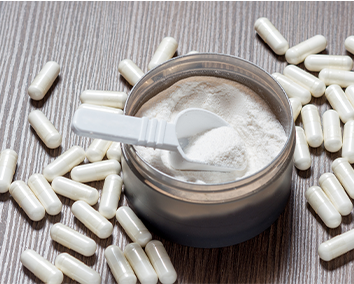
The vast majority of the dietary supplement industry is composed of responsible and honest manufacturers whose products present few health risks and little potential to cause positive athletic drug tests. However, there also exist a number of unscrupulous manufacturers whose products can contain stimulants, pro-hormones, or other anabolic agents that can result not only in a positive doping test, but may also have deleterious health effects on a person who uses the products.
Additionally, even honest manufacturers are not always aware of the exact contents of all of the raw materials that make up the ingredients of their products. Many of these raw materials are shipped from overseas where quality control standards may be questionable. Contaminants can make their way into raw materials of a product without the product manufacturer's knowledge or consent.
A study commissioned by the International Olympic Committee in 2001 analyzed 634 non-hormonal nutritional supplements bought from 215 different suppliers in 13 different countries and found that 14.8% tested positive for at least one anabolic agent. Many of those testing positive originated in the United States. In addition to the reasons above, lax regulation of the dietary supplement industry may be partially to blame for these results.
DSHEA
The Dietary Supplement Health and Education Act of 1994 (DSHEA) regulates dietary supplement sales in the United States. DSHEA places the burden of proof on the Food and Drug Administration (FDA) to show that a product intended to supplement the diet creates an unreasonable risk of illness or injury, and should therefore be prohibited. As was demonstrated in 2004 when the FDA attempted to ban ephedra only to have the ban subsequently overturned by a federal court, this is a difficult burden for the FDA to meet.Anabolic Steroid Control Act of 2004
Responding to criticism that arose after it was revealed that some athletes (most notably baseball players) were using pro-hormones that were available in the United States over-the-counter, Congress enacted the Anabolic Steroid Control Act of 2004. This law, which took effect in January 2005, bans the sale of most steroid precursors such as androstenedione. The Act leaves in place an exception for the steroid precursor dehydroepiandrosterone, more commonly known as DHEA, which is considered a banned substance by the World Anti-Doping Agency and certain other sporting bodies.The BSCG program is focused on helping average consumers and athletes alike differentiate between the honest, responsible dietary supplement manufacturers and those whose products present unnecessary risks. While a 100% guarantee is impossible for any program to provide, BSCG uses the most up to date science to provide manufacturers and consumers with the best information available.
Visit the site, Support Clean Sport.
Visit the blog, The Catlin Perspective.
Please Join Us on Facebook
News of Interest
“Don’t Do It, You Dope,”
by Abhishek Raghunath, Forbes India, July 18, 2011.
"Don Catlin Responds,"
Sports Illustrated, June 6, 2011.
“Diana Taurasi, Alberto Contador cases highlight questions facing anti-doping movement”
by Amy Shipley, Washington Post, February 27, 2011.
“Electric Cowboys,”
by Natasha Gardner, American Cowboy magazine, February 16, 2011.