THE GOLD STANDARD IN THIRD-PARTY CERTIFICATION AND TESTING : +1-800-920-6605, info@bscg.org
Many elite athletes and fitness experts have many questions about sports doping and supplements. Sports Doping and Supplements usage overall have been skyrocketing since the 90s. Please take a moment to read our FAQ about Sports Doping and Supplements, and to better understand what we are all about.
Banned Substances Control Group (BSCG) is an independent, third-party certification and testing provider serving the dietary supplement, natural product, and food and drink industries. The BSCG Certified Drug Free program is a leading international third-party certification that utilizes the most up-to-date scientific analysis and testing procedures to ensure products are free of drugs or other contaminants that can be harmful or lead to positive drug tests. We also evaluate GMP compliance and the general quality of products and verify label claim and contaminant testing process and results. The BSCG Certified Drug Free program today screens for more than 450 drugs offering some of the broadest protection available in the industry.
Dietary supplement certification or third-party certification describes a consistent process that is conducted by an independent third-party reviewer to assess the quality and safety of a dietary supplement, or other related consumer products and help consumers, athletes, military service members, and first responders determine which supplement products are safe to consume. BSCG third-party certification focuses of banned substance testing, GMP compliance, and verification of label claims and limits on environmental contaminants like heavy metals, microbiological agents, and pesticides.
BSCG offers 5 third-party certification programs. BSCG Certified Drug Free offers industry leading anti-doping protection along with verifying GMP compliance and product quality. BSCG Certified Quality is an annual testing program built for consumer protection and retail security that verifies product quality and GMP compliance and screens for our list of more than 450 drugs. BSCG Certified CBD is a complete quality solution for the hemp and CBD product industries that combines an initial compliance review with screening for more than 450 drugs, verification of CBD label claims and THC limits for drug testing protection, and testing for environmental contaminants. BSCG Certified GMP is a unique one of a kind program that conducts audits on brands to ensure they comply with the requirements of GMP, while BSCG Certified Facility offers onsite audits for GMP compliance to manufacturing facilities.
BSCG Certified Drug Free has been an international leader in third-party certification for banned substances since it’s inception in 2004. It was one of the first programs in the world to offer third party certification of dietary supplements. BSCG was built on a foundation of more than 30 years of sport drug testing and anti-doping experience. The BSCG Certified Drug Free program tests for more than 450 drugs including 400+ on the WADA Prohibited List and 50+ prescription, OTC, or illicit drugs not banned in sport offering the broadest protection available in the industry. BSCG provides complete transparency with the testing menu, reporting levels and limits, and other technical details available for public review on our site. Testing methods are ISO 17025 accredited and are validated for dietary supplement testing and included in the scope of accreditation. The Certified Drug Free program requires every lot of participating supplement products to be tested for banned substances and also requires manufacturers to be GMP audited and quality control testing for product label claims and limits on contaminants is verified annually. Please explore our comparison of third-party certification programs for banned substances for more details.
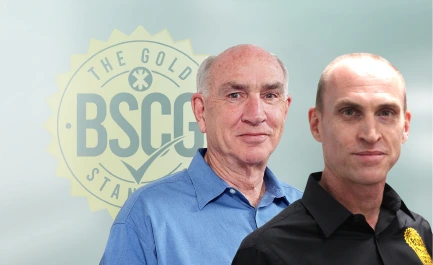
Don H. Catlin, M.D., was a longtime leader in sports drug testing and is widely considered the father of anti-doping in the Unites States. He built the first sport drug testing laboratory in the U.S. to conduct such testing, the UCLA Olympic Analytical Laboratory, and in over 25 years as its director, grew it into the largest performance-enhancing drug-testing lab in the world. In a seminal publication in 2000, he first called the scientific community’s attention to the problem of contaminated dietary supplements that could lead to positive drug tests. Oliver Catlin, his son, joined Dr. Catlin in 2004 to continue and expand upon his father’s pursuits in drug testing and toxicology and has himself become a respected leader in the field. Today, as BSCG President, Oliver is intimately involved with everything from developing BSCG’s testing menu to sharing its expertise with the industry, expanding BSCG’s services to include quality control testing and GMP compliance audience, and calling attention to difficult issues in his insightful blogs and content pieces. Together the Catlins are co-founders of BSCG along with their longtime colleague, respected Los Angeles attorney Ryan Connolly.
BSCG tests for more than 450 drugs including 400+ drugs on the WADA Prohibited List that are also banned substances in professional and collegiate sport, military, and first responder drug testing programs, and 50+ prescription and over the counter drugs included in retail testing requirements like Amazon’s dietary supplement compliance policies. The compounds included cover more than 98% of the positive drugs tests found internationally in sport over the last decade. In addition, we include prescription and over the counter drugs that are commonly found as contaminants in FDA testing. Compounds included cover those prohibited by most sport leagues or groups including; WADA, NFL, MLB, NHL, MLS, PGA, LPGA, NBA, WNBA, NASCAR, FIFA, ATP, WTA and more. For more information, see our Testing Menu.
The WADA prohibited list is often used as a model for other sporting groups or leagues when determining what should be banned in sport. Focusing on the WADA prohibited list when developing a supplement certification testing menu ensures that drugs banned by other sporting programs and leagues are covered as well. WADA laboratories test for Olympic and professional sports worldwide. If supplements are causing positive drugs tests, the compounds responsible are represented in the WADA statistics on adverse results. BSCG has focused its menu development on compounds responsible for adverse results as we believe those to be the most relevant to supplement contamination. The compounds we cover were responsible for more than 98% of positive drug tests in sport worldwide over the last decade.
Testing at detection levels in the part per billion range is important for protecting athletes, military service members, and first responders from traces of drugs that could be present in supplement products and lead to a positive drug test. Minute amounts of drugs can be found on urine drug tests down to low parts per trillion levels. Studies have shown that there is a roughly 1,000-10,000 fold difference between the amount ingested and the amount found in urine, so even ingesting trace amounts can be an issue for athletes, military service members, first responders and other drug tested professionals.
ISO 17025 accreditation is a system of standards for testing and calibration laboratories that ensures methods and practices meet the most demanding criteria. Having a top laboratory that meets the ISO 17025 standard is vital to ensuring the methodology and practices used are effective in their testing aims.
In order to navigate the complex grey areas between drugs in sport and dietary supplements as a third-party certification provider it is essential to have in-depth knowledge of how the prohibited lists and associated thresholds are interpreted and applied in sport drug testing. Some supplement ingredients may have the potential to be banned in sport; some of these ingredients may appear to be legitimate and require deep experience to resolve. There are also naturally present hormones like IGF-1 that are found in whey protein, colostrum, and even deer antler. Evaluating whether that natural presence is a concern or not takes not just integrity but experience. BSCG brings decades of anti-doping experience to third-party certification which enables us to deal with even the most complex banned substance issues that may arise.
BSCG leadership has more than three decades of experience testing for banned substances in sport and dealing with associated toxicology issues and supplement concerns. BSCG brings the Olympic standard in drug testing to third-party certification. From exposing the first designer steroid in sport (norbolethone) to pioneering the first tests for artificial testosterone using carbon isotope ratio analysis or launching a new test for the EPO variant darbepoetin or the designer steroid behind the BALCO scandal (THG), BSCG’s leadership has been at the forefront of some of the most advanced scientific testing techniques for banned substances in sport, and in supplements. In 2004, BSCG became one of the first third-party certification programs in the world to test for banned substances. BSCG is a leader in third-party certification and testing as well as sport drug testing and anti-doping science. This unique experience and knowledge is the foundation of BSCG’s certification and testing giving us the ability to navigate complex issues when certifying dietary supplements.
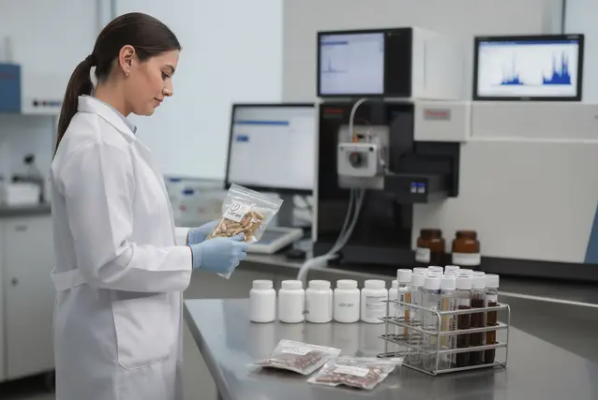
Supplement testing is not easy. Products come in a variety of different matrices with an array of ingredients that can sometimes affect analyses in different ways. Issues with matrix interference or effects need to be evaluated and considered when reviewing results. The science has to be done right in order to get effective results. Many labs might be able to test for drugs but to do so effectively in dietary supplements is something few labs are equipped and trained to do.
21 C.F.R. 111 – Good Manufacturing Practices (GMP) are a set of guidelines that the FDA put together to govern the manufacturing of food and/or dietary supplements. They cover areas such as personnel, sanitation, storage, the manufacturing process and tracking, quality standards, quality control and adverse event tracking. It is now mandatory for all supplement manufacturers to make products according to GMP. While this requirement has improved quality overall, it does not ensure quality in products as the guidelines are weak and vague in certain areas, especially in regards to ingredient specifications, finished product specifications and contaminant testing. A GMP audit looks at the facilities and processes involved in making dietary supplement or other consumer products but only testing can tell you what is actually in the products.
Third party certification is essential for athletes, military service members, or first responders to ensure a dietary supplement is acceptable to use. Always make sure the lot you are going to use has been certified to be drug free by a reputable third-party organization such as BSCG. This takes the guess work out and an athlete, military service member, or first responder can rest assured that the product has been completely reviewed and tested for banned substances. That is the single best way to protect against inadvertent positive drug tests that can come from dietary supplements. A 2022 review of 50 dietary supplement studies that covered more than 3,000 products reported that 28% of uncertified supplements had undeclared drugs present that could cause an inadvertent positive drug test. We also encourage athletes to spend time reviewing and researching the products they wish to use and learning the science behind them. For questions, athletes, military service members, or first responders may call BSCG at 800-920-6605 or have their custom supplement regiment tested in the Athlete Assurance Program, the only program in the industry tailored for individual athletes and teams.
Consumers should be aware of the potential for drugs to infiltrate their products as this is happening more often today and they should look for third-party certification that address this growing challenge. Consumers should also look for certifications that include GMP compliance audits and a quality control process review to ensure that what is on the label is what is in the product. Sport nutrition products, weight loss supplements, joint health products, sleep aids and sexual enhancement products have seen growing a growing trend of drug contamination. Even seemingly natural products or herbs can contain compounds that can be a problem. Inaccuracy of labels can also be an issue if consumers are getting less or more of a nutrient or element than expected. Environmental contaminants like heavy metals, microbiological agents, or pesticides can also be a concern. Consumers should look for products with third-party certification to ensure their quality and verify that unwanted drugs are not present.
Equines and canines face contamination concerns from feed, compounded veterinary drugs and a growing number of animal supplements that could cause inadvertent positive drug tests. Competition animals like thoroughbreds or greyhounds are subject to drug-testing rules that include more than 1,000 drugs. A tragic example of the concerns that may arise came in 2009 in Florida where a polo team had a local pharmacy compound a supplement. The recipe was not followed correctly and a dangerously high level of selenium was put in the supplement, which resulted in the death of 21 horses that collapsed on the field. Making sure that what an animal ingests has been tested to ensure quality and verify they are free of banned substances can help protect their health and their lives and avoid positive drugs tests.
Getting third-party certified gives manufacturers and brands the peace of mind to know that their products meet quality specifications for label claims and environmental contaminants, are free of banned substances, and meet GMP compliance requirements. Having a respected third party attest to this and allow their seal on a product tells consumers that the product is safe and not hiding something that might be detrimental. Supplement companies that are certified consistently tell us they are glad they are, as it has helped establish trust with their consumers and represents that they are committed to quality. Surveys have shown that transparency initiatives like third party certification can have a 20% return on investment. Consumers are more likely to buy supplement products they can trust, and third-party certification helps establish that trust. Proactive certification also offers risk management protection to brands by verifying quality and compliance and testing for drugs providing insurance against the occurrence of costly quality issues arising through government inspections or other retail or regulatory testing.
BSCG offers certification of raw materials or ingredients so that suppliers know that they are providing clean ingredients that meet quality specifications and are free of banned substances. This also confirms for downstream brands or manufacturers that the ingredient they purchased has been tested and meets quality standards without unwanted contaminants or banned substances. Costly returns or quality issues can be avoided by ensuring raw materials and ingredients are certified.
BSCG’s five third-party certification programs start with a complete GMP compliance audit and quality control process review. When certifying products and ingredients we also conduct an initial formula evaluation that considers any apparent toxicology, banned substance, or general health concerns. We then perform an audit on GMP compliance focused heavily on labels, claims, ingredient specifications, finished product specifications, contamination testing, supplier qualification, adverse event reporting, recall procedures, master manufacturing records and batch production records. In the BSCG Certified Drug Free program every finished product batch or lot produced is tested for our industry leading list of more than 450 drugs with label claims and contaminant specifications verified annually. Ingredient brands can opt for monthly testing. In the BSCG Certified Quality program annual testing is done for label claims, environmental contaminants, and our list of more than 450 banned substances. The BSCG Certified CBD program tests for CBD levels, THC limits, as well as banned substances and environmental contaminants. The BSCG Certified GMP program is an audit only program focused on supplement brand compliance. BSCG Certified Facility offers onsite audits for GMP compliance of manufacturers.
Supplements, ingredients, or manufacturers that have been certified receive written confirmation of certification from BSCG and can use the BSCG third-party certified seals on product packaging and marketing materials. Our certified clients and a list of products or ingredients that have been certified are also available on our certified clients’ pages or by using our searchable database. A search box for products and manufacturers is also at the top of our website and can be explored by lot #, brand, category or other keywords.
Unfortunately, many products that are sold as dietary supplements do not actually qualify as legal supplements because they contain illegal ingredients or are adulterated. The sheer volume of illegal dietary supplements and substances makes regulating them difficult for authorities and often regulatory action only happens after there are serious adverse events or consumer harm. The U.S. Food & Drug Administration (FDA), for instance, needs to demonstrate that an ingredient is illegal and then ban it, but by that time the unscrupulous manufacturers have often moved on to another illegal ingredient. The current penalties are simply not strong enough, especially on second and third offenses, to dissuade companies from putting out problematic products. Fines are usually less than $250,000 for selling an adulterated supplement product while profit potential is measured in millions.
The FDA occasionally tests products for contamination and drugs as part of enforcement but under current policy it is not their job to ensure the safety of products. It is the responsibility of the supplement brands to ensure products are safe. The FDA is tasked with setting policies and guidelines and using their limited resources to ensure these guidelines are followed. The FDA and other regulatory agencies do not have the resources needed to ensure safety of all supplements or perform testing to expose hidden drugs or banned substances. So third-party certification plays an important role in consumer safety by verifying the quality, safety, and integrity of dietary supplement products.
Regrettably, some unscrupulous manufacturers may include banned substances in a product without listing them on the label. They might do this to spike a product and make it work better for the intended purpose without regard to the negative health consequences or positive drug tests that may follow. The banned substances or ingredients are often pharmaceutical drugs known to have serious health concerns and have not been approved for safety reasons. In the case of herbs and other natural products, there could be banned substances that appear naturally as components of certain ingredients that are not listed on the label. For example, whey protein or colostrum can contain IGF-1, certain plants may produce small amounts of anabolic steroids, or banned stimulants like phenethylamines can be present in citrus or other ingredients like cocoa. Contamination with banned substances can also occur in the manufacturing environment or even through contaminated water used in production. Labeling requirements dictate what supplement companies need to include on the ingredient list and supplement facts panel, but a label review is not sufficient to ensure banned substances or adulterants are not present. Only third-party certification or testing can provide assurance that banned substances are not present in a supplement.
BSCG can be reached by phone at 800-920-6605, or you can e-mail us at info@bscg.org. Each third-party certification program we offer is outlined on our programs and service page.


 YouTube Channel
Oliver Catlin Interview
 Instagram
@bscgcertified
 BSCG BLOG
Nutraceutical Testing Checklist: What to Request Before Launching a Supplement
 The Catlin Perspective blog widget
THE HISTORY OF BSCG

 Facebook
Banned Substances Control Group
Designed and Optimized by  Developed, PPC and SEO by
 Business Services