Weight-Loss Supplements And The Hidden Dangers of Garcinia Cambogia
Mar 03, 2026
The start of every year often brings the same promises. These fresh starts can catch a quiet wobble by the time February rolls in, which is often when weight-loss supplements step up to the plate. Garcinia cambogia is marketed as an aid for appetite control and fat loss, despite somewhat limited scientific evidence. The concerning element is that last year, France’s health authorities issued a warning after Garcinia-based supplements were linked to a series of negative side effects. Despite being banned in French medicines for more than a decade, it’s often sold in the U.S. and still appears in many online products sold globally. Here’s why it’s become a case study for supplement risk and why verification, quality testing, and drug-free certification matter more than motivation, especially when your customer’s health might be at risk.
Natural Can Turn Into A Medical Emergency
Most consumers reaching for weight-loss supplements aren’t looking for an extreme. It’s more about feeling better in their clothes or a little healthier, which is what makes the garcinia cambogia data particularly concerning. Between 2009 and 2024, France’s food safety authority recorded 38 cases of serious adverse effects linked to this supplement, which include acute liver injury, heart inflammation, and muscle damage. One case even involved a fatal liver failure, while another saw a previously healthy 32-year-old woman require a heart transplant after developing myocarditis. These supplements weren’t misused. Instead, it was everyday consumers following the label directions of a product marketed to them as a natural weight loss aid. They put their trust in the brand, and at least one paid the ultimate price.
Garcinia Isn’t Alone
These stories don’t mean that garcinia cambogia doesn’t work. By many accounts, it does have some scientific efficacy. That said, it is not the only one to have some risk. A paper in JAMA Network Open estimated that almost 5% of U.S. adults had taken at least one herbal supplement in a 30-day period that could be potentially toxic to the liver. Garcinia cambogia was one of the six offending botanicals flagged alongside green tea extract, turmeric, ashwagandha, black cohosh, and red yeast rice. The research highlighted separate data from the Drug Induced Liver Injury Network that showed how herbal and dietary supplements now account for around 20% of documented drug-induced liver injury cases, up from roughly 7% in the mid-2000s. These products can get into consumers’ hands, often with inconsistent labelling. Weight-loss is a supplement category that’s often driven by a customer’s urgency, which makes a lack of oversight potentially dangerous. This isn’t an argument against plant-based ingredients. It’s more of an argument for evidence, third-party testing, and quality controls that match up with the potential biological impact these compounds might have on someone’s body.
Why BSCG Certified Drug Free Protects Everyone
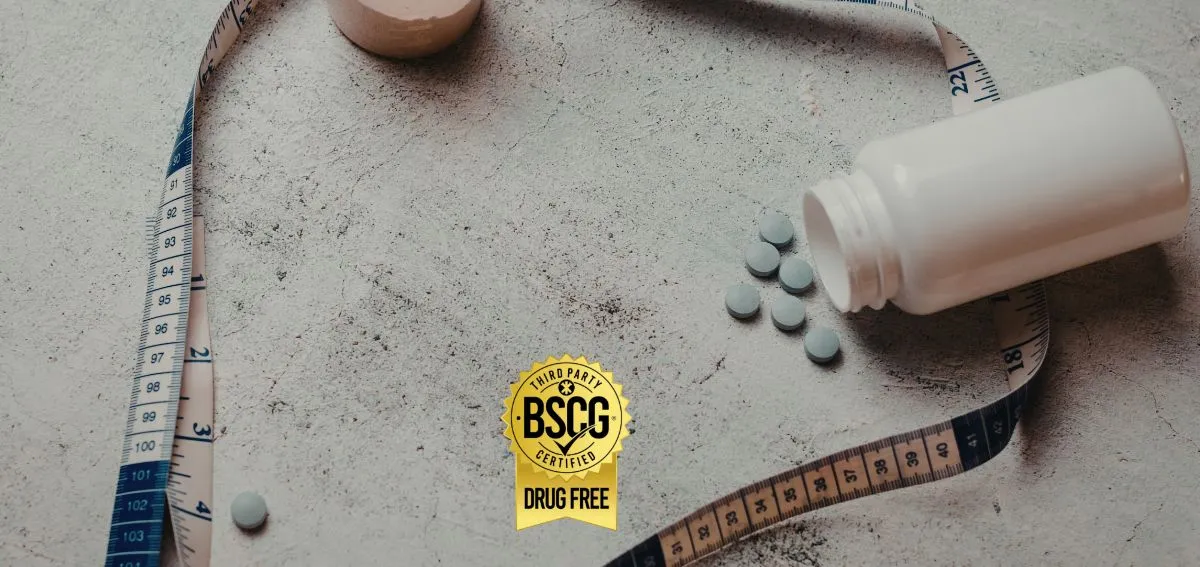
What makes BSCG’s Certified Drug Free program so protective is the sheer scope. Every lot of a BSCG Certified Drug Free supplement is screened against more than 450 drugs, including 400+ on the WADA Prohibited List and 50+ prescription, over-the-counter, or illicit compounds. That’s the world’s broadest testing menu when compared to other leading competitors. This certification is paired with an initial GMP quality-control audit and verification of product specifications and quality. BSCG offers the maximum assurance possible to athletes, trainers, and military professionals who are subject to strict drug testing. That is why the program is globally recognized not only by the UFC but also by the NFL, the U.S. Department of Defense Operation Supplement Safety, and many others.
Proof Matters When Motivation Is High
When someone’s motivation to exercise and eat for weight loss is low, then their motivation to try supplements is probably high. However, as consumers become more informed, a brand may not be able to rely on “natural” positioning to earn their trust. Ingredients like garcinia cambogia shine a light on the fact that the gap between promises and proof can create real harm if third-party testing is missing. For brands, retailers, and partners, this credibility risk can have negative consequences. Third party certification protects consumers, preserves a brand’s reputation and make sure that when someone turns to supplements in a possibly vulnerable moment, that the product delivers transparency instead of uncertainty about the long-term health impact.



CERTIFIED CLIENTS
Search by Lot, Product, Brand, Category, or Other Keyword.
Certified Drug Free
Certified Quality
Certified GMP
Certified CBD










































.png)