Alibaba Offers Performance Enhancing Drugs During 2026 Milan Cortino Olympic Games
Feb 19, 2026

A story December 3, 2025 in the Associated Press put the world on notice that Olympic sponsor Alibaba was actively selling drugs that were on the WADA Prohibited List. The retail giant Alibaba responded and said it bars all prohibited substances in accordance with the WADA banned list. When asked for comment the International Olympic Committee (IOC) brushed the issue off and said that Alibaba, “confirmed to us that it consistently monitors its marketplaces and that it does not have prohibited substances for sale from the WADA 2025 list.” With the Milan Cortina 2026 Olympics underway we looked again to see what performance enhancing drugs (PEDs) Alibaba might still be selling.
A Network of Unapproved Drugs like BAM15, SLU PP 332 and GHK-Cu Available From Olympic Sponsor Alibaba
Back in December, there was a significant network of 311 suppliers for drugs like BPC-157, TB500 on Alibaba. After the AP article came out the links to the specific vendors have been deactivated, but the supply network still seems to exist and could perhaps be turned back on after the Olympics. Although many listings for unapproved peptides like BPC-157 were deactivated, many listings remain for other research chemicals that are prohibited by the World Anti-Doping Agency (WADA).
In their extended statement to AP Alibaba said, ““Although some of these substances may not be legally restricted in ordinary consumer contexts, we have proactively adopted stricter standards to define operational boundaries and our compliance efforts go beyond passive adherence and minimum legal requirements.”
Every year the WADA Prohibited List is updated with new compounds that rise to a level of concern and meet the listing conditions. The listing conditions consider if a substance has the potential to enhance or enhances sport performance, represents an actual or potential health risk to the athletes, or if It violates the spirit of sport. The 2026 WADA Prohibited List was released in September of 2025 allowing athletes time to review the new additions and change their use habits if necessary.
This would also allow an Olympic sponsor like Alibaba to review it’s platform for new WADA prohibited drugs and remove listings accordingly. That assumes that Alibaba is truly committed to keeping substances that are banned in Olympic sport off the platform.
Unfortunately that doesn’t seem to have happened.
BAM15 Was Added to the 2026 WADA Prohibited List as an AMPK Activator
One of the most impactful additions to the 2026 WADA Prohibited List was the addition of the research chemical BAM15 that was banned as a metabolic modulator, specifically an AMPK activator, in category S4.4.1. BAM15 has become one of the more popular research chemicals along with drugs like BPC-157 and TB500.
On Alibaba several listings can now be found for BAM15. This one calls BAM15 a "weight burn fat supplement" which suggests this is being marketed for human consumption. It is not legal to market research chemicals for human consumption. They also provide several BAM15 Buyers Guides for those considering purchasing substances from their platform. One listing for BAM15 recommends another research chemical SLU-PP-332.
While Alibaba has deactivated many of the links that were for suppliers of performance enhancing drugs noted in the AP article like BPC-157 or TB500 that are on the WADA Prohibited List, they still continue to offer the recently prohibited BAM15 and a number of research chemicals that are not yet listed but still may qualify as prohibited in category S0 – Non-Approved Substances. Under the language of the WADA Prohibited List any unapproved substances may be considered banned.
What are the Research Chemicals SLU-PP-332 and GHK-Cu Available on Alibaba
Research chemicals like SLU-PP-332 and CHK-Cu are becoming popular trendy products these days. Perhaps seeking to capitalize on the trends Alibaba has a number of listings for both these unapproved substances.
SLU-PP-332 is an experimental small-molecule drug that is a mitochondrial metabolic modulator and exercise mimetic that mimics the metabolic benefits of endurance exercise by activating estrogen-related receptor proteins (ERRs). Research indicates it boosts mitochondrial function, increases fat oxidation, and supports weight management by inducing a metabolic state similar to regular physical activity.
GHK-Cu (glycyl-L-histidyl-L-lysine copper) is a naturally occurring copper-binding peptide that, in the context of sports nutrition and "biohacking," is stacked with other peptides to accelerate recovery, reduce inflammation, and support tissue repair. It is part of the trendy GLOW or Wolverine stack that consists of GHK-Cu and the WADA prohibited substances BPC-157 and TB500. While often associated with skin rejuvenation, in a sports context, GHK-Cu may support collagen and elastin production for tendon, ligament, and muscle repair or soft tissue support in general.
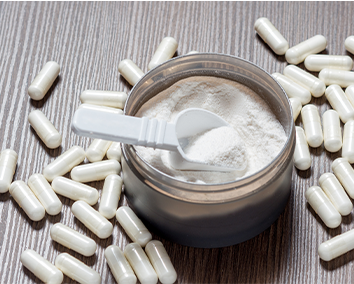
There were more than 30 listings for SLU-PP-332 on Alibaba as of February 7, 2026. These include finished product packages with capsules that appear to be intended for human consumption. Similarly, there are also a number of listings for GHK-Cu as a powder and also in capsules in supplement bottles.
It seems Alibaba needs to do some more work to address research chemicals and substances on the WADA Prohibited List, or those that may qualify, that continue to be sold on the platform. An Olympic sponsor like Alibaba should be held to high standards by the IOC. The meek response from the IOC when an Olympic sponsor was selling, and continues to sell, PEDs was certainly unfortunate for those that value clean sport. Both entities need to take another hard look to ensure this doesn’t continue to happen within the Olympic community.
The fight for clean sport is hard enough without an Olympic sponsor selling PEDs. The world should demand better of the IOC and of Olympic sponsors like Alibaba.
CERTIFIED CLIENTS
Search by Lot, Product, Brand, Category, or Other Keyword.
Certified Drug Free
Certified Quality
Certified GMP
Certified CBD