Military Drug Test Laboratories: Who Performs Testing and Why Standards Matter
Jan 20, 2026
Military Drug Test Programs: Structure and Oversight
The United States military utilizes a network of Department of Defense laboratories, certified forensic laboratories, and specialized testing organizations to conduct drug testing. No single commercial entity handles all testing. Entities considered “trusted” adhere to analytical, procedural, and transparency standards designed to meet military forensic and legal requirements, which differ from civilian workplace testing standards.
The Department of Defense operates five primary forensic drug testing laboratories, which collectively process over four million specimens annually. These laboratories hold Health and Human Services (HHS) certification through the National Laboratory Certification Program. The laboratories are located at Fort Meade, MD; Tripler AMC, HI; Great Lakes, IL; Jacksonville, FL; and Lackland, TX.
How Military Drug Testing Works
The Department of Defense provides centralized oversight for all military drug testing programs, enabling consistency across service branches and standardization in specimen collection, handling, and analysis. Military drug tests follow protocols that maintain forensic standards and ensure validity and reliability.
Military laboratories implement chain-of-custody procedures beyond typical civilian requirements. Each handler of a specimen signs a custody form (DD Form 2624) at every stage. Specimens are sealed with tamper-evident tape in the presence of the service member, stored securely, and usually shipped within 24 hours to DoD-certified laboratories.
Military forensic standards require laboratories to test for a broad spectrum of substances, use lower detection limits, and employ validated methods that can be defended in court-martial proceedings. The military applies a THC cutoff value of 15 ng/ml, reflecting sensitivity levels established for forensic and legal reliability in military testing.
Military laboratories regularly expand panels to detect emerging substances, including synthetic cannabinoids, designer stimulants, and novel psychoactive substances. These updates align with the military's zero-tolerance policy and address the consequences attached to positive findings.
What "Trusted" Means in a Military Drug Test Context
Trust in a military drug testing context is established by demonstrating analytical sensitivity, comprehensive coverage, and the ability to detect low concentrations of a wide array of substances, including analogs and metabolites. Advanced instrumentation and validated analytical methods underpin this detection capability.
Transparency is maintained through comprehensive documentation of laboratory procedures, detailed record-keeping, and the ability to support findings in legal proceedings. All steps, from chain of custody to analytical methods and quality control, follow strict protocols that allow for independent verification and reproducibility.
Laboratories are required to produce repeatable and consistent results when the same sample is tested multiple times. They must participate in proficiency testing and undergo regular inspection to ensure quality standards that reduce analytical error and maintain result consistency.
Certain elements of military drug testing align with established anti-doping standards, such as those used for Olympic or professional sports testing. These applications demand detection of both performance-enhancing drugs and potential masking agents. Expertise in anti-doping directly informs military lab practices.
The Role of Commercial and Independent Testing Organizations
Commercial laboratories are engaged for specific Department of Defense needs, including drug testing of civilian employees, contractors, and specialized populations. Commercial laboratories contracted for specific Department of Defense purposes must comply with Department of Health and Human Services regulations and meet standards applicable to DoD clients.
Military testing programs for active-duty personnel are distinct and administered through a dedicated laboratory network. Commercial labs serve supplemental or support roles rather than replacing military laboratories.
Independent third party organizations focus on risk mitigation and prevention by identifying contaminated supplements, advising on banned substance issues, and offering certification programs. These measures support prevention and help identify risks before a positive result occurs, addressing risk factors that are not captured by post-exposure drug testing alone.
Independent surveillance and compliance efforts equip military personnel with tools to identify and avoid banned or risky products. By recommending third party testing of products and maintaining databases of supplements that are banned for military personnel, these organizations add an additional layer to the military's approach to drug test risk management.
Military Supplement Risks and Operation Supplement Safety
Military policy applies strict liability to any positive drug test result, holding service members accountable regardless of intent or knowledge. Consequently, inadvertent ingestion of contaminated supplements can carry the same disciplinary and legal consequences as intentional use, including court-martial and administrative action. That's why the U.S Department of Defense created Operation Supplement Safety (OPSS) to focus on military supplement risks.
A recent compilation of analytical studies on dietary supplements found that 28% of the more than 3,132 products analyzed posed a risk of unintentional doping. The banned substances found include stimulants, pharmaceutical analogs, or other banned drugs. Contamination can result from poor quality raw materials, environmental presence, inadequate manufacturing controls or other means.
Stimulant analogs such as DMAA and related compounds are present in certain pre-workout and weight loss products, sometimes without being disclosed on labels. Service members consuming such products are at risk of testing positive for substances explicitly prohibited under military regulations.
Military drug testing focuses on post-exposure detection rather than pre-consumption risk management. That's why OPSS recommends third party certification programs like BSCG as a means for military personnel to avoid the risk of testing positive from dietary supplements. The gap between labeling and product content exposes military personnel to the risk of unintentional doping violations, and third party certification programs offer a solution.
How BSCG Supports Military Drug Test Risk Reduction
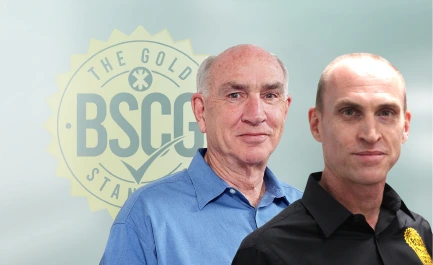
BSCG applies more than 25 years of experience in anti-doping and sport drug testing to dietary supplement certification. Dr. Don Catlin, a co-founder, previously directed the UCLA Olympic Analytical Laboratory, which conducted testing for the U.S. military as well as for sports organizations like USADA, NFL, NCAA and others. This background in sports drug testing informs current analytical and certification practices.
BSCG is recognized as a third-party certification provider by the U.S. Department of Defense Operation Supplement Safety (OPSS). The OPSS program serves as a DoD-wide resource on dietary supplements. Recognition indicates alignment between BSCG testing standards and military requirements for banned substance screening of dietary supplements.
The Certified Drug Free program encompasses testing for over 450 compounds, including more than 400 identified on the World Anti-Doping Agency (WADA) Prohibited List, as well as additional substances banned in military, law enforcement, and first responder drug testing programs. This broad coverage addresses substances which could result in positive military drug tests.
BSCG has one of the largest testing menus for banned substances in the industry and discloses testing menus and detection thresholds. Analytical methods are performed in ISO 17025-accredited laboratories, using detection limits selected to identify trace-level contamination relevant to military drug testing that reach down to the low parts per billion levels. These thresholds are selected to reliably detect trace levels of contamination that can cause inadvertent positives.
BSCG uses a dynamic testing approach, regularly updating methods to identify newly emerging designer substances and analogs. This proactive method aligns with the military approach to threat adaptation.
BSCG also maintains a Dietary Supplement Ingredient Advisory List, which offers direct guidance to military personnel and other drug-tested professionals. This resource identifies and cautions against ingredients with known risks in drug testing situations as alternative resource to the OPSS list of DoD prohibited dietary supplement ingredients.
Military Drug Test vs Civilian Drug Test Programs
Military drug testing, governed by DoD Instruction 1010.16, enforces zero-tolerance policies designed to support readiness, discipline, and security. Civilian workplace testing generally addresses productivity and safety, with consequences generally limited to employment outcomes, not criminal action.
Military drug testing includes a wider range of substances, including synthetic cannabinoids, LSD, benzodiazepines, and designer drugs, along with reduced cutoff thresholds for detection. Civilian programs commonly cover a narrower scope with generally less sensitive detection methods.
Positive military drug test results may lead to court-martial, discharge, loss of benefits, and a permanent criminal record, consequences not usually associated with civilian workplace testing.
Accountability and oversight in military laboratory operations fall under DoD authority, whereas civilian testing is regulated by HHS and relevant state agencies. Military standards prioritize minimal error due to the potential for criminal proceedings and significant career impact.
FAQ: Key Questions About the Process
Which drug testing company is trusted by the US military?
The US military primarily relies on its own five DoD-certified forensic laboratories for the testing of active-duty personnel. Commercial and independent organizations support supplementary functions, including testing for civilian employees and supplement screening initiatives.
Does the US military use commercial drug testing companies?
For some populations, such as DoD civilian employees or for specific screening requirements, commercial laboratories may be utilized. These laboratories must adhere to HHS standards and military-specific requirements.
How is a military drug test different from a workplace drug test?
Military drug testing examines a wider array of substances, applies lower detection limits, and imposes criminal penalties in some cases. Workplace testing typically leads to administrative employment actions rather than criminal prosecution.
Can supplements affect military drug test results?
Supplements have been shown to sometimes contain undeclared banned substances. Military policy holds service members responsible for positive findings regardless of intent, making supplement contamination a documented risk factor.
How can service members reduce drug test risks from banned substances?
Service members can reduce risk by avoiding products with ingredients listed as banned and by only selecting supplements certified by authorized third-party programs, and consulting specialized resources like OPSS before supplement use.
Is third-party testing relevant to military drug tests?
Third-party testing and certification programs serve to identify and prevent inadvertent positives by for banned substances on a lot by lot basis. Programs recognized by the Department of Defense and anti-doping authorities like BSCG, NSF, and Informed Sport align with military standards for banned substance detection. It is important to make sure the lot you have is certified by checking third party databases.
Important Considerations for Ongoing Military Testing
The Department of Defense consistently refines military drug testing as new substances and detection methods emerge. Adherence to strict standards and incorporation of evolving analytical methods allow the military to address new threats. Ongoing vigilance and awareness of supplement contents are required for service members to remain compliant.
Education regarding banned substances and evidence-based prevention strategies support compliance beyond the act of testing alone. Utilization of military-endorsed resources and independently verified third party certification programs assists service members in maintaining readiness and avoiding inadvertent doping violations.
Ongoing military drug testing depends on evolving analytical methods, strict laboratory oversight, and informed risk management practices. Education regarding banned substances, supplement contamination risks, and testing standards supports compliance beyond laboratory analysis alone. Independent organizations with forensic expertise may contribute supplementary resources that align with military testing requirements.
CERTIFIED CLIENTS
Search by Lot, Product, Brand, Category, or Other Keyword.
Certified Drug Free
Certified Quality
Certified GMP
Certified CBD