Pre Workout Supplement Powder Facts, Ingredients, Safety
Feb 02, 2026
Pre-workout supplement powders provide a widely used format for supporting energy, focus, and exercise performance. This product category enables flexible ingredient dosing, rapid absorption, and greater transparency compared to capsules or ready-to-drink formulations. However, the powder format also raises considerations involving ingredient composition, dosing, and safety profiles.
This post details the components of pre-workout supplement powders, outlines the rationale for the dominance of the powder format, describes label and testing practices, and identifies scenarios in which these products are incorporated into training programs. It also guides consumers to third-party certified pre-workout supplement options.
Definition of Pre-Workout Supplement Powder
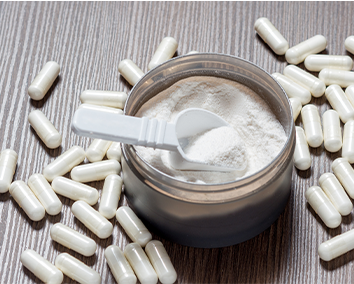
A pre-workout supplement powder constitutes a powdered dietary supplement intended to be mixed with liquid and consumed prior to exercise. In comparison to capsules or premixed options, powders enable a wider range of ingredient dosing, offer quick absorption, and allow transparent formulation practices. The powder format supports higher quantities of active ingredients and allows manufacturers to disclose precise ingredient levels on product labels.
Powder Format as the Predominant Choice in Pre-Workout Supplements
Powdered pre-workout products represented 64.42% of the category’s market share in 2025 (Mordor Intelligence). Multiple structural and practical considerations contribute to this preference.
Many pre-workout ingredients are effective at gram-level doses. Creatine generally appears at 3-5g per serving, citrulline at 4-8g, and beta-alanine at 2-4g. Encapsulating these quantities would require ingestion of numerous large capsules.
Most water-soluble compounds used in pre-workout formulations, including citrulline malate, beta-alanine, and various caffeine types, integrate more efficiently into liquids. Powdered forms simplify formulation and dispensing without the challenges associated with compression or encapsulation.
The powder format also permits users to adjust serving sizes based on variables such as body weight, ingredient tolerance, or exercise intensity. Capsule products are restricted to standardized dosages.
Powdered supplements dissolved in liquid allowing for a faster rate of gastrointestinal absorption compared to solid capsules, which require further breakdown before uptake can occur.
From a manufacturing perspective, powder production often proves more cost-effective than capsule production, especially with complex formulas that involve high ingredient doses.
Ingredient Categories in Powdered Pre-Workout Supplements
Most pre-workout powders include compounds that serve distinct functional roles. Common ingredients, supported by research published in Nutrients, include caffeine, beta-alanine, citrulline, taurine, tyrosine, and creatine.
Stimulant Compounds
Caffeine is present in the majority of pre-workout powders, comprising 86.45% of the pre-workout market share in 2025 (Mordor Intelligence). Doses generally range from 100 to 350mg per serving, with some products reaching up to 550mg. The U.S. FDA recommends adults limit caffeine use to 400mg/day.
Caffeine is included in various forms. Caffeine anhydrous is prevalent, but some mixtures use natural sources such as green tea extract, guarana, or yerba mate. Compounds derived from guarana and other botanical sources should be monitored, as more than 60 plants contribute dietary caffeine. Caffeine is prohibited in the NCAA above 15ug/ml and so drug tested collegiate athletes need to ensure caffeine sources are limited (BSCG).
Stimulant-free pre-workout options are available for users training later in the day, those with caffeine hypersensitivity, or individuals mitigating stimulant tolerance. In 2025, stimulant-driven pre-workouts held a 79.42% revenue share, but stimulant-free versions increased at a 9.32% compound annual growth rate (Mordor Intelligence).
Ingredients Supporting Vasodilation ("Pump" Ingredients)
Ingredients such as citrulline and nitrate-containing compounds drive nitric oxide production and support blood flow during exercise. L-citrulline frequently appears at 1.5-4g per serving. Citrulline malate is a common alternative, combining citrulline with malic acid, while beet root and red spinach extracts provide dietary nitrates.
These ingredients are present to promote vasodilation and nutrient delivery to working muscles, resulting in enhanced blood flow and muscle volume during activity. These types of ingredients are common in non-stim pre-workout supplements.
Performance-Oriented Ingredients
Creatine and beta-alanine are extensively studied in sports nutrition. Creatine supplementation primarily supports improved athletic performance and muscle mass accrual, especially during high-intensity, short-duration exercise. Creatine is one of the most researched ingredients used in sports nutrition products as summarized in a position stand from the International Society of Sports Nutrition (ISSN).
Beta-alanine is dosed at 1-4g and acts as an intracellular buffer, reducing acid accumulation during high-intensity bouts. Notably, beta-alanine may cause benign paresthesia, which manifests as tingling in select skin regions.
Ingredient quantity is a key factor. Some products feature popular components in negligible quantities that do not meet research-backed effective dosing. Verification of included amounts is essential for efficacy (BSCG).
Focus and Cognitive Support Compounds
L-tyrosine and choline serve as substrates for neurotransmitter synthesis, supporting cognitive effects during exercise. L-tyrosine precedes dopamine and norepinephrine. Choline is a precursor to acetylcholine. Inclusion of these compounds in pre-workout supplements aims to promote cognitive clarity and sustained focus, especially when combined with stimulant compounds.
Electrolytes and Carbohydrates
Sodium, potassium, and magnesium are frequently incorporated to support muscle contraction and hydration. Carbohydrates such as dextrose, maltodextrin, and cluster dextrin provide rapidly utilized energy substrates beneficial for prolonged or high-intensity training.
While most common in intra-workout or endurance-specific products, some pre-workout powders include these ingredients for sessions of extended duration.
Transparency in Dosing and Labeling Practices
Powdered products generally display comprehensive ingredient details relative to capsule-based products. Open-label practices enumerate each ingredient and its precise dose. This transparency allows consumers to evaluate product formulation against clinical evidence.
However, 44.3% of ingredients in pre-workout supplement products are disclosed via proprietary blends, which aggregate ingredient weights but omit specific doses (Texas Health Resources). Omission of exact dosing prevents accurate assessment of efficacy.
Established dosing reference ranges exist for most standard ingredients: creatine monohydrate at 3-5g, citrulline at 6-8g, beta-alanine at 2-4g, caffeine at 100-300mg for most individuals, and tyrosine at 500-2000mg. Adequately transparent products disclose ingredient amounts in alignment with these values.
Formulas containing large numbers of ingredients may be susceptible to underdosing, despite the added flexibility of powders over capsules. Consumers should review detailed labels and research effective ranges to avoid purchasing ineffective products (BSCG).
Frameworks for Safety and Quality
The U.S. Food and Drug Administration (FDA) does not pre-approve dietary supplements before they reach the market (Bucked Up). Regulatory oversight is primarily post-market, meaning products can be sold before proof of safety or labeling accuracy is established.
Independent third-party testing bodies, including NSF Certified for Sport, Informed Sport, and the Banned Substances Control Group (BSCG), provide optional certification by verifying product content, contaminant status, and testing for banned substances in sport. Evaluations conducted by Sport Integrity Australia found over 35% of 200 uncertified sports supplements purchased online contained undeclared banned substances, with 57% failing to list these compounds on the label (BSCG).
Many pre-workout supplements include ingredients banned in competitive sport or use synthetic compounds with regulatory ambiguity, such as DMAA, DMHA, BMPEA, higenamine, and hordenine (BSCG). Despite efforts to connect these to plant origins, synthetic stimulant profiles dominate banned lists (BSCG).
Analytical testing confirmed that 40% of creatine samples deviated from purity benchmarks, sometimes containing contaminants such as dihydro-1,3,5-triazine, dicyandiamide, or trace mercury levels (BSCG). Separate analyses of protein powders found lead and other toxic metals present in 77% of plant-based and 79% of organic products, indicating that contamination is a cross-category concern (BSCG).
Potential allergens—including dairy, soy, gluten, and tree nuts—are included in some products. Stimulant-sensitive individuals can experience jitters, insomnia, or palpitations in response to caffeine intake, which is otherwise tolerated by some users. Adverse events identified in a study of 872 pre-workout users included increased heart rate or palpitations (23.4%), nausea (26.6%), skin reactions (34.3%), and dizziness (14.7%) (National Institutes of Health).
Sports drug-testing authorities maintain the principle of strict liability, under which athletes are directly responsible for substances detected during tests, regardless of source (BSCG). Muscle-building, male performance, pre-workout, nootropic, or weight-loss supplements possess an elevated risk profile with respect to contamination by pharmaceutical agents or novel designer drugs that may be prohibited in sport (BSCG).
Third-Party Certified Pre Workout Supplement Powder
A variety of pre workout supplement powder products participate in the BSCG Certified Drug Free program offering protection to drug tested athletes, military service members, and first responders. These pre-workout products have every lot screened for more than 450 drugs offering some of the broadest banned substance protection available in the industry.
Shaklee Pre-Workout Drink Stick Mix
Shaklee Performance® Pre-Workout Stick is a single-serving, drink-mix supplement formulated to support energy, focus, and workout performance when taken before exercise. It provides 100 mg of naturally sourced caffeine from green tea for steady energy, along with beta-alanine to help delay muscle fatigue and L-theanine to support mental focus and reduce jitter. Designed to mix easily with water and consumed about 30 minutes prior to training, it is positioned as a clean, moderate-stimulant pre-workout option suitable for a wide range of active individuals.
Vitargo Pre Intra and Post Workout
Vitargo carbohydrate supplements are unique pre-workout fueling powders built around a patented high-molecular-weight starch that delivers carbohydrates into your bloodstream and working muscles faster than ordinary sugars or maltodextrin. Vitargo’s large molecular structure and low osmolality mean it empties from the stomach quickly, reducing bloating and providing ready energy for high-intensity or endurance training when taken before exercise. This rapid delivery supports enhanced muscle glycogen levels, helps delay fatigue, and can improve performance consistency throughout a workout, while also facilitating quicker post-session recovery when used intra- or post-workout. Vitargo is typically sugar-free, vegan, gluten-free, and certified clean, making it a popular choice for athletes seeking a rapid carbohydrate fuel source to maximize energy availability without gastrointestinal discomfort.
Ambrosia Kinetic Mushroom Pre-Workout
Ambrosia Collective Kinetic Mushroom Enhanced Pre‑Workout is a pre-workout powder formulated to combine physical performance support with cognitive enhancement in a single scoop. It blends a mushroom performance complex (including Lion’s Mane, Reishi, and Cordyceps) with 3,000 mg of Creapure® creatine monohydrate to help fuel strength, power, and recovery, while the organic mushroom constituents are intended to delay fatigue, enhance oxygen use, and support mental clarity. The formula also features a 250 mg caffeine blend (natural sources plus sustained-release forms) alongside nootropic-focused ingredients like AlphaSize® (A-GPC) and NeuroFactor™ coffee extract to promote focus and energy without a pronounced crash. Taken before training, Kinetic aims to deliver sustained energy, improved focus and cognitive support, and enhanced overall workout performance through a combination of adaptogens, stimulants, and performance nutrients.
Xeela Clean Pre-Workout
Xeela Clean Pre Workout is a stimulant-forward, “clean” pre-workout powder formulated to support energy, focus, and performance when taken about 20 minutes before training. Each serving delivers approximately 220 mg of caffeine—about the equivalent of two cups of coffee—to help increase alertness and workout drive without a pronounced post-exercise crash, and the formula is explicitly sugar-free and sweetened with monk fruit extract and sucralose. The product is marketed with ingredients intended to promote strength, pump, and fat-burning during workouts while being third-party tested and BSCG Certified Drug Free of banned substances appealing to athletes concerned about clean, verified supplementation. Its blend omits caffeine-related jitters for many users and can be combined with creatine separately if desired, giving flexibility for individual performance needs.
Appropriate Applications of Pre-Workout Powders
Pre-workout powders are incorporated according to specific exercise modalities and training goals. High-volume or intensity-oriented practices may benefit from the inclusion of stimulants and performance-oriented compounds. Strength and hypertrophy phases typically involve the use of creatine and vasodilators.
Endurance athletes may emphasize carbohydrate and electrolyte replenishment, while practitioners of power-oriented activity are more likely to focus on creatine and caffeine supplementation.
Stimulant-free pre-workout formulas address late-evening training, caffeine hypersensitivity, or protocols that involve temporary stimulant discontinuation. Such products focus on pump ingredients, beta-alanine, and cognitive support agents.
Pre-workout supplementation may not be necessary for every training model. Less strenuous activities, brief sessions, or adequately fueled morning workouts may not require additional supplementation. Product selection should correspond to the specific performance or physiological objective (BSCG).
Frequently Asked Questions about Pre-Workout Supplement Powders
Definition of Pre-Workout Supplement Powder
Pre-workout supplement powder is a powdered dietary supplement intended to be diluted and ingested prior to exercise. Active constituents typically include caffeine, creatine, and citrulline, all of which are used to enhance workout energy, focus, and performance parameters.
Comparison between Powder and Capsule Delivery Formats
Powdered supplements facilitate larger ingredient doses, rapid uptake, user customization, and maximized labeling transparency. Capsules are limited by size constraints, which prevent high-dose ingredient inclusion.
Safety Considerations Surrounding Pre-Workout Powders
The safety of pre-workout powders rests on ingredient quality, label accuracy, and the exclusion of contaminants or prohibited substances. Third-party testing and certification provides evidence that a product meets defined quality control standards (BSCG).
Caffeine Content in Pre-Workout Powders
Most pre-workout powders include caffeine at doses between 100mg and 350mg per serving. Caffeine-free alternatives exist for users with heightened sensitivity or those training at times when caffeine tolerance may be a concern.
Regulatory Structure for Pre-Workout Powders
The FDA classifies pre-workout powders as dietary supplements and applies regulatory scrutiny after products reach the market. Current Good Manufacturing Practice (CGMP) standards do not mandate testing for banned substances; only third-party certification programs address this level of scrutiny for athletes, military service members, and first responders subject to strict drugs testing policies (BSCG).
Label Review Recommendations for Athletes
Athletes are advised to seek products that provide open-label ingredient disclosure, third-party certification, and absence of proprietary blends. Verifying the product lot number within the third-party certification provider's database is an essential step for drug tested professionals.
Trends and Considerations in Performance Supplementation
The pre-workout supplement powder sector has expanded in demand, with adaptogen and nootropic inclusions expected to demonstrate 9.34% annual growth as consumer interest in cognitive support rises (Mordor Intelligence). Ongoing research and product development focus on optimizing both compound selection and dosing regimens within compliance guidelines.
Increasing awareness regarding contamination risk has prompted more brands to obtain independent third-party certifications. Programs that require analytical testing of every manufacturing lot for banned substances, along with verification of GMP compliance and ongoing testing for label accuracy and contaminants provide objective confidence in product safety (BSCG).
Consideration of chronic safety and compliance risks extends beyond short-term performance outcomes. Potential for heavy metal accumulation, stimulant tolerance, and regulatory noncompliance highlights the importance of using products with thorough verification of quality and safety. Pre-workout powder users who prioritize scientific accuracy and third-party validation, and who match product composition to training requirements, are positioned to achieve performance benefits in accordance with industry best practices.
CERTIFIED CLIENTS
Search by Lot, Product, Brand, Category, or Other Keyword.
Certified Drug Free
Certified Quality
Certified GMP
Certified CBD