Supplement Adulterant Testing: What You Need to Know
Jan 05, 2026
Dietary supplements represent a multi-billion dollar global industry, yet not all products comply with established safety or regulatory requirements. Some supplements contain undeclared substances, including pharmaceutical drugs, designer compounds, or stimulants prohibited by regulators. These adulterants introduce health risks, regulatory non-compliance, and potential consequences for athletes and others subject to drug testing. Laboratory adulterant testing identifies such undeclared materials as part of proactive risk management and regulatory oversight.
This review defines supplement adulteration, describes the factors contributing to its occurrence, explains laboratory detection methods, and presents the necessity of testing for risk management by brands, athletes, military service members, and regulators.
Supplement Adulterant Testing Explained
Supplement adulteration refers to the presence of undeclared or prohibited substances in dietary supplements, including pharmaceutical drugs, designer compounds, or banned stimulants. Supplement adulterant testing uses analytical laboratory methods to detect these substances, supporting consumer safety, regulatory compliance, and anti-doping risk management.
What Is Supplement Adulteration?
Supplement adulteration is the presence of undeclared substances in a dietary supplement. These substances are not identified on the product label and frequently include pharmaceutical ingredients, investigational drugs, or synthetic compounds outside the scope of legal dietary ingredients under prevailing regulations.
Adulteration involves the inclusion of undisclosed substances that can alter product effects, increase health risks, or breach regulatory requirements. Documented examples include anabolic agents in muscle-building products, prescription medications in weight-loss supplements, and synthetic stimulants in pre-workout formulations.
U.S. regulations under the Dietary Supplement Health and Education Act (DSHEA) prohibit marketing ingredients as dietary supplements if they are approved as new drugs or under investigation, unless the ingredient was sold as a supplement prior to drug approval. Despite this restriction, testing by the U.S. FDA and others has identified investigational and pharmaceutical compounds in products labeled as dietary supplements.
Adulteration constitutes a federal regulatory violation because undisclosed substances can generate unreasonable health risks and mislead consumers. The FDA has documented over 1,060 tainted supplement products across categories such as muscle building, sexual enhancement, weight loss, and pain relief.
Adulteration vs Contamination in Dietary Supplements
Adulteration and contamination represent separate regulatory and analytical issues that necessitate distinct testing strategies. Adulteration entails deliberate or negligent inclusion of undeclared active ingredients, often to enhance product effectiveness, justify marketing statements, or reduce production cost.
Contamination arises from unintentional introduction of unwanted materials. Risk factors include inadequate raw material quality controls or insufficient manufacturing segregation and even contaminated water used during production. Examples of contaminants include heavy metals, pesticides, solvents, microbial agents, and even drugs that can infiltrate even the best supply chain or production control.
Analytical approaches differ between these risks. Adulteration testing deploys targeted screens for illicit or banned drugs. This may also expose contamination with small amounts of drugs. Meanwhile, contamination analysis typically focuses on environmental and process-related impurities using methods such as heavy metal quantification and microbial assays.
A single finished good may exhibit both adulteration and contamination. For example, a supplement may include a synthetic stimulant while also containing heavy metal contaminants. Comprehensive risk mitigation programs address both categories using a combination of specialized analytical protocols can offer robust protection to consumers.
Why Supplements Become Adulterated
Supplement adulteration results primarily from market incentives and inconsistent regulatory enforcement. Performance and weight-loss supplements remain particularly affected due to consumer demand for rapid outcomes. In some cases, undeclared pharmaceutical components are introduced to satisfy performance or weight-loss expectations without transparent labeling.
Differences in production cost contribute to adulteration. Synthetic drug compounds can be less expensive and exert greater physiological effects than labeled plant extracts or amino acids. Addition of unstated stimulants or anabolic agents can alter product efficacy or improve costs.
Complex, globally distributed supply chains increase the probability of adulteration. Many manufacturers rely on international suppliers where regulatory controls may be limited. Raw ingredients may be mislabeled, substituted, or tainted before integration into finished products.
Regulatory gaps, including the requirement for the FDA to demonstrate unreasonable risk, impede detection and removal of adulterated products. As a result, a limited number of enforcement actions address only a fraction of available tainted supplements. Following issuance of FDA warning letters, some adulterated supplements remain accessible for extended periods.
Common Adulterants Found in Dietary Supplements
The substances detected as adulterants vary with supplement category, but several classes appear repeatedly across the market.
Stimulants are prevalent in pre-workout and weight-loss products. Synthetic compounds such as DMAA, DMHA, and higenamine are common. Some products are marketed using botanical terminology, though chemical analysis can reveal synthetic, pharmaceutical structures.
Anabolic agents are identified in muscle-building supplements. These include designer steroids, prohormones, and selective androgen receptor modulators (SARMs). A significant fraction of SARMs are investigational drugs not approved for human use but sold illegally online as dietary supplements. Regulatory analyses confirm that synthetic steroids and steroidal analogs are the most frequently detected adulterants in muscle-building products.
Weight-loss drugs include sibutramine, a prescription appetite suppressant withdrawn due to cardiovascular risk. Studies report that sibutramine is present in approximately 84.9% of adulterated weight-loss products identified by the FDA over a decade. Other reported adulterants include phenolphthalein and non-disclosed diuretics.
Erectile dysfunction drugs dominate in sexual enhancement supplements. Sildenafil and tadalafil, both requiring prescriptions, are frequently detected in this supplement category. Sexual enhancement products represented 45.5% of all documented adulterated supplements in one analysis.
Designer drug analogs increasingly present complex challenges. These newly synthesized substances closely resemble regulated drugs but may be chemically distinct enough to escape current legal definitions. Manufacturers introduce novel analogs to circumvent detection or regulatory bans. As specific compounds become regulated, structurally related but unregulated analogs may appear in the marketplace.
Risks Associated With Adulterated Supplements
Adulterated supplements present risk across multiple domains, including consumer and athlete health, regulatory compliance, and brand or retailer liability. The magnitude of risk depends on compound identity, concentration, and the characteristics of the individual using the product.
Health risks arise from undisclosed pharmaceutical ingredients, especially when combined with prescribed drugs or preexisting medical conditions. Sibutramine, for example, is associated with elevated risk of heart attack and stroke. Anabolic agents disrupt endocrine function and may cause hepatic injury. Stimulants have been linked to cardiovascular events, particularly in susceptible individuals.
Published analyses indicate that 10% to 30% of supplements contain prohibited substances. The presence of multiple such materials in a single supplement can increase the likelihood of harmful interactions.
Anti-doping consequences affect athletes and other individuals subject to regulated drug testing. Exposure to banned substances—even a single dose—can generate positive results, suspension, forfeiture of awards, or other penalties. Analyses show that 14.8% of non-hormonal supplements contained at least one anabolic agent; more comprehensive surveys have identified hidden prohibited substances in up to 28% of supplements sampled for anti-doping violations.
Regulatory enforcement introduces administrative and legal risk for brands and distributing entities. Between 2007 and 2016, the FDA identified 776 adulterated supplements linked to 146 companies. As documented, weight-loss supplements accounted for approximately 27% of all FDA-recalled dietary supplements.
Liability and reputational impact results following regulatory investigation. Retailers distributing adulterated supplements may incur legal exposure and diminished consumer confidence. Brands failing to validate ingredient sourcing and authenticity risk damage to reputation, regardless of intent.
What Is Supplement Adulterant Testing?
Supplement adulterant testing is the most important component of third party certification aimed at detecting undeclared or banned substances. This approach extends beyond standard quality control practices, which may verify label accuracy and ingredient identity, concentration, product purity, and limits on environmental contaminants.
Adulterant testing focuses on identifying substances that must not be present in dietary supplements, including prescription drugs, investigational compounds, designer analogs, and performance enhancing drugs and substances prohibited by anti-doping organizations. The objective is to identify non-disclosed ingredients associated with health, regulatory, or anti-doping risk.
Basic quality assessments confirm product compliance with labeled specifications. Adulterant analysis confirms the exclusion of substances omitted from the label. This distinction remains critical, as many supplements with dangerous or illicit adulterants pass conventional quality testing without detection.
Comprehensive adulterant testing relies on broad-spectrum panels testing for hundreds of substances. Laboratories must adapt to evolving threats as manufacturers introduce new compounds. Reliance solely on legacy substance lists may lead to undetected risks from emerging analogs.
How Laboratories Detect Adulterants
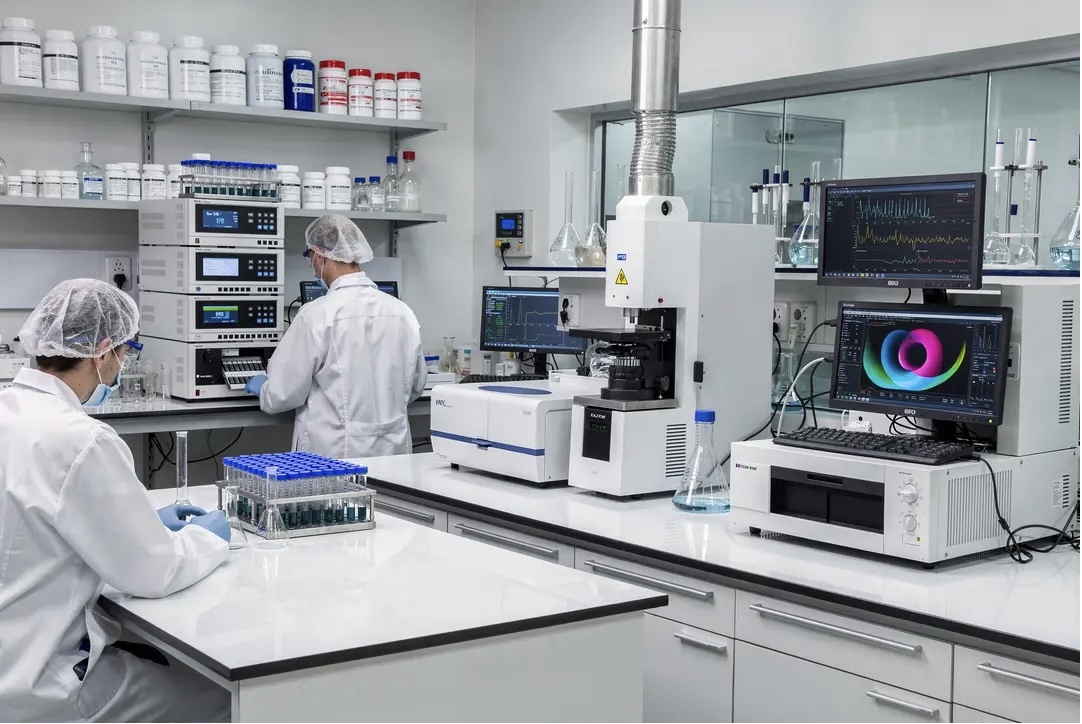
Laboratories generally use advance mass spectrometry methods to detect supplement adulterants. Developing extractions and analytical methods to detect a wide array of banned substances and performance enhancing drugs in dietary supplements is complex and requires validation to ISO 17025 standards to be done right.
The principal analytical technology remains a combination of liquid or gas chromatography coupled with mass spectrometry (LC-MS or GC-MS), which is required to detect different types of drugs across categories at detection levels necessary to protect against inadvertent positive drug tests. These techniques resolve and analyze compound molecular characteristics for precise identification.
Reference standards are maintained so that laboratories can verify analytical results against known substances, including synthetic drugs or designer analogs. Positive sample findings are compared to these references for accurate compound identification.
Testing panels must be comprehensive, as adulterants vary based on supplement type. Panels targeted toward anabolic agents will not necessarily detect stimulants or cognitive enhancers. Effective testing programs include extensive banned substance panels and align with requirements established by regulatory and anti-doping authorities, including the World Anti-Doping Agency (WADA), where applicable. BSCG tests for an industry leading testing menu of more than 450 banned substances and supplement adulterants.
Limitations of Supplement Adulterant Testing
No analytical testing program can guarantee detection of all possible adulterants present in dietary supplements. The supplement industry evolves rapidly, with continual emergence of designer substances not represented in current methods. A comprehensive panel may fail to detect compounds not yet characterized or widely used at the time of testing protocol development.
Detection depends on analytical scope and validation at the time of product assessment. Laboratories can only identify substances for which validated standards and methods exist. Novel or uncharacterized substances may escape detection pending new validation and reference addition.
Single-batch testing only characterizes that specific lot and does not represent full product uniformity, especially with variable manufacturing controls. Periodic and multiple-lot testing increases detection reliability compared to single-sample analysis.
Combining analytical testing with other elements, such as supplier qualification, production auditing, and regulatory review, increases risk mitigation. BSCG certifications include GMP compliance reviews, verification of quality control testing, and screening for banned substances and supplement adulterants maximizing protection for consumers and drug tested professionals and athletes.
BSCG's Approach to Supplement Adulterant Testing
BSCG third party certification programs apply over 25 years of anti-doping and sport drug testing expertise to supplement certification and analytical quality control to test for supplement adulterants. The laboratory methodology follows the same analytical standards as those used in regulated Olympic and professional sports drug screening, with adaptation for dietary supplement matrices and compliance requirements.
The BSCG Certified Drug Free program requires testing of every finished product lot for over 450 banned substances, which include more than 400 compounds on the WADA Prohibited List, as well as 50 prescription, over-the-counter, and illicit substances. This testing menu reflects a broad banned substance scope comparable to other recognized third-party certification programs and includes substances specified by retail industry standards like Amazon.
Other programs include the BSCG Certified Quality program, that incorporates GMP compliance with annual testing for label claims, environmental contaminants and banned substances. The BSCG Certified CBD program focuses on quality control for hemp and CBD products and includes a GMP quality control compliance review with every lot tested for cannabinoid profile with use of a strict THC limit to protect against positive drug tests, and screening for more than 450 banned substances with environmental contaminant testing included on every tenth lot.
Testing panels are continuously updated to include newly identified designer substances and analogs, supporting ongoing detection of compounds not prevalent at the time of original certification.
Laboratory analysis is conducted under ISO 17025 accreditation using validated supplement and food matrix procedures. All test results undergo review by experienced analysts with anti-doping or analytical chemistry laboratory backgrounds.
Supplement certification from BSCG integrates Good Manufacturing Practice (GMP) audits, ingredient specification verification, and label claim testing within a comprehensive certification program, providing assessment of both adulteration and contamination risks and establishing compliance with quality standards like GMP.
Key Takeaways
- Supplement adulteration involves the undisclosed presence of controlled drugs, synthesized analogs, or banned substances that present risks to health, compliance, and anti-doping outcomes.
- Adulteration typically stems from intentional or negligent inclusion of active pharmaceutical agents, whereas contamination generally involves inadvertent impurities. Both adulteration and contamination can come from pharmaceutical drugs or banned substances in sport.
- Frequently detected adulterants include synthetic stimulants, anabolic substances, weight-loss medications, and erectile dysfunction drugs, with detection rates ranging from 10% to 30% in certain supplement categories.
- Laboratories rely on advanced analytical technologies such as mass spectrometry and extensive screening panels for adulterant detection, though some novel compounds may remain undetected.
- Testing programs serve as an essential risk mitigation layer yet should function within an overarching system of compliance that incorporates supplier and manufacturing oversight.
- Risk control strategies require a combination of wide-ranging testing panels, surveillance for emerging substances, and integration with GMP auditing and ingredient authentication.
Frequently Asked Questions
What is supplement adulteration?
Supplement adulteration defines the presence of undeclared substances in a dietary supplement, which includes unlisted pharmaceutical drugs, investigational research chemicals, or banned substances in sport.
How is adulteration different from contamination?
Adulteration arises from deliberate or negligent inclusion of active agents meant to alter supplement effects, while contamination results from unintentional exposure to substances such as pesticides or heavy metals or even drugs and banned substances.
What is supplement adulterant testing?
Supplement adulterant testing is an analytical evaluation to identify undeclared or prohibited substances within dietary supplements using methods including mass spectrometry and broad-spectrum screening panels.
Are adulterated supplements common?
Published evidence estimates that between 10% and 30% of dietary supplements in certain categories, such as weight loss, muscle building, and sexual enhancement, contain prohibited substances.
Can supplement adulterant testing guarantee safety?
No laboratory procedure provides definitive assurance that all possible adulterants are detected, as new designer drugs and synthetic analogs may emerge, however, third party certification that includes broad screening for banned substances offers excellent protection to athletes, military service members, and first responders subject to strict anti-doping protocols. Effective certification programs include ongoing analytical monitoring for supplement adulterants, evaluation for GMP compliance and supplier qualification, and verification of ongoing testing for label claims and contaminants.
Why do manufacturers adulterate supplements?
Manufacturers adulterate supplements primarily due to pressures related to market expectations, cost efficiency, supply chain complexity, and insufficient regulatory enforcement, which can allow adulterated products to persist following official action.
Stay Informed and Look to Certification to Find Safer Supplements
The issue of supplement adulteration persists due to constrained regulatory oversight and the continuous introduction of new designer compounds that aim to thwart the regulations. All stakeholders—brands, distributors, and consumers—should implement systematic and evidence-based practices to ascertain product composition.
Supplement adulterant testing forms a core risk control measure, but is most effective when included in programs that incorporate manufacturing audits, ingredient verification, and monitoring for novel substances. Analytical testing panels must be updated regularly in response to changes in the supplement market or additions to the banned substance lists used in sport or tactical drug testing programs.
Athletes, military personnel, and other drug-tested individuals face particular vulnerability to undisclosed contaminants, as inadvertent ingestion of a tainted supplement may result in career suspensions, loss of income, and other consequences. All consumers are at risk from undeclared pharmaceutical substances, particularly where interactions with other medications may arise.
Effective management of supplement adulteration risk depends on understanding both the capabilities and limitations of analytical testing. While no third party certification program eliminates all risk, rigorous adulterant testing, combined with manufacturing oversight, ingredient verification, and surveillance for emerging compounds, significantly improves protection against exposure to undeclared substances in dietary supplements.
CERTIFIED CLIENTS
Search by Lot, Product, Brand, Category, or Other Keyword.
Certified Drug Free
Certified Quality
Certified GMP
Certified CBD