Top 5 Lab-Tested Protein Powders for Athletes Reviewed for Banned Substances
Jan 08, 2026
Athletes selecting a protein powder must address the critical issues of hidden banned substances and contaminants. Manufacturing and labeling practices for supplements often do not meet uniform regulatory standards, which can result in products containing undeclared substances prohibited under anti-doping regulations. Documented cases have attributed a significant number of positive doping tests to the use of dietary supplements containing unlisted substances. Reliance on product labeling alone is insufficient for protection in doping hearings.
This article outlines the evaluation processes used to assess protein powders for the presence of banned substances and contamination risk. It reviews five widely used options according to publicly available testing and certification data. The inclusion of these products is solely informational and does not constitute endorsement.
What Athletes Need to Know About Lab-Tested Protein Powders
Protein powders for athletes present documented risks related to hidden banned substances, heavy metals, and inaccuracies in labeling. Independent laboratory evaluations may include banned substance screening, label verification, and environmental contaminant testing. Good Manufacturing Practice (GMP) compliance is also essential. This article explains these assessment criteria and presents comparative information for five protein powder options based on publicly verified sources.
The primary risk factors associated with protein powder use include the presence of undisclosed banned substances and pharmaceutical or designer drugs regulated in sport. Ingredient lists on supplement products do not always accurately reflect the substances present, as some substances are omitted or inadvertently introduced during production.
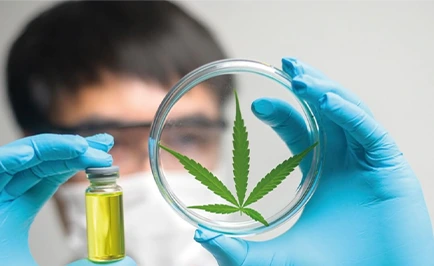
Contaminants such as heavy metals may present health hazards. Analyses have identified lead and other metals in protein powders, which can accumulate in body tissues over time. A Clean Label Project survey found that 77% of plant-based and 79% of organic protein powders exceeded California Proposition 65 thresholds for toxic metals. Consistent consumption of small quantities of heavy metals may lead to physiological accumulation over time. To ensure protection against heavy metal contamination it is important to do consistent testing using industry standard limits and methods like those from US Pharmacopeia, which are higher than Proposition 65 limits.
Prevalence and Use of Protein Powder for Athletes
Sport drug-testing programs operate under the principle of strict liability, holding athletes accountable for any prohibited substance detected in their system, regardless of intent or source. This standard significantly increases the risk of unintentional doping due to supplement contamination, requiring athletes to implement rigorous scrutiny of all substances ingested.
Use of dietary supplements among athletes remains prevalent with protein powder for athletes one of the most popular choices. For instance, 93 percent of elite New Zealand athletes report supplement use, with general U.S. adult supplement use rising from 62 percent in 2009 to 73 percent in 2013. Advising universal avoidance of supplements is neither feasible nor supported by available evidence that many supplements, when properly vetted, can support athlete goals while maintaining compliance with health and anti-doping requirements.
For brands and compliance teams, third-party certification communicates adherence to quality and transparency standards. The BSCG Certified Drug Free program applies defined procedural requirements for sport, military, and first responder markets by enabling consumers to identify products subjected to enhanced testing and verification standards for banned substances. The BSCG Certified Quality program is an annual testing solution that includes banned substances, label claims, contaminants and GMP audit verification. Open publication of testing parameters and detection limits supports industry credibility and informed decision making.
How Protein Powder for Athletes Is Evaluated for Safety
Comprehensive testing and evaluation of supplements, including protein powder for athletes, incorporates four main domains: banned substance screening, label accuracy, contaminant testing and GMP compliance. Certification programs include these elements in different ways, and some programs only focused on banned substance testing while others cover all three of these key elements.
• Banned substance screening. Testing for banned substances is not required in the supplement industry and so only premium brands that want to go above and beyond industry standards to protect athletes and consumers participate. Industry leaders like BSCG provide testing for over 450 drugs, including those listed on the World Anti-Doping Agency (WADA) Prohibited List and a selection of additional prescription, over-the-counter, and illicit drugs not banned in sport. To be protected against banned substance contamination requires that the lot you are using has been tested. The BSCG Certified Drug Free program tests every finished product lot to maximize protection for athletes and other drugs tested professionals, while the BSCG Certified Quality program screens for banned substances annually, as well as label claims, heavy metals, microbiological agents, and pesticides in plant based products.
• Label accuracy and ingredient legitimacy. Certification processes may require initial review of formula documentation to assess toxicology, banned substance concerns, and ingredient regulatory status. Assessment criteria focus on verifying that no ingredients are on prohibited lists and that all components comply with dietary supplement regulations. Some programs also verify testing is done properly on an ongoing basis or do the testing as part of the program.
• GMP and quality system review. Manufacturing facilities must demonstrate GMP compliance through routine third-party audits, conducted at minimum every two years, or via substantiation of regulatory adherence. Evaluation includes review of labels, marketing claims, quality control protocols, supplier standards, product specification and testing records, adverse event reporting, and recall procedures.
• Contaminant and heavy metal monitoring. Quality assurance may include testing for label claims, heavy metals, pesticides, microbiological agents, and comprehensive screening for banned substances. As part of GMP compliance many good quality brands will include consistent testing for heavy metals, microbiological agents, and sometimes pesticides. Verification of ongoing testing for contaminants is an essential element of quality control and is required under GMP.
Even with robust safeguards, zero-risk status cannot be guaranteed. Athletes must confirm the specific lot number of any supplement in current use is certified in the relevant program’s database to ensure the protection applies to protein powder for athletes or other supplements.
Top 5 Third Party Lab Tested Protein Powders Reviewed
The following five examples represent protein powders that have participated in the Certified Drug Free program and have committed to testing every lot for banned substances. Each has completed testing and verification according to the outlined framework. Inclusion in this list does not constitute endorsement or recommendation, but it does represent that these brands have gone above and beyond industry standards to test for a comprehensive list of banned substances to protect athletes, military service members, first responders and other drug tested professionals for the risk of inadvertent positive drug test. Testing scope and certification status may vary by product and production lot, check the BSCG database for current status.
#1 – Ambrosia Collective Planta Protein
The Ambrosia Collective is a solution based company founded on a very unique and purposeful concept known as bio-hacking. Ambrosia Collective has all products in the line in the BSCG Certified Drug Free program with one product in the protein supplement category, Planta Protein available in multiple flavors. Every lot is tested in the Certified Drug Free program and more than 30 Planta Protein lots were tested in 2025.
Program protocols for these certified lots include lot-level testing for over 450 banned substances, annual verification of label claims and contaminant testing, as well as an initial audit of GMP and process controls. This demonstrates that plant-based protein powders can achieve lot-by-lot certification, including assessments for ingredient integrity and contaminants.
#2 – Haleo Big Whey Straight
Haleo, one of Japan’s premium supplement brands, has many products in the BSCG Certified Drug Free program including Big Whey Straight, which has several finished product lots, including 2023.09 A and 2025.05A, with corresponding report dates in 2023 and 2024.
All lots are required to be tested for more than 450 banned substances, with annual verification of GMP conformance and required quality control testing verified annually. This helps ensure that Haleo's whey-based protein powders are free of contaminants like banned substances or heavy metals.
#3 – Herbalife 24 Rebuild Strength (Chocolate) and Formula 1 Sport (Vanilla)
Herbalife 24 is one of the world's largest athlete focused supplement brands. Herbalife 24 Rebuild Strength (Chocolate) and Formula 1 Sport (Vanilla) have numerous lots that have been tested under the BSCG Certified Drug Free program along with many other Herbalife 24 formulas. These two protein powders also incorporate other ingredients like vitamins, minerals, or amino acids to provide a complete package for athletes.
As with all BSCG Certified Drug Free products, every lot is screened for more than 450 banned substances in sport, military and first responder drug testing programs. A GMP compliance audit is required for manufacturers. Annual review of label claim and contaminant testing certificates of analyses is performed. Lot verification in the database is required for athlete protection.
#4 – The Func Lab Whey Protein Isolate, Whey Protein Concentrate, and Plant Protein
The Func Lab is an up and coming Indian supplement brand that has a heavy focus on protein powders. Products include Whey Protein Isolate, Whey Protein Concentrate, and Plant Protein available in multiple flavors with multiple lots certified in 2025, the year The Func Lab joined the BSCG Certified Drug Free program.
Each certified lot undergoes screening for more than 450 banned substances, with annual verification of label and contaminant specifications and GMP audit and a initial quality control and compliance assessment. Lot numbers can be verified in the BSCG database.
#5 – Buff Chick Buff Whey Protein and Buff Clear Protein
Buff Chick provides third-party tested supplements designed for women's strength and performance and is one of the leading sports nutrition brands for female athletes. Buff Chick’s Buff Whey Protein and Buff Clear Protein have multiple flavors all of which are participating in the BSCG Certified Drug Free program, along with all the formulas Buff Chick makes. Many lots of Buff Chick products are certified annually ensuring clean protein powder options formulated for women and female athletes.
BSCG Certified Drug Free certification includes full banned substance screening for 450 performance enhancing drugs banned by WADA, professional sports like the NBA, NFL, MLB or NHL, and annual assessments of label and contaminant testing and GMP audit status of manufacturers. A complete initial quality control and GMP compliance audit is also conducted. Only products and lots formally listed in the Certified Drug Free database have received certification and verification.
Understanding Certifications for Protein Powders
Third-party banned substance certifications are integral for athletes, military personnel, and first responders subject to mandated drug testing. The risk of hidden drug contamination in supplements underscores the need for such certification. Beyond anti-doping, third-party programs assess manufacturing quality, and some also include verification of label claim and environmental contaminant testing.
Comparison of relevant certification programs, including BSCG Certified Drug Free and BSCG Certified Quality, NSF Certified for Sport, Informed Sport and Informed Choice, HASTA, and Cologne List, involves analysis of technical and procedural parameters.
- Testing menu scope. Testing for a broad array of banned substances provides greater risk mitigation. For example, BSCG screens for over 450 drugs, including more than 400 substances on the WADA Prohibited List. Other providers cover up to 300 substances.
- Laboratory quality (ISO 17025). Accredited laboratories (ISO 17025) must use validated methods for dietary supplement testing to ensure reliability and minimize the possibility of inadvertent doping violations. All leading programs perform testing in ISO 17025 accredited labs.
- Batch testing frequency and lot verification. Frequency of testing directly determines whether certification applies to the specific lot in possession. Verification of lot numbers against public databases is required for assurance. Not all certification programs test every individual lot.
- Detection levels and thresholds. Detection capabilities should reach low parts per billion (ng/g) levels in order to provide adequate security to athletes, military service members, or first responders. Programs establishing maximum allowable levels for performance-enhancing drug residues should rely on scientific justification and transparent risk assessment methodologies. Some programs, like BSCG, are transparent and provide the details publicly while others do not.
- Audit depth and ingredient toxicology. Initial audits should review GMP compliance as well as reviewing formulas for ingredient toxicology, banned substances, and non-compliant or illegal ingredients before products enter certification.
Leading programs such as BSCG Certified Drug Free and Certified Quality, Cologne List, Informed Sport and Informed Choice, and NSF Certified for Sport maintain publicly accessible databases of certified products and lots, providing reference points for athletes and professionals.
How BSCG Evaluates Protein Powders for Risk
Protein powders entering the Certified Drug Free program are subjected to structured evaluation and control protocols:
- Review of brand and product documentation. Assessment includes program agreements, product labeling and supplement facts, formula details, supplier information, manufacturing facility credentials, and validation of GMP certification or equivalent qualifying standards.
- Ingredient and toxicology assessment. All ingredients undergo evaluation for compliance with anti-doping requirements, dietary supplement regulations, and potential toxicology concerns.
- Quality control and GMP review. Program reviews supplier and product specification sheets, specification sheets, certificates of analysis, master manufacturing records, batch production records, and operating procedures related to recalls and adverse event reporting.
- Multilayered banned substance screening. In the BSCG Certified Drug Free program each lot is tested against a menu of more than 450 prohibited drugs, with periodic random checks as warranted. In the BSCG Certified Quality program banned substance screening is done annually, along with label claim and contaminant testing.
- Verification of label accuracy and contaminants. Annual verification of product specifications and contaminant limits is often performed by qualified testing and certification providers. The BSCG Certified Quality and Certified CBD programs include routine testing for heavy metals, pesticides, and microbiological agents along with label claims. The Certified Drug Free program verifies that proper label claims and contaminant testing is done annually.
- Ongoing monitoring and database listing. Certified lots are entered into a public database, where records are maintained for four years. Reports are available so that consumers and athletes can verify the details included in the testing.
Certification provides a way for consumers and drug tested professionals like athletes, military service members, or first responders to verify the quality of supplement and other consumer products and protect themselves from potential contamination that could lead to positive drug tests or health concerns. Certification substantially reduces, but does not eliminate, the risk of unintentional doping or contaminants in protein powder supplements.
Key Takeaways
1. Unintentional doping risk is substantiated by available evidence. Documented use of contaminated supplements remains a significant contributor to positive doping tests; anti-doping protocols enforce strict athlete liability if someone pops positive.
2. Heavy metal contamination in protein powders is a quantifiable concern. Empirical surveys reveal that a plant-based and organic powders sampled may have high levels of heavy metals that can exceed established thresholds like California Prop 65, with potential for long-term accumulation. Always look to industry standard limits like USP <2232>.
3. Third-party certification increases assurance of product quality and compliance. Programs testing at the lot level for a comprehensive banned substance menu and verification of GMP and contaminant controls offer higher standards of protection.
4. No certification can guarantee absolute safety; independent lot verification remains necessary. Athletes are advised to confirm lot certification status via official databases to ensure compliance and minimize risk.
5. Several reputable certification programs are available. BSCG Certified Drug Free and BSCG Certified Quality, Cologne List, Informed Sport and Informed Choice, and NSF Certified for Sport provide athletes with reliable means to confirm supplement compliance with anti-doping protocols.
Frequently Asked Questions
Are all protein powders tested the same way?
No. Variations exist in frequency, testing menu, sensitivity, and transparency across certification programs. For instance, the Certified Drug Free program conducts comprehensive drug screening on every finished lot, whereas other programs may test at different intervals.
Does certification guarantee that a protein powder contains no banned substances?
No certification program can provide an absolute guarantee of banned substance absence. Third-party certification, however, represents a significant reduction in risk and programs that test every lot and have broad testing menus maximize the protection.
How often should a product be retested?
The Certified Drug Free program requires screening for performance enhancing drugs and other prescription, OTC and illicit drugs on every finished product lot with annual verification of GMP audit status and label claim and contaminant testing to meet specifications. The BSCG Certified Quality program tests annually for banned substances, label claims, and contaminants and also verifies GMP audit status. When it comes to banned substances it is vital to verify that a product lot has been tested if you want the protection to apply. For label claims and contaminant testing, which is a required component of GMP compliance, annual verification provides a spot check to ensure that the ongoing process is effective and meets product specifications.
How do different certifications compare?
Comparative analysis focuses on elements such as the scope of banned substance lists, laboratory accreditation status, testing and reporting frequency, detection thresholds, audit procedures, approach to label claims and contaminant testing, and transparency of published methodology.
Where can athletes find more details on testing for a specific protein powder?
Athletes and representatives should verify certification status and lot information using public third-party databases such as those maintained by BSCG, LGC, NSF, Cologne List or HASTA.
Moving Forward Safely with Protein Powder for Athletes
Athletes using protein powders must combine nutrition and training considerations with careful supplement selection informed by independently verified data. Informed, verified supplement use contributes to safety and compliance.
When supplement use is elected, the use of products tested and certified by experienced third-party organizations decreases the probability of inadvertent doping and exposure to contaminants. BSCG Certified Drug Free and Certified Quality, Cologne List, Informed Sport and Informed Choice, and NSF Certified for Sport maintain searchable databases of tested and certified products and lots in the marketplace.
Quality control remains critical even for certified products, as demonstrated by instances of heavy metal contamination when contaminant protocols are inadequate. Third-party certification according to recognized standards provides essential quality assurance and transparency. Documented evidence underscores the need for rigorous contaminant and banned substance monitoring in the protein powder category.
CERTIFIED CLIENTS
Search by Lot, Product, Brand, Category, or Other Keyword.
Certified Drug Free
Certified Quality
Certified GMP
Certified CBD