Trusted Third-Party Certification Providers for Supplement Testing
Apr 21, 2026
For supplement brands operating in regulated or drug-tested markets, third-party certification and testing that incorporates screening for banned substances on the WADA Prohibited List is an essential consideration. Third-party certification programs implement ongoing batch testing, make databases publicly accessible, and may be acknowledged by sport governing bodies. This post identifies some of the leading programs and the factors that differentiate them.
The Significance of Third-Party Supplement Testing
The FDA does not require dietary supplements to receive pre-market approval, placing the responsibility for product quality and safety on the manufacturer. Independent third-party certification and testing addresses this gap by providing external verification of label accuracy and contaminant exclusion.
Brands selling in drug-tested markets must observe heightened due diligence. Reports show a notable proportion of adverse findings in drug-testing programs result from supplement-related exposures and strict liability applies in cases of doping. Certification programs that verify every production lot maximize protection for brands, athletes, military service members, first responders, sporting authorities, anti-doping authorities, and others.
Some third-party certification programs offer more than just testing for banned substances by addressing label accuracy, environmental contaminant testing, GMP compliance, consumer trust, and retail or regulatory scrutiny. Certification programs apply a structured, repeatable process that one-time analytical tests cannot match.
Established Alternatives for Comprehensive Quality Assurance
Several organizations offer structured supplement certification programs with defined testing requirements, public product databases, and recognition by sports and regulatory bodies. Each program has specific procedures regarding scope, testing intervals, and jurisdictional presence. The following programs constitute primary options for supplement brands that require formalized third-party verification. A comparison chart is available for review.
BSCG
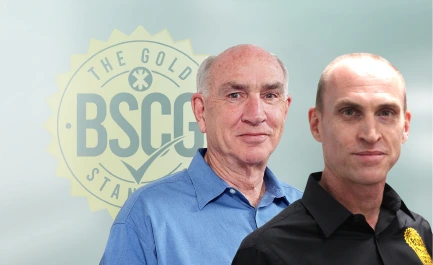
BSCG (Banned Substances Control Group) was built on a foundation of more than 25 years in Olympic drug testing. It was created by legendary anti-doping guru Dr. Don Catlin, his son Oliver Catlin, and respected attorney Ryan Connolly. The BSCG Certified Drug Free includes anti-doping protection, verification of product quality, and GMP compliance. The program tests every finished product lot against a panel of over 450 substances, including 400+ drugs on the WADA Prohibited List and additional prescription, over-the-counter, and illicit drugs not banned in sport that have been targeted by the FDA or are required to be tested for as part of retail compliance requirements like those on Amazon dietary supplement seller central. Detection levels are in the parts per billion range.
The program also reviews GMP compliance, supplier qualification, product specifications, and testing for label claims, and environmental contaminants. BSCG publishes its testing menu, detection limits, and reporting thresholds, ensuring transparency. Agencies and entities such as UFC, NFL, LPGA, the U.S. Department of Defense Operation Supplement Safety (OPSS), and the International Testing Agency recognize the program.
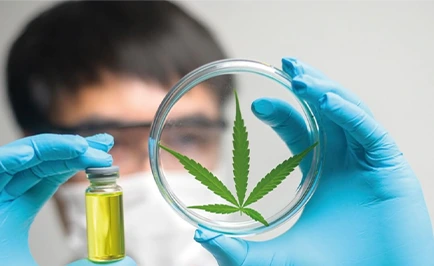
BSCG offers additional services, including Certified Quality for retail and consumer assurance, as well as Certified CBD for products requiring cannabinoid profile verification and THC dose limits in addition to ongoing testing for banned substances and GMP compliance evaluation.
NSF Certified for Sport®
NSF Certified for Sport® screens supplements for more than 290 substances prohibited by leading athletic organizations. This includes stimulants, narcotics, steroids, diuretics, and masking agents. Products in this program must participate in the NSF Contents Certified program, which covers label claims and contaminants that are tested according to the ANSI 173 standard, and the certification process also requires GMP facility audits by NSF.
The program is recognized by USADA, MLB, National Hockey League, Canadian Football League, PGA, NASCAR, IRONMAN, and other entities. Testing frequency varies by product, and in some cases, only one or two lots are certified, whereas in other cases more frequent testing or testing of every lot is conducted based on brand or NSF discretion. Detection levels are generally in the part per billion range with allowable levels per serving used to evaluate the significance of analytical findings. Verification of lot-specific certification in the public database is required for due diligence.
Informed Sport and Informed Choice
Informed Sport, managed by LGC in the UK, requires batch testing of every lot for over 285 WADA-prohibited substances using accredited methods at low detection thresholds. Certified batches are documented in a searchable database. The program has recognition in Europe, Australia, and other regions, including acknowledgment by UK Anti-Doping, UFC, International Testing Agency, NFL, CrossFit and a variety of anti-doping organizations and other sporting groups.
Informed Choice—a related program—uses monthly blind sampling and addresses general supplement consumers, rather than focusing solely on athletes subject to drug testing. Both programs are described in BSCG's supplement testing overview.
Both programs include an initial quality control and compliance review. This includes review of quality systems and audits as well as procedures at manufacturing facilities that is done through a document audit.
Other Programs
The Cologne List (Kölner Liste) functions as a German screening initiative, where manufacturers submit products for analysis focused on steroids and stimulants from the WADA Prohibited List, with screening for approximately 150 substances. The program tests annually, not batch-by-batch, and serves as a point-in-time assessment. It is recognized principally within German and Austrian sport authorities.
HASTA® (Human and Supplement Testing Australia) assesses over 250 banned substances and requires testing of every product lot. The program operates primarily in Australia and New Zealand. The Australian Institute of Sport, International Testing Agency, and UFC recognize HASTA®. Certified products are accessible in a searchable public database.
Participation in a certification program does not equate to endorsement of the listed products. Each program enforces specific acceptance criteria, and brands should independently review those requirements. Certifications are not a guarantee that products are free of banned but offer significant protection against hidden banned substances and inadvertent positive drug tests.
Evaluating Factors in Choosing a Certification Partner
The banned substance panel size, testing frequency, laboratory accreditation, and transparency are major evaluation criteria for third-party certification. A comprehensive banned substance panel reduces the risk of undetected contaminants. Lot-by-lot testing ensures verification applies to the individual lots released to market. A single one time test does not offer ongoing protection.
ISO/IEC 17025 laboratory accreditation is a baseline requirement. Effective detection should operate in the low parts-per-billion range to identify trace contaminants that could influence drug testing outcomes. Programs that openly publish testing menus and reporting thresholds enable stakeholders to accurately evaluate the extent of analysis and the protection offered.
The depth of GMP audits also varies. Some certification programs conduct comprehensive quality control assessments, including supplier qualification, material controls, and recall procedures. Others concentrate exclusively on finished product testing. In regulated markets, a wider scope enhances the overall quality control and compliance protection offered in third-party certification.
Cost is an important factor as is the overall efficiency of the testing provided. NSF is significantly more expensive than some other programs and turnaround times may be longer as well. BSCG offers an all inclusive testing model, meaning that initial banned substance screening and confirmation and quantification of banned substance findings is done for one price within a 10-15 business day turnaround. NSF and Informed Sport and Choice require additional cost and extended turnaround times in the event a banned substance is detected. These can be important factors in decision making.
Frequently Asked Questions
Do certification programs guarantee a product is free of banned substances?
No certification program guarantees a product is entirely free of banned substances. Certification substantially reduces risk but cannot eliminate it in totality.
How often are supplements tested under these programs?
Testing frequency is program dependent. BSCG Certified Drug Free, Informed Sport, and HASTA® test every production lot. Informed Choice uses monthly blind sampling. NSF Certified for Sport® frequency of testing varies by product. The Cologne List tests products annually.
Which programs are recognized by sport governing bodies?
BSCG, NSF Certified for Sport®, Informed Sport, HASTA® and Cologne List have recognition from various sports governing bodies and anti-doping organizations, with specific endorsements varying by region and program. BSCG, NSF, and Informed Sport operate internationally while HASTA and Cologne List generally serve more regional markets.
Does a supplement need to be certified to be sold legally?
Certification is voluntary in most jurisdictions. However, for brands distributing products in drug-tested sports, military, or designated retail channels, certification may be required or strongly expected by relevant organizations and buyers.
Key Considerations for Future Testing Partnerships
Brands requiring ongoing compliance records, acceptance by sports governing entities, or public lot-specific documentation achieve these objectives through structured certification programs. Contract laboratory testing alone does not fulfill those requirements.
The certification programs discussed—BSCG, NSF Certified for Sport®, Informed Sport, Informed Choice, HASTA®, and the Cologne List—support supplement verification through specific operational models. Decision-makers should evaluate available programs based on banned substance panel size, testing intervals, audit comprehensiveness, and recognition requirements applicable to their markets of interest. BSCG, NSF, and Informed are all part of the Amazon Compliance Fast Track in the U.S., which can benefit brands with efficient entry into that dietary supplement retail market.
Selection should reflect product distribution channels, consumer demographics, and compliance obligations relevant to each brand. Reviewing published program criteria and data transparency prior to engagement supports informed quality management and regulatory strategy.
CERTIFIED CLIENTS
Search by Lot, Product, Brand, Category, or Other Keyword.
Certified Drug Free
Certified Quality
Certified GMP
Certified CBD