USADA's Official Recommendations for Third Party Supplement Certification
Nov 11, 2026
Athletes are responsible for every substance found in their samples, including substances that entered through a contaminated supplement. In 2026, USADA broadened its supplement guidance to address that risk. The agency now recommends five third-party certification programs instead of one, and BSCG Certified Drug Free is among them.
The update appears in USADA's official guidance on reducing supplement risk and third-party testing recommendations. USADA advises athletes who choose to use supplements to select products certified by one of these programs:
- Banned Substances Control Group (BSCG) Certified Drug Free
- Eurofins Clean Sport
- Informed Sport (not Informed Choice)
- NSF Certified for Sport
- TruShield Certified
USADA states that these programs reduce the risk of a positive test but do not remove it. The agency does not approve or endorse any individual supplement.
What Is USADA?
The U.S. Anti-Doping Agency (USADA) is the independent, nonprofit national anti-doping organization for Olympic, Paralympic, Pan American, and Parapan American sport in the United States. It began operations in 2000. It conducts athlete drug testing, manages results, supports scientific research, and educates athletes on topics that include dietary supplements.
Why USADA Recommends Third-Party Supplement Testing
USADA recommends third-party supplement testing because no regulator checks a supplement's contents before sale, while anti-doping rules hold the athlete accountable for whatever a product contains. Certification places an independent check between those two facts.
Supplements Reach the Market Without Pre-Approval
The FDA states that it does not have the authority to approve dietary supplements for safety and effectiveness before they are marketed. A limited exception applies to new dietary ingredients, which require a 75-day premarket notification with safety information. USADA describes this system as post-market regulation: no regulatory body confirms label accuracy or safety before a product reaches consumers.
Strict Liability Applies to Athletes
The USADA Protocol states that it is each athlete's personal duty to ensure that no prohibited substance enters the body. A violation does not require proof of intent, fault, or negligence. An athlete who tests positive from a contaminated product can still face a sanction, although a proven contamination source may reduce its length. In one example, USADA announced that four athletes accepted six-month sanctions after trace ostarine findings consistent with supplement contamination.
Published Data on Contamination
Published analyses indicate that contamination is not rare in certain supplement categories:
- A 2022 review of published studies concluded that more than 28% of the supplements analyzed posed a potential risk of unintentional doping.
- An earlier review of prohibited contaminants found that weight-loss and muscle-building products carry greater risk, and it named third-party-certified products as a way to lower that risk.
- An IOC-commissioned study of 634 non-hormonal supplements from 13 countries found that 14.8% contained at least one anabolic agent, as summarized in the BSCG supplement information resource.
These figures describe the products sampled in each study. They are not a contamination rate for all supplements.
Health Hazards Beyond a Positive Test
USADA frames its guidance around two outcomes: testing positive and experiencing adverse health effects. Undeclared stimulants, anabolic agents, and prescription drugs can affect health whether or not the consumer is drug tested. The USADA High Risk List tracks products with known concerns, although USADA notes that the list is not exhaustive.
Why USADA Expanded Its List in 2026
USADA first named a single program after a 2018 consensus paper on the essential features of third-party certification. That paper called for accredited laboratories, documented standards, freedom from conflicts of interest, and testing for substances prohibited in sport. At that time, USADA recommended NSF Certified for Sport.
In 2026, USADA completed a new review and added four programs. The agency reports that the review also required each program to meet these conditions:
- No certified product has caused a positive test in an athlete.
- The certifier has experience supporting anti-doping investigations and keeps the records and samples needed to do so.
- Every lot of a certified product is tested, which USADA prefers, or certified lots are clearly identified so athletes can verify them.
- The program certifies, or would consider certifying, other consumer products such as creams and massage oils.
USADA also cites athlete surveys showing demand for more certified products, including products available to U.S. athletes who live, train, and compete abroad.
Comparing Leading Third-Party Certification Programs: BSCG, NSF Certified for Sport, and Informed Sport
USADA does not rank the five recommended programs, and this overview does not rank them either. USADA states that all five meet the core intent of the 2018 criteria, although each program addresses the criteria in different ways. There are some key elements that set programs apart.
What to Look for in Sports Supplement Testing
Programs that offer third-party certification for drug-tested athletes generally evaluate four areas:
- Prohibited substance screen: the number and type of banned substances tested, and the laboratory's accreditation.
- Batch or lot testing: whether every production lot is tested, and how the athlete can confirm a specific lot.
- Facility review: whether the manufacturing site is audited against Good Manufacturing Practice (GMP) requirements.
- Label accuracy: whether label claims and contaminant limits are verified as part of the certification process.
How Three of the Programs Describe Their Scope
The summaries below draw on each program's own published statements. Screen sizes are not directly comparable, because programs count and group substances differently and detection limits vary by compound and product type.
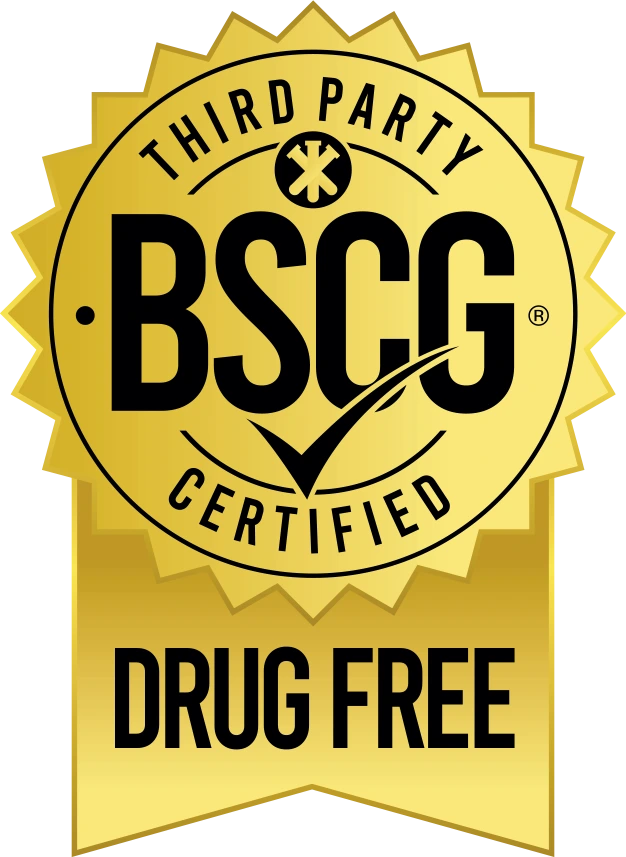
- BSCG Certified Drug Free: BSCG states that its Certified Drug Free program screens for more than 450 drugs, including over 400 on the WADA Prohibited List. Every finished product lot is tested. Manufacturers must be audited for GMP by BSCG or another qualified third party at least every two years, or otherwise show compliance in the region of sale. Label claim and contaminant specifications are verified annually.
- NSF Certified for Sport: NSF states that its Certified for Sport program verifies that products do not contain any of 290 banned substances, that contents match the label, and that contaminants are not at unsafe levels. NSF states that it audits the GMP-certified manufacturing facility annually or bi-annually, depending on the facility's grade.
- Informed Sport testing: Informed Sport states that every batch is tested for more than 285 substances prohibited in sport before release. The program reviews manufacturing quality systems and buys certified products at retail for blind testing.
Eurofins Clean Sport and TruShield Certified complete the USADA list. Each publishes its own program requirements and certified product listings.
Check the Program Name, Not Only the Certifier
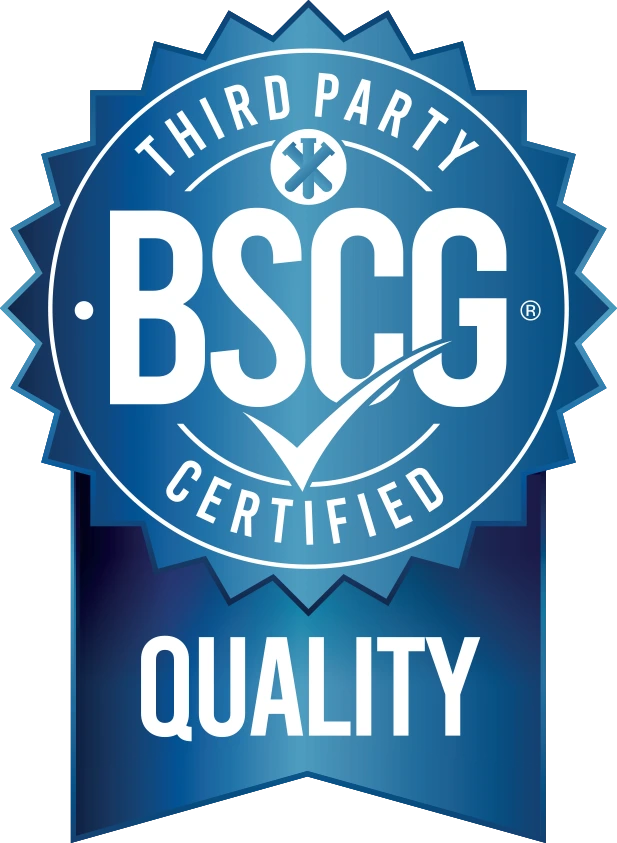
USADA points out that every recommended certifier runs more than one program, and only the banned substance program applies to drug-tested athletes. Informed Sport qualifies, while Informed Choice does not. In the same way, BSCG states that its Certified Quality program is not designed for athlete, military, or first responder protection. USADA identifies the BSCG program for drug-tested athletes by its Drug Free name.
USADA's Steps Before Buying a Supplement
- Identify a legitimate need and weigh the benefits against the risks that come with all supplements.
- Search the database or mobile app of a recommended program for a certified product that meets that need.
- When buying online, follow the certifier's purchasing instructions or contact the company to buy a certified lot.
- When buying in a store, look for a recommended seal, then confirm the lot number in the certifier's database or app.
The BSCG Approach to Third-Party Protection
BSCG Certified Drug Free combines every-lot banned substance testing with quality and manufacturing checks. The program serves two groups: athletes who need to verify a specific lot, and supplement brands that need documented evidence of control over banned substance risk.
Testing Scope and Method
- Screen: more than 450 drugs, made up of over 400 on the WADA Prohibited List and more than 50 prescription, over-the-counter, and illicit drugs.
- Published menu: the BSCG banned substance testing menu lists each compound and the reporting rules. It also states that the menu covers all drugs in Amazon's dietary supplement testing requirements.
- Laboratories: BSCG states that all testing takes place in ISO 17025 accredited laboratories using methods validated for supplements.
- Surveillance: BSCG may buy certified products off the shelf and test them at any time.
Lot Verification for Athletes
The BSCG Certified Drug Free database lists certified products, ingredients, and lot numbers, and it holds four years of data. BSCG states the rule plainly: a lot that is not listed has not been tested. This matches USADA's instruction to confirm the lot, not only the seal.
Anti-Doping Background
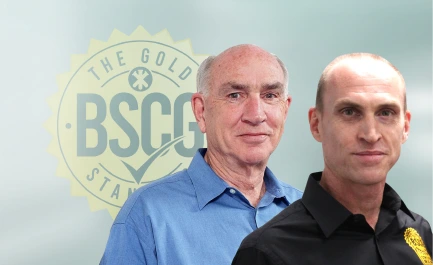
BSCG was founded in 2004 by Dr. Don Catlin, Oliver Catlin, and Ryan Connolly. Dr. Catlin founded the UCLA Olympic Analytical Laboratory in 1982, the first sports anti-doping laboratory in the United States, and directed it for 25 years. BSCG also reports that Dr. Catlin helped create the independent agency that became USADA in 2000.
Other organizations also list the program. BSCG reports that the NFL's 2025 Supplements Memo names BSCG as one of three third-party certification providers, and that the Department of Defense's Operation Supplement Safety directs service members to it. Further listings appear on the BSCG global recognition page. These listings recognize the certification program and are not endorsements of individual products.
What Certified Brands Can and Cannot Claim
USADA sets a clear boundary for supplement companies. A brand may state that its product is certified by a third-party program highlighted on USADA's Reduce Your Risk page. USADA states that describing any product as USADA or WADA approved or recommended would be false advertising.
For brands, the Certified Drug Free certification process runs through five stages: agreements and product information, ingredient and toxicology review, quality control review, lot testing, and database listing.
Key Takeaways and Next Steps
USADA's 2026 guidance gives athletes more certified options without changing the underlying rules. Strict liability still applies, and USADA is explicit that certification lowers risk without removing it. BSCG makes the same point: no program is a 100% guarantee that a product is free of banned substances.
- For athletes: choose only the sport-specific program from each certifier, and confirm the lot number in that program's database before use. Lots can be checked in the BSCG Certified Drug Free database.
- For supplement companies: certification under a USADA-recommended program can be stated accurately, but USADA approval cannot be claimed. Program requirements for brands are set out on the BSCG Get Certified page.
- For both: USADA plans to evaluate country-specific certification programs in 2027, so the recommended list may change again.
Frequently Asked Questions
Does USADA Approve or Endorse Dietary Supplements?
No. USADA states that it does not approve or endorse any dietary supplement or supplement company. It recommends certification programs, not products. USADA adds that third-party certification is not FDA approval or WADA approval, because neither body approves supplements before sale.
Which Third-Party Certification Programs Does the U.S. Anti-Doping Agency Recommend?
As of its 2026 review, USADA recommends five programs: BSCG Certified Drug Free, Eurofins Clean Sport, Informed Sport, NSF Certified for Sport, and TruShield Certified. Before 2026, USADA recommended only NSF Certified for Sport.
Can an Athlete Still Test Positive After Using a Certified Supplement?
The risk is lower but not zero. USADA reports that no athlete has tested positive from a product certified by the recommended programs. It also states that none of the programs eliminates the risk entirely, and that all supplement use is at the athlete's own risk.
Are Athletes Banned From Using Uncertified Supplements?
No. USADA states that athletes may use any supplement they choose. Without independent evaluation, however, the athlete has only the company's own advertising to rely on, and strict liability still applies to any positive test.
How Does an Athlete Confirm That a Specific Lot Is Certified?
Find the lot number on the package and search for it in the certifier's database or app. A seal on the label is not enough by itself, because certification applies to tested lots. In the BSCG database, a lot that does not appear has not been tested.
Do Sports Supplement Testing Programs Certify Products Other Than Supplements?
BSCG does and some other programs do as well. USADA notes that several programs certify items such as topical creams, massage oils, hemp creams, and cleansers. The same rule applies to these products: confirm that the lot in hand appears in the program's database.
CERTIFIED CLIENTS
Search by Lot, Product, Brand, Category, or Other Keyword.
Certified Drug Free
Certified Quality
Certified GMP
Certified CBD