GHK-Cu Peptide: Benefits, Safety, Legal Status, and Research
Jul 31, 2026
GHK-Cu is a copper-binding tripeptide primarily studied for its potential role in skin remodeling, wound healing, and hair-related biological processes. The majority of available research derives from laboratory experiments, animal models, cosmetic analyses, and a restricted set of human studies. Topical copper-peptide cosmetics differ from compounded injectable GHK-Cu, which lacks FDA approval and comprehensive human safety data.
Online interest in GHK-Cu has progressed at a faster rate than human-focused evidence can support. Marketing frequently conflates cell-based, animal, and cosmetic findings into comprehensive claims. Critical factors—including route of administration, product source, regulatory status, and evidence quality—determine how claims should be interpreted.
This review distinguishes between the defined properties of GHK-Cu and the marketed claims, outlining clear differences between topical serums, oral capsules, and compounded injectables.
What Is GHK-Cu?
GHK-Cu is the copper-bound form of the tripeptide glycyl-L-histidyl-L-lysine. GHK is present in human plasma and other body fluids and binds copper ions to form a copper complex. Scientific studies primarily investigate its roles in skin biology, tissue repair, and cell signaling.
GHK-Cu (glycyl-L-histidyl-L-lysine copper complex) was discovered in 1973 by biochemist Dr. Loren Pickart, who found that plasma from young donors was far more effective than plasma from older donors at boosting liver cell protein synthesis. Fractionating the plasma, he isolated the tripeptide responsible — a chain of glycine, histidine, and lysine with a strong natural affinity for copper, forming the GHK-Cu complex (findings published in Biochemical and Biophysical Research Communications). GHK-Cu occurs naturally in plasma, saliva, and urine, with levels that appear to decline with age.
Through the late 1970s–80s, Pickart's follow-up research linked the peptide to wound healing, collagen production, and anti-inflammatory activity. Copper peptides entered commercial skincare in the late 1980s, and by the early 2000s GHK-Cu had become a staple "anti-aging" ingredient in the cosmetics industry — which remains its main commercial use today.
On the pharmaceutical side, GHK-Cu has never been FDA-approved as a therapeutic drug, despite decades of preclinical interest — including a 2012 study flagging it as a top candidate for reversing gene-expression changes tied to emphysema in COPD. Critics note the lack of large-scale clinical trials, so it's stayed mostly in cosmeceutical rather than regulated-drug territory.
GHK-Cu does not function as growth hormone, nor does it serve as a growth hormone secretagogue or a growth hormone-releasing peptide. Peptide classification pertains to chemical structure only. This distinction has been established in previous peptide reviews, such as the BPC-157 review.
What Does This Copper Peptide Do in the Body?
Current research is investigating GHK-Cu's roles in copper binding, cell signaling, matrix remodeling, collagen-related pathways, and repair mechanisms.
The literature describes mechanisms such as:
- Copper transport and binding in cells
- Cell signaling and gene expression alterations
- Extracellular matrix remodeling
- Collagen and elastin pathway involvement
- Modulation of inflammation and oxidative stress
- Tissue repair signaling
Pickart and Margolina report that GHK-Cu may modulate expression of numerous human genes, as evidenced by gene-expression and cell data (Int. J. Mol. Sci. 2018). Mechanistic findings in cell or animal models do not equate to demonstrated clinical benefits in people.
What Are the Proposed Benefits?
GHK-Cu is credited with a fairly wide range of proposed benefits, mostly from preclinical and dermatological research rather than large human trials. The most studied benefits are skin related. It's said to stimulate collagen and elastin production, improve skin firmness and elasticity, reduce fine lines, and speed wound healing by promoting tissue repair and new blood vessel formation. It's also promoted for slowing hair thinning. Beyond skin and hair, proponents point to antioxidant and anti-inflammatory effects, and more recent gene-expression research (including the 2012 COPD/emphysema study mentioned earlier) has explored it as a broader "tissue remodeling" agent that might help reverse patterns of cellular damage or aging. It's also been studied in a more exploratory way for nerve regeneration, bone health, and even as a potential modulator of stem cell activity or cancer-related pathways. These claims come from in vitro or animal studies, small trials, or Pickart's own body of work rather than large independent human trials, so they're best treated as promising but not firmly established.
Skin appearance and remodeling
Topical copper-peptide products are commonly marketed for skin texture, firmness, and appearance. Supporting evidence consists of a combination of cosmetic research, laboratory experiments, and limited human studies.
Wound and tissue healing
The body of evidence for wound-healing effects largely stems from cell and animal studies, including scald wound research in mice and wound studies in rabbits. Findings from animal or cell models are not transferable to human clinical contexts. The available evidence does not support the use of GHK-Cu for open wounds, surgical sites, or musculoskeletal injuries in humans.
Hair growth and hair-follicle support
Support for hair-related benefits is limited. A widely cited study on copper-peptides and hair used AHK-Cu, not GHK-Cu. That study investigated AHK-Cu in vitro on human hair follicles and dermal papilla cells, not GHK-Cu. Direct evidence for GHK-Cu in promoting hair regrowth in humans remains limited and indirect.
Inflammation and oxidative stress
Laboratory and preclinical studies have examined GHK-Cu in relation to inflammation and oxidative stress markers. Modulations detected in cell biomarkers do not confirm disease prevention, expedited recovery, or systemic benefit in human populations; these mechanisms remain under investigation.
Injury recovery and regenerative claims
Preclinical research informs many claims regarding recovery and regeneration. Human clinical evidence is not adequate to establish GHK-Cu as an effective recovery agent. Injectable products present additional regulatory, quality, and anti-doping considerations compared to topical serums.
How Strong Is the Evidence for GHK-Cu?
GHK-Cu demonstrates the strongest evidence for its roles in biological plausibility and in some topical cosmetic applications. Evidence supporting systemic, injectable, injury-recovery, or disease-modifying applications is limited. Most enthusiasm is based on laboratory and animal research or narrative reviews, rather than well-controlled human trials.
Evidence from laboratory research
In vitro research has focused on gene expression, collagen modulation, extracellular matrix biology, and effects on oxidative stress. Such studies generate hypotheses but do not provide proof of clinical outcomes, optimal dosing, or safety in humans.
Evidence from animal research
Animal experiments investigating wound healing and tissue effects justify continued research but do not determine human safety or efficacy. Physiological differences between species restrict the applicability of animal findings to humans; these results should be interpreted as preliminary.
Evidence from human and cosmetic studies
Human evidence is limited and includes mixed findings. A randomized clinical trial examined the effects of a topical GHK-Cu product following CO2 laser skin resurfacing. Blinded evaluations revealed no significant difference in erythema resolution, wrinkle improvement, or overall skin quality between treatment groups.
Participant satisfaction rates were higher among users of GHK-Cu, but subjective satisfaction does not equate to objective clinical benefit. Data from topical cosmetic use do not transfer directly to oral or injectable contexts.
How Do Topical, Oral, and Injectable Forms Differ?
Administration route affects exposure, regulatory oversight, evidentiary support, and product quality risks. Topical, oral, and injectable forms of GHK-Cu represent distinct product classes and should not be equated.
Topical cosmetic products
Copper-peptide topicals have the most established history of human exposure in cosmetic use. Cosmetic availability does not substantiate all claimed effects. U.S. FDA does not recognize cosmetics as treatments for diseases, wounds, injuries, or hair-loss conditions.
Oral capsules and liquid products
Oral GHK-Cu products are increasingly available. Peptide absorption, dosing, and measurable clinical benefits remain inadequately characterized for oral administration. Oral availability is expected to be poor based on available information. Status as a dietary supplement does not corroborate therapeutic claims.
Compounded injectable products
Compounded injectable GHK-Cu is not approved by the FDA. Human safety data is limited, and injectable products pose added risks regarding sterility, aggregation, immunogenicity, impurities, dosage accuracy, and identity. Injectable and topical forms are not equivalent.
Is GHK-Cu FDA Approved?
There is no FDA-approved injectable GHK-Cu drug. As of July 2026, non-injectable GHK-Cu is categorized under FDA's 503A Category 1, indicating ongoing evaluation. The FDA Pharmacy Compounding Advisory Committee met and recommended it be added to the 503A Bulk list. The FDA must now decide whether to allow it to be legally compounded. It remains an unapproved drug.
Injectable status
FDA includes injectable GHK-Cu among bulk substances that may present safety risks. The agency identifies potential immunogenicity associated with aggregation and peptide impurities, noting insufficient human data for safety characterization (FDA safety-risk page). Lack of approval indicates absence of reviewed dosing information, labeling, manufacturing standards, or established adverse event profiles.
Non-injectable 503A Category 1 status
Category 1 placement denotes nomination for compounding and inclusion in ongoing FDA evaluation. According to the 503A bulk substances document, non-injectable GHK-Cu was returned to Category 1 in 2026.
Is GHK-Cu Safe?
Safety profiles depend on formulation, route, exposure level, and manufacturing quality. Available evidence is inadequate to thoroughly characterize risk, particularly for systemic or injectable use.
Topical irritation and sensitivity
Topical copper-peptide products may cause irritation, redness, or sensitivity. Cosmetic use is distinct from medical treatment of wounds, injuries, or skin conditions, and cosmetic claims do not establish therapeutic equivalence.
Systemic and long-term uncertainty
Data on the systemic and long-term safety of GHK-Cu are insufficient, especially concerning oral and injectable exposures. Uncharacterized risks cannot be interpreted as absence of risk.
Injectable product risks
Non-FDA-approved injectables entail risks involving sterility, contamination, aggregation, immunogenicity, peptide impurities, concentration inaccuracies, and product identity. Specific adverse event profiles cannot be documented without robust human data.
Is GHK-Cu Prohibited for Athletes?
GHK-Cu is not specifically included on the WADA Prohibited List but as an unapproved drug it is considered to be prohibited under Category S0 Non-approved Substances. WADA encompasses unnamed substances within its categories, and product mislabeling and contamination generate anti-doping risks.
WADA's S0 category covers pharmacological agents lacking any government health authority approval for human therapeutic use. USADA affirms that S0 extends to substances not named specifically if they lack approval and possess potential for performance enhancement (USADA). Recent regulatory action has included related peptides, such as BPC-157, within this framework.
Unapproved peptides and wellness-clinic risk
Unapproved peptides and products labeled for "research use only" bear significant risks regarding purity, identity, and undisclosed ingredients. Administration at a wellness clinic does not relieve athletes of anti-doping responsibility. Strict liability applies in sport and military drug testing programs.
Current anti-doping sources to check
Consult the current WADA Prohibited List, the relevant national anti-doping organization, and applicable sport, team, or league rules. The BSCG WADA Prohibited List explainer provides further detail regarding the S0 category and strict liability.
Why Do Online GHK-Cu Products Present Additional Risks?
Online GHK-Cu products may carry increased risk due to insufficient verification of labels, purity claims, concentration, sterility, and product identity. Ambiguous marketing blurs the distinction between cosmetics, supplements, and drugs, complicating product identification and regulatory oversight.
Research-use-only labeling
Products labeled "research use only" or "not for human consumption" are not intended for self-administration. According to BSCG supplement information, these products typically lack the controls of finished consumer goods. The warning presented by such labeling should be taken seriously.
Seller certificates of analysis
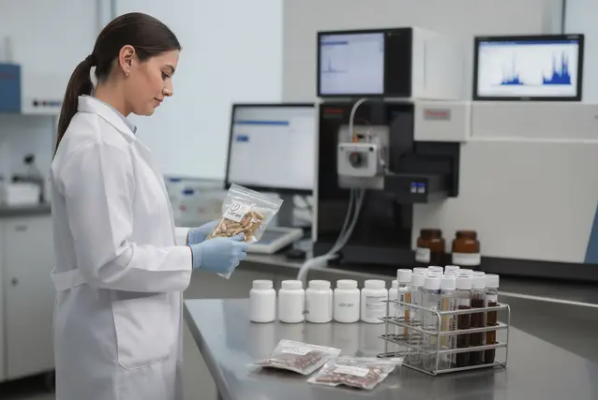
Seller-provided certificates of analysis do not constitute independent verification. These certificates may not establish product identity, sterility, concentration, contaminant levels, or compliance with anti-doping standards. Vendor claims require independent substantiation. Often HPLC testing is used to verify purity but only mass spectrometry testing can verify identity.
Contamination and mislabeling
Undeclared substances, incorrect concentrations, peptide degradation, and microbial contamination have been observed in dietary supplements. A 2022 analysis found that 28% of 3,132 products contained hidden contaminants, underscoring potential for unintentional anti-doping violations. Such risks persist regardless of labeled ingredients.
Is There an Established GHK-Cu Dosage?
No FDA-approved dosage exists for injectable GHK-Cu because there is no FDA-approved injectable drug. Online dosing recommendations lack controlled human evidence and official validation, and should not be construed as medical guidance.
Why online dosing claims are unreliable
Dosing figures posted by clinics, forums, or vendors lack FDA-reviewed labeling, and typically rest on unverified identity and uncertain safety data. Doses advertised by sellers may not reflect actual product content due to unknown quality controls.
Why route matters for dose claims
Topical, oral, and injectable routes differ markedly in absorption and risk. Data from one mode of administration cannot substantiate dosing guidance for another. GHK-Cu is subject to degradation in the digestive tract, making oral use largely ineffective unless products are designed for liposomal delivery.
What Should Athletes and Consumers Know Before Using GHK-Cu?
Verification of product type, route of administration, regulatory and anti-doping status, and product quality is essential for athletes and consumers. Natural origin does not assure safety.
Product type and route
Accurate assessment begins with identification of ingredient use and classification. Topical serums, oral capsules, and compounded injectables present distinct evidence bases, regulatory frameworks, and risk profiles.
Naturally occurring does not mean risk-free
Biological presence of GHK does not demonstrate the safety or efficacy of concentrated, injected, or unverified forms. Marketing claims based on natural occurrence may not reflect true risk profiles.
Third-party testing and its limits
Independent laboratory testing can confirm identity, label claims, contaminant presence, and anti-doping risk but does not guarantee clinical effectiveness or absence of risk. HPLC testing may be used to verify purity but more complex mass spectrometry testing is typically required to verify identity.
Frequently Asked Questions
What is GHK-Cu peptide?
GHK-Cu consists of the copper complex of glycyl-L-histidyl-L-lysine, a naturally occurring tripeptide. Research primarily investigates its roles in skin biology, wound processes, and cell signaling, drawing mostly from laboratory, animal, and cosmetic studies.
What does GHK-Cu do?
GHK-Cu research focuses on copper binding, cell signaling, matrix remodeling, and engagement in collagen pathways. These actions represent areas under investigation rather than confirmed clinical effects in human subjects.
Is GHK-Cu FDA approved?
GHK-Cu is not FDA approved. No FDA-approved injectable drug exists, and non-injectable GHK-Cu remains under FDA's 503A Category 1 evaluation as of July 2026.
Is GHK-Cu safe?
Safety depends on route, formulation, and manufacturing quality. Topical GHK-Cu may cause irritation. FDA has expressed concern for injectable use due to potential immunogenicity and contamination, and data for systemic or long-term safety are limited.
Does topical GHK-Cu work?
Cosmetic-use evidence exists for topical copper-peptide products, but a randomized human trial found no significant measurable improvement in skin outcomes after laser resurfacing. FDA does not approve these products for disease treatment or management of skin injuries and conditions.
Does GHK-Cu help with hair growth?
Hair-growth effects remain unproven. Frequently cited studies investigate other copper peptides, such as AHK-Cu, and should not be attributed as evidence for GHK-Cu.
Is injectable GHK-Cu safe?
Limited human safety data are available. FDA notes potential immunogenicity, aggregation, and impurity risks, and manufacturing quality for many online products is unverified.
Is there an established GHK-Cu dosage?
No established dosage exists; FDA has not approved any injectable formulation. Dosage advice from online sources lacks regulatory or clinical validation. Oral availability is poor making oral administration largely ineffective.
Is GHK-Cu prohibited in sport?
GHK-Cu's is not specifically named on the WADA Prohibited List but it is considered banned under category S0 non-approved substances which prohibits any unapproved substances. Athletes must consult official authorities for current status.
Can GHK-Cu cause cancer?
Laboratory and animal studies do not establish carcinogenic or protective properties of GHK-Cu in humans. Human clinical cancer data are lacking, so no authoritative benefit or risk statement can be made.
What the Evidence Means for Product Quality and Athlete Responsibility
Evidence for GHK-Cu varies across topical, oral, and injectable products. Research demonstrates biological plausibility and limited cosmetic interest, while human data remain insufficient. Controlled human studies provide little evidence for measurable benefit. Mechanistic observations in laboratory and animal settings do not constitute clinical validation.
Regulatory status and manufacturing quality have critical impact when product claims approach pharmaceutical, supplement, or cosmetic classifications. Injectable GHK-Cu is not FDA approved, non-injectable use is under review, and online products present risks related to identity, purity, and contamination.
Athletes must exercise caution with unapproved peptides, research use only products, and wellness-clinic injections. Strict liability applies under anti-doping codes. While independent testing can mitigate certain risks, such measures do not confirm clinical efficacy or eliminate all risk.
CERTIFIED CLIENTS
Search by Lot, Product, Brand, Category, or Other Keyword.
Certified Drug Free
Certified Quality
Certified GMP
Certified CBD