TB-500 Peptide: Benefits, Safety, Legal Status, and Research
Jul 28, 2026
TB-500 is not an FDA-approved drug and is not a lawful dietary supplement ingredient although it is often packaged in supplement bottles. Online sources market TB-500 for expedited injury recovery, wound healing, tendon repair, and quicker training returns, but these claims are not substantiated by regulatory approval or robust human data.
Promoters highlight TB-500 for recovery related uses, yet popularity does not equate to FDA approval, verified benefit in humans, product quality, or permission for drug-tested athletes. Most supporting science is based on thymosin beta-4, a related peptide studied in laboratory and animal models, not in humans using marketed products.
This review provides educational material and does not replace medical advice. Individuals with injury, wound, pain, or inflammation should consult a licensed healthcare professional before using TB-500 or other substances.
What Is TB-500?
TB-500 is a synthetic peptide associated with the fragment LKKTETQ of thymosin beta-4. TB-500 alone does not occur naturally. TB-500 is described as the specific portion of the larger thymosin beta-4 peptide that is responsible for angiogenesis and regulating the inflammatory response.
Thymosin beta-4 was discovered in the 1960's. The full amino acid sequence for it was identified in 1981. It wasn't until the early 2000's that the active region correlating to TB-500 was discovered.
The FDA nor other equivalents in other countries do not recognize TB-500 as an approved medication or lawful supplement ingredient. The FDA classifies it as thymosin beta-4, fragment (LKKTETQ). TB-500 remains unapproved for human use whether marketed for research or otherwise.
Sellers promote TB-500 for recovery, tissue repair, wound healing, muscle recovery, joint support, and inflammation. These products, often labeled "research use only," have not secured approval for human administration.
Further regulatory context can be found in the TB-500 status, risks, and bans article, which categorizes TB-500 as a research chemical within a regulatory grey area.
Is This Peptide the Same as Thymosin Beta-4?
TB-500 shares relation to thymosin beta-4, but the existence of research on thymosin beta-4 does not demonstrate the safety or efficacy of commercial TB-500 products. Thymosin beta-4 is a naturally occurring 43-amino-acid peptide, while TB-500 is generally defined as a synthetic seven-amino-acid fragment (Ac-LKKTETQ) corresponding to amino acids 17 to 23 of thymosin beta-4.
The distinction between thymosin beta-4 and TB-500 has significant implications when evaluating research. Citing thymosin beta-4 studies does not verify the efficacy or safety of commercially available peptides. TB-500 and thymosin beta-4 are related but are not identical compounds.
Thymosin beta-4 in Research
Thymosin beta-4 functions in cell migration, tissue remodeling, and wound healing and binds to actin. A 1999 rat study determined that thymosin beta-4 increased wound reepithelialization by 42 percent after four days compared with controls, indicating biological activity but not established clinical utility in humans.
Fragment bioactivity remains uncertain. A March 2024 study observed that TB-500 (Ac-LKKTETQ) did not enhance wound healing, while its metabolite Ac-LKKTE did. The parent fragment frequently marketed as TB-500 may not possess primary biological activity.
Commercial Peptide Labeling Concerns
The FDA recognizes "TB-500" as a common, unofficial designation. Products under this name may reflect differing salts, derivatives, or active entities. Labeling as TB-500 does not identify the precise molecule, purity, dosage, stability, or sterility.
Popularity of TB-500 Online
Widespread online marketing drives TB-500's popularity, but digital demand does not reflect proven efficacy, regulatory approval, or validated product quality. Distribution occurs through peptide clinics, forums, wellness influencers, and vendors focused on recovery. TB-500 is also available for direct sale through a number of online vendors.
Frequent claims include:
- Faster injury recovery and training resumption
- Support for joint mobility and soft tissues
- Muscle repair following intense sessions
- Tendon and ligament recovery
- Facilitation of wound healing
- Support for reducing inflammation
The prevalence of these claims explains the search for TB-500 but does not establish its suitability or effectiveness.
Claimed Benefits
Assertions of TB-500 benefits generally pertain to recovery, tissue repair, inflammation support, and mobility enhancement. However, the FDA does not approve TB-500 for these uses. Claims rely primarily on thymosin beta-4 animal studies, laboratory findings, anecdotal observations, or marketing materials rather than clinical evaluations of commercial TB-500 products.
Injury Recovery
Sellers reference TB-500 for muscle strains, overuse injuries, and accelerated activity resumption, based on related animal models. Scientific evidence is insufficient to establish TB-500 as an FDA-approved injury treatment.
Tendon and Ligament Recovery
Recovery claims for tendons and ligaments are common. TB-500 is not indicated or approved as a substitute for diagnosis, imaging, physical therapy, surgery, rest, or medical attention.
Claims Regarding Wound Healing
Thymosin beta-4 has been investigated in wound-healing models and two small-scale Phase 2 trials for ulcers, but sample sizes and methods limit interpretation. No Phase 3 trials have involved TB-500 or proven its safety and effectiveness for wounds.
Muscle Recovery
TB-500 is frequently promoted for post-activity muscle recovery. Existing marketing remains performance-adjacent. There is an absence of clinical data to substantiate muscle recovery benefits in humans.
Inflammation Claims
Mechanistic and animal studies regarding inflammation reduction do not establish a human benefit for TB-500. Claims of reduced inflammation remain unsupported by controlled clinical human data.
Current Research
Research identifies biological interest in thymosin beta-4, but evidence does not establish the safety, efficacy, or regulatory approval of TB-500 products. Distinctions exist between the investigated biology and marketed commercial peptide products.
Evidence for Thymosin Beta-4
Peer-reviewed studies of thymosin beta-4 examine cell migration, angiogenesis, and tissue-repair models in vitro and in animals. Translating these findings to a commercial TB-500 product is not justified by current data.
Laboratory and Animal Research
The majority of interest in TB-500 arises from preclinical in vitro and animal studies involving thymosin beta-4 rather than TB-500. Preclinical results do not define safe or effective use in humans and do not confirm product quality.
Limits of Human Data
Controlled clinical trials examining TB-500 in humans for efficacy, recovery, or performance do not exist. Research involving thymosin beta-4 in humans is limited to specific indications and does not establish generalizable benefits for TB-500.
FDA Safety Risk Assessment
The FDA advises that drug products containing thymosin beta-4 fragment LKKTETQ (TB-500) may create immunogenicity risk for specific administration routes owing to possible aggregation or peptide-related impurities. The FDA lacks data on human exposure and does not possess critical safety information for this substance.
Regulatory Status and FDA Approval
TB-500 does not hold FDA approval as a drug product. Regulatory approval requires review for safety, effectiveness, labeling, manufacturing quality, and intended use. TB-500 has not undergone or completed this process.
Compounded Drugs and FDA Review
Compounded medications—including TB-500 preparations—do not receive FDA review for safety, efficacy, or manufacturing quality. The FDA scheduled review of TB-500 as a bulk drug substance for late July 2026 through the Pharmacy Compounding Advisory Committee (PCAC). On July 23, 2026 the PCAC recommended that it be added to the 503A Bulk list for compounding pharmacies. The FDA must now review the recommendation and make a decision on whether to add it to the 503A Bulk list. Such reviews are advisory and non-binding and do not grant approval. The 2026 peptide regulation update details that removal from the FDA Category 2 list does not amount to regulatory approval.
Online Availability
The presence of TB-500 on websites, clinic offerings, or "research use only" listings does not confer legal status or regulatory approval for use in humans. Online research chemicals have been shown to have a host of quality control concerns and many are not what they claim to be on the label.
Legality and Status in Supplements
TB-500 does not qualify as a lawful dietary supplement ingredient and is not an approved drug under FDA regulations. "Research use only" designations do not authorize products for human consumption. Product legality depends on form, claims, distribution, compounding status, and jurisdiction. External similarities to supplement products do not alter this regulatory position. TB-500 is not effective when taken orally, and dietary supplements must be ingested by definition, so any oral form of TB-500 sold as a dietary supplement is illegal and also ineffective.
Compliance With Dietary Supplement Law
Guidance is available in the Dietary Supplement Ingredient Advisory List, which outlines why peptides like TB-500 do not meet DSHEA criteria as lawful supplements. Marketing with descriptors such as "recovery peptide" or "tissue repair peptide" does not change the legal classification.
Implications of Research-Only Labeling
Some commercial sellers note " for research only not for human consumption" while promoting TB-500 for wellness or recovery. This labeling does not ensure regulatory compliance or product safety; it indicates the only legal avenue for selling certain unapproved chemicals. Research only labeling is often used as a way to legally import unapproved peptides or chemicals like TB-500.
Implications for Drug-Tested Athletes
TB-500 use presents direct anti-doping risk and should be avoided by drug-tested athletes or military service members unless there is explicit authorization from qualified anti-doping officials. It is frequently marketed for recovery and healing, which increases regulatory scrutiny in sport settings. There have been a handful of non-analytical positives reported for TB-4 and TB-500, but very few adverse analytical findings have been reported to date.
WADA Classification
The 2026 WADA Prohibited List lists "Thymosin-ß4 and its derivatives e.g. TB-500" under category S2.3 Growth Factors as prohibited at all times. As an unapproved drug there is not way to acquire a Therapeutic Use Exemption. Details regarding anti-doping categories are available through the WADA Prohibited List overview.
Risks of Contamination and Mislabeling
Risks include undisclosed substances, ingredient substitution, peptide-related impurities, cross-contamination, and unreliable product labels. Athletes bear strict liability for substances found during testing. Documented cases have resulted in multi-year ineligibility based on evidence of TB-500 and related peptide use.
Official Verification and Resources
Official agencies and resources provide the most reliable status verification:
- Global DRO
- USADA
- WADA resources
- OPSS for military personnel
- Sport governing bodies and team medical staff
Organizations can utilize programs such as the Certified Drug Free program and athlete testing resources for banned substance screening and third-party product testing.
Standard Dosage
No FDA-approved dosage exists for TB-500 because it lacks regulatory approval. Online dosage recommendations originate from sellers and user forums instead of medical standards and should not be considered authoritative.
Limitations of Online Protocols
Dosage protocols found online vary by administration route and are not medical guidelines. Unverified dosing recommendations do not substitute for clinical evidence or licensed medical consultation.
Concerns Regarding Product Concentration
Dosage accuracy cannot be guaranteed with TB-500 due to potential mislabeling, concentration errors, impurities, or product degradation. Certificates of analysis for such products are not always reliable evidence of composition or strength.
Risks by Administration Route
Diverse product forms do not influence TB-500's regulatory approval or verify safety and efficacy. Formulations available include injectables, oral liquids, capsules, nasal sprays, topical preparations, and research-use vials.
Risks of Injectable Products
Injectable TB-500 carries risks of sterility breaches, contamination, dosing errors, impurities, improper storage, and manufacturing lapses. Unregulated injectable use bypasses critical safety measures present in approved medications.
Oral and Capsule Product Risks
Oral TB-500 products may avoid certain injection-specific harms but retain safety, legal, quality, and anti-doping risks. Capsules raise compliance issues regarding supplement law, and oral absorption is not assured. Available form does not alter regulatory status. TB-500 is not considered to be orally active and would be ineffective in illegally marketed oral dietary supplements.
Nasal Spray and Topical Risks
Nasal and topical routes do not mitigate the risks of labeling inaccuracies, product contamination, or route-specific unknowns. Needle-free formats remain unverified and unapproved.
Side Effects and Safety
Principal safety concerns with TB-500 include the absence of human safety data, uncertain long-term effects, immunogenic risk, impurities, product contamination, and risks associated with unapproved use. No comprehensive human side-effect profile is available.
Unknowns in Human Safety
No peer-reviewed clinical studies have established TB-500’s safety profile in humans, and no long-term studies are available. Descriptions of TB-500 as "low-risk" lack support from the evidence base for approved medications. Human dose-response characteristics remain undetermined.
Immunogenicity and Impurity Hazards
The FDA identifies possible immunological reactions linked to peptide aggregation or uncharacterized impurities in TB-500 products. Absence of comprehensive active ingredient characterization complicates risk assessment.
Risks of Self-experimentation
Self-medicating with an unapproved peptide can delay necessary clinical care. Signs and symptoms such as wounds, persistent pain, or mobility impairments often require professional diagnosis, imaging, and supervised treatment. Delayed intervention can worsen health outcomes.
Product Quality and Associated Risks
The risk profile of TB-500 incorporates potential labeling inaccuracies, ambiguous certificates of analysis, product substitutions, and marketing that does not correspond to product identity or quality. Products sold as research chemicals are not subject to current Good Manufacturing Practices or contaminant testing requirements that apply to dietary supplements. Heat during storage or shipping can significantly degrade peptides.
Labeling Accuracy
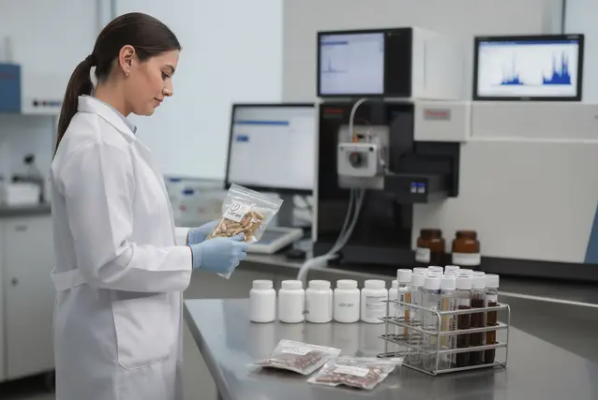
Product labels may not identify the correct peptide, potency, or presence of additional substances. Stating "TB-500" does not verify substance identity or concentration. Some sellers claim to do third-party testing but that may not verify the identity of the substance. Often HPLC testing is employed, which can verify purity but not identity. Typically more complex mass spectrometry testing is required for proper identification of a peptide like TB-500.
Contamination and Sterility Issues
Testing of unregulated peptide products has found endotoxins, truncated peptide sequences, solvents, heavy metals, infectious agents, and instability from substandard storage conditions. These risks precede any intended biological effect.
Certificates of Analysis Limitations
Certificates of analysis for research peptides may lack specificity, cover a limited analyte panel, derive from unverifiable labs, omit relevant tests, or fail to assess contamination and sterility. Such certificates are not equivalent to independent product verification.
Comparison with Other Peptides
TB-500 differs from other peptides in composition, use profile, regulatory classification, and athlete risk. The term "peptide" does not denote legal status, safety, or eligibility for athletic competition.
Thymosin Beta-4 Comparison
Thymosin beta-4 is a naturally occurring, full-length peptide subjected to research. TB-500 is commonly characterized as a synthetic peptide fragment. TB-500 is a piece of TB-4. These compounds are not completely interchangeable.
BPC-157 Comparison
BPC-157 and TB-500 are both marketed for recovery related effects, presenting similar concerns in regulation, safety, and anti-doping compliance. Operation Supplement Safety (OPSS) identifies BPC-157 as a prohibited, unapproved peptide; TB-500 presents comparable risk to athletes. Relevant themes are discussed in the BPC-157 article.
KPV Comparison
KPV is typically discussed in the context of inflammation and gut research, while TB-500 is primarily promoted for tissue repair and recovery. Neither holds FDA approval.
Collagen Peptides
Collagen peptides are derived from hydrolyzed dietary protein and are permitted as dietary supplement ingredients under DSHEA. TB-500 functions as an unapproved compound with drug-like claims. Peptides identified by alphanumeric codes are generally designated as experimental substances, not dietary supplement ingredients.
Considerations for Consumers
Consumers should exercise caution and not consider TB-500 a proven therapy, legitimate supplement ingredient, or safe athlete recovery product. It lacks FDA approval, its marketed claims significantly exceed available clinical evidence, and the FDA acknowledges potential safety issues for compounded drugs containing thymosin beta-4 fragment LKKTETQ.
Guidance for Symptomatic Individuals
Individuals with injuries, wounds, pain, or mobility limitations should consult licensed healthcare practitioners for diagnosis and management rather than depending on unapproved peptides.
Guidance for Drug-Tested Athletes
Athletes subject to anti-doping rules should avoid TB-500 unless authorized by regulatory authorities. Verification should occur through official channels, and contamination or mislabeling risks should be considered. Involving sport medical personnel and governing bodies is recommended.
Guidance for Brands and Retailers
Brands and retailers should assess ingredient legitimacy, review product claims, and understand banned-substance risks. Verification procedures and regulatory compliance protect both consumers and commercial interests.
Key Points
- TB-500 is a synthetic peptide associated with claimed benefits for recovery, wound healing, tissue repair, and mobility, but is not FDA approved.
- Its structure reflects the thymosin beta-4 fragment LKKTETQ, and it is not established as equivalent to full-length thymosin beta-4.
- Published research on thymosin beta-4 does not verify commercial TB-500 effectiveness.
- There is no FDA-approved dosage or use established for TB-500.
- Compounded peptide products, including TB-500, are not FDA reviewed or approved for safety, efficacy, or quality.
- The FDA highlights possible immunogenicity and impurity risks for TB-500 compounds.
- Most efficacy claims rely on animal models, laboratory findings, or studies done on TB-4 and there are few human studies done to date.
- All marketed routes—injectable, oral, topical, nasal, or research-only products—pose regulatory and quality risks.
- Drug-tested athletes should classify TB-500 as high risk.
Frequently Asked Questions
Peptide Status
TB-500 is a synthetic peptide related to thymosin beta-4. This classification does not designate regulatory approval or confirm safety or efficacy for recovery indications. TB-500 is not approved as a drug, dietary supplement, or any other form and can't currently be compounded legally.
Claimed Peptide Benefits
Claims for TB-500 include recovery, wound healing, mobility, soft-tissue repair, inflammation support, and muscle recovery. These assertions are based on preclinical or indirect research, not on FDA-approved therapeutic benefits.
Safety of Injections
TB-500 injections pose risks of contamination, dosing error, product impurity, and a lack of regulatory approval. No robust safety data support regular use of injectable TB-500 in humans.
Oral Capsule Safety
Oral TB-500 may avoid risks unique to injections but does not meet criteria for lawful supplement use. Capsules pose safety, quality, and regulatory risks irrespective of their format and TB-500 is not considered to be orally active so purchasing it in forms meant for oral use are likely ineffective unless offered as liposomal preparations.
Military Use Considerations
Military personnel should not use unapproved peptides such as TB-500 without confirmation from military, medical, or OPSS authorities. Peptide hormones are included on the DoD Prohibited Dietary Supplement Ingredients list and can affect eligibility for service.
Perspective on Recovery Peptide Claims
Claims regarding TB-500’s wellness or recovery role have outpaced available clinical research, FDA review, and independent product validation. The major finding in the literature is the biological role of thymosin beta-4, but this does not translate into proven TB-500 product safety or efficacy.
Effective guidance is as follows: TB-500 lacks FDA approval, has no established dosage, exhibits product quality concerns, and creates clear anti-doping risk. Drug-tested individuals should avoid TB-500 barring explicit approval from governing bodies.
Resources on banned substance testing, athlete safety, and supplement certification serve to clarify distinctions between lawful supplements and unapproved drug ingredients.
CERTIFIED CLIENTS
Search by Lot, Product, Brand, Category, or Other Keyword.
Certified Drug Free
Certified Quality
Certified GMP
Certified CBD