Trusted Supplement Certification: How Third-Party Certifications Build Trust
Aug 20, 2026
Supplement labels communicate ingredient lists, quantities, and product claims but do not independently verify product contents. Trusted supplement certification addresses this gap by providing third-party evaluation.
Certification introduces an independent entity to assess products. Third-party certification providers may include a variety of components include review of standards, performing testing, verifying label accuracy, screening for environmental contaminants or banned substances and evaluating compliance with GMP and other regulations. Four core factors support trust: scope breadth, transparency of standards, testing rigor, and persistence of follow-up controls.
Th certification process supports quality assurance for brands, risk reduction for athletes and other drug tested professionals, product selection for retailers, and label reliability for consumers. Organizations such as BSCG conduct independent certification built on anti-doping and supplement quality experience. The principles outlined here apply across certifying organizations.
Definition of Trusted Supplement Certification
Trusted supplement certification signifies third-party verification that a dietary supplement has undergone independent assessment against specific standards for safety, quality, label accuracy, banned substance risk, or manufacturing controls. Certification typically involves laboratory testing, label verification, contaminant screening, manufacturing review, and ongoing assessment by an entity unaffiliated with the product seller.
Independent Supplement Certification Process
Independent supplement certification occurs when a qualified third party assesses a product, ingredient, or facility against established criteria before authorization of certification claims or seal use. Certification often requires product testing, document review, and confirmation of adherence to program requirements.
The process proceeds from application through ongoing oversight. While details vary by certifier and program, most implement a comparable sequence.
Application and Scope Review
The certifier determines the item under certification. This may involve a finished supplement, ingredient, CBD product, animal supplement, ingredients or raw materials, or manufacturing facility. Defining scope before testing is essential. Certification for one attribute does not extend to other attributes.
Document and Label Review
Initial stages include analysis of records such as formulation details, ingredient lists, label claims, supplier information, manufacturing records, and relevant quality documentation. This documentation review identifies risks before laboratory analysis. Certifiers can flag banned ingredients or questionable claims based on provided records.
Laboratory Testing
Laboratory analysis confirms product composition. Depending on the program, testing may address banned substances, ingredient identity, potency, label claims, contaminants, or cannabinoid content or a combination of elements.
Testing protocols should align with product category and certification claims, and should be conducted in ISO 17025 accredited laboratories using methods validated for dietary supplements or other relevant matrices and product types.
Technical Review and Certification Decision
The certifier reviews laboratory results, reference standards, thresholds, and accompanying documentation. If non-compliance is identified, brands must implement corrective actions before approval. Certification is only granted when all program requirements are satisfied.
Ongoing Monitoring
Certification programs include renewal testing, surveillance, and batch reviews to confirm continued compliance. For example, BSCG's Certified Drug Free program conducts banned substance testing on every finished product lot and also incorporates random product purchases and annual quality verification. Formula modifications or changes in manufacturers necessitate new reviews.
Rationale for Third-Party Certification
Third-party certification increases reliability by separating product verification from the manufacturer or seller. The independent record of assessment, testing, and compliance provides verifiable assurance for buyers.
Independence from the Brand
An independent certifier without ties to the product ensures unbiased evaluation. Standards remain consistent across all participants and reduce potential conflicts of interest.
Clear Standards and Published Scope
Well-defined, published criteria or standards establish a factual foundation for trust. The scope of certification may cover banned substances, label claims, contaminants, GMP compliance reviews, THC compliance, or facility controls. Program transparency is critical to avoid ambiguity.
Documentation Beyond Marketing Claims
Certification requires an accessible record demonstrating compliance with defined criteria. A certification seal should be backed by clearly stated criteria that is included in the program and accessible status information.
Many certifiers maintain public databases listing certified products and batch numbers of products that have been tested for verification purposes. It is vital to ensure that certification applies to a particular product or lot in order to understand the scope of the quality assurance and protection offered.
Considerations for Brands Selecting a Certification Program
Brand selection of a certification program should be based on clear scope, validated testing, transparent criteria and standards, targeted risk coverage, ongoing compliance monitoring, and accurate use of certification claims. Programs vary according to specific needs and may focus on different elements of quality or compliance.
Alignment Between Risk and Certification Scope
Certification scope must address the relevant risks. For example, sports nutrition products require banned substance testing, while CBD products require cannabinoid and THC testing to verify claims and regulatory compliance.
A general quality seal may not include coverage for banned substances. Misalignment between product and certification scope creates gaps in assurance.
Transparency in Testing and Thresholds
Certifiers should disclose the substances tested and the criteria for passing or failing results. Opaque banned substance lists or criteria undermine the value of certification.
BSCG, for example, publishes its testing menu and outlines detection thresholds, screening for more than 450 drugs including over 400 on the WADA Prohibited List. BSCG is one of the only certification providers that provides these details publicly. Transparency supports comparative evaluation and allows for athletes, military service members, or consumers to verify program scope.
Recognition and Market Relevance
Brands must ensure a certification’s recognition aligns with intended market requirements. Different audiences—athletes, military, retailers—hold distinct expectations. Verification of a certifier’s documented recognition is important.
For instance, the Department of Defense OPSS program recognizes specific certifiers for military supplement purchases including BSCG Certified Drug Free, NSF Certified for Sport, Informed Sport and USP Verified.
Procedures for Issue Resolution and Change Management
Strong certification programs address corrective actions, re-testing, documentation, and investigation following product changes or identified issues. Certification status should reflect product updates, and a clear investigative process supports program integrity.
Distinction Between Certification and Standard Supplement Testing
Certification integrates testing with structured criteria and standards, technical review, documentation, and ongoing oversight and testing, while standard supplement testing captures only a point-in-time product assessment.
Nature of Standard Testing
Standard testing validates a single sample or batch. It applies to batch checks, investigative testing, raw ingredient analysis, or routine quality control. A one-time passing test does not confer product certification. Programs like BSCG's Athlete Assurance Program provide banned substance testing without the right to use a certification seal that includes additional elements of product quality control and compliance.
Certification Requirements
Certification programs specify structured standards, documentation, repeated review, controlled seal use, and periodic monitoring in addition to consistent ongoing testing. For example, good manufacturing practice programs verify quality processes through system-based evaluation but GMP certification programs do not typically include any product testing.
Interpreting Label Claims
Terminology on labels, such as "tested," "third-party tested," "certified," or "banned substance tested," carries specific meanings. Verification of the precise claim is necessary, as some terms reference simple testing while others denote comprehensive certification and quality control.
Common Supplement Certification Types
Common certification categories include banned substance risk, label accuracy, contaminant analysis, CBD and THC compliance, manufacturing controls, ingredient validation, and animal supplement safety. Examples reflect program categories and not endorsement.
Banned Substance Certification
This type is designed for users such as athletes, teams, and military personnel to confirm absence of substances on the WADA Prohibited List. Coverage includes stimulants, anabolic agents, and related compounds, addressing strict accountability rules in sport, military, or first responder drug testing. Banned substance certification often includes other key elements like GMP compliance and verification of label claims and contaminant testing protocols and results providing a well rounded certification for drug tested professionals and consumers alike.
Quality and Label Claim Certification
Programs validate ingredient identity, potency, and label accuracy, while screening for potential environmental contaminants like heavy metals, pesticides, or microbiological agents. Such program are designed primarily to provide quality assurance to consumers and retail risk management. Programs such as BSCG Certified Quality incorporate annual label claims, banned substance, and environmental contaminant testing along with GMP compliance.
CBD and Hemp Certification
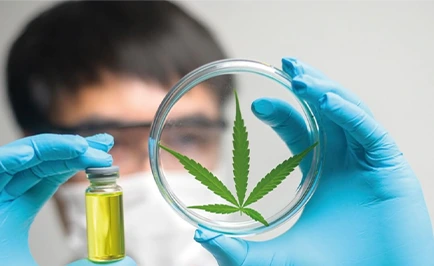
CBD products undergo reviews for cannabinoid content, THC limits, contaminant analysis, and label accuracy. BSCG Certified CBD tests every lot for banned substances and cannabinoids, and incorporates screening for heavy metals, pesticides, and microbiological agents. THC limits can differ by regulatory requirement, so reviewing applicable standards is essential.
GMP and Facility Certification
Facility certifications prioritize manufacturing controls, records, procedures, sanitation, and supplier oversight conducted via audits. BSCG Certified GMP is available to supplement brands that want to verify they meet all requirements of 21 CFR 111, and to manufacturing facilities that need to have onsite audits conducted to verify compliance.
Animal Supplement Certification
These programs target species-specific supplement risks, including rules governing animal competition. BSCG animal supplement certification addresses substances banned in equine and canine doping regulations.
Certification Seals for Consumers and Retailers
Certification seals provide visible signals of compliance with specific third-party program requirements. Confirming a seal’s validity requires direct verification in certification provider databases.
Scope and Limitations of Seals
A certification seal covers specific products, batches, formulas, or facilities, as defined by program details. Seal presence does not indicate comprehensive certification of a brand’s full product line.
Current Status Verification
Certifiers may update product listings and certification status as products, formulas, or lot numbers change. Confirmation via a certifier’s database is recommended. BSCG recommends confirming lot-specific certification, as packaging may not always reflect current status. For banned substance programs a specific lot must be tested in order for protection to apply and verification of lot numbers in program databases is an essential step for athletes, military service members, first responders and consumers.
Expectations for Retailers and Marketplaces
Retailers and marketplaces often require or prefer certification. For example, programs specify drugs required for screening in certain supplement categories for platforms such as Amazon. BSCG has two certification programs, Certified Drug Free and Certified Quality, that are part of the Amazon Compliance Fast Track and offer brands an efficient and easy solution for complying with Amazon dietary supplement compliance requirements.
BSCG’s Role in Independent Supplement Certification
BSCG provides third-party evaluation of supplements, ingredients, CBD products, manufacturing facilities, and animal supplements according to established testing and quality criteria. Areas of focus include banned substance risk, label claim accuracy, environmental contaminants, and GMP compliance.
Program Scope
BSCG offers multi faceted certification programs designed for different purposes. Certified Drug Free screens every lot for banned substances and also incorporates verification of label claims and contaminant testing and GMP compliance. The program was designed for anti-doping protection but also offers excellent quality assurance for consumers and retailers. Certified Quality was built to provide quality and compliance assurance for consumers and retailers with annual testing for label claims, contaminants and banned substances. Certified CBD addresses hemp and CBD product specific requirements that includes testing each lot for cannabinoids and banned substances and includes screening for environmental contaminants as well. Certified GMP focuses on GMP compliance at the brand or manufacturing levels but does not include a testing component. Animal supplement certification addresses quality and banned substance assurance specific to equines and other animals.
Expertise in Anti-Doping and Supplement Safety
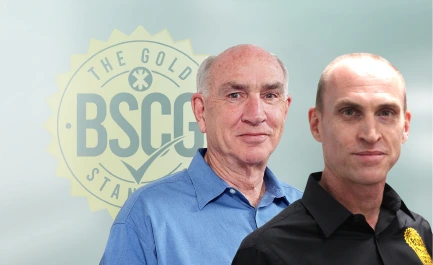
BSCG originated from anti-doping science, with co-founders Dr. Don Catlin, Oliver Catlin, and Ryan Connolly recognized for sport drug testing expertise and leadership. Dr. Catlin’s work in Olympic drug testing informed the organization’s methodology.
Transparency and Documented Scope
BSCG publishes program specifics, testing protocols, and thresholds whenever possible. Banned substance testing covers more than 450 substances, including more than 400 banned in sport. Interested parties can compare program parameters on BSCG’s certification program comparison page.
Limits of Supplement Certification
Certification mitigates risk and supports confidence in dietary supplements but does not create absolute product safety or regulatory compliance. While programs do not guarantee 100% risk elimination they have proven to be a vital resource in ensuring product safety, quality assurance, and compliance.
Scope Constraints
Program claims pertain exclusively to the explicitly certified aspect, such as label accuracy or banned substances. Facility certification does not confer product certification, and each claim must be interpreted in its operational context.
Product and Supplier Changes
Ongoing monitoring is necessary to address risks from ingredient substitutions, new suppliers, reformulations, or manufacturing site changes. Strong programs require recertification to reflect alterations.
Potential Misuse or Outdated Claims
Certification seals may appear on packaging that does not correspond to current certified status due to older inventory, third-party sales, or label lag. Checking product status in a certifier’s current database is an appropriate verification step.
Brand Preparation for Certification
Brands preparing for certification should organize product and manufacturing records, confirm label accuracy, review high-risk ingredients, and ensure comprehensive documentation. Pre-submission reviews prevent delays and facilitate compliance assessment.
Product and Formula Documentation
Brands must prepare complete records, including labels, supplement facts, formulations, ingredient sources, product specifications, and intended claims. Accurate and complete documentation supports efficient certification.
Supplier and Manufacturing Documentation
Supply chain documentation—including supplier qualifications, certificates of analysis, manufacturing records, GMP documents, and facility data—supports traceability and quality assurance. Notably, recent recalls underscore the value of robust records.
Risk Assessment Prior to Submission
Early identification of high-risk ingredients, presence of banned substances, potential contaminants in CBD or botanical ingredients, and claims discrepancies streamlines the certification process. Preliminary toxicology and regulatory compliance reviews support the process and provide added value for certified clients.
Frequently Asked Questions
Is third-party testing equivalent to certification?
No. Third-party testing typically refers to a one-time laboratory analysis, whereas certification encompasses testing, technical review, and sustained oversight to verify compliance with defined criteria.
Can certified supplements contain banned substances?
Certification reduces, but does not eliminate, the risk of banned substances. Risks may arise from contamination, formula changes, suppliers, or counterfeiting, and no program guarantees absolute safety.
Who pays for certification?
Typically, the brand or manufacturer pays relevant certification fees. Certifiers are required to apply criteria independently based on published standards, regardless of financial arrangements.
How do consumers verify certification?
Verification requires consulting the certifier’s database or product list to confirm product identity, brand, certification scope, and status. Reliance on packaging alone is insufficient for confirmation.
Does certification substitute for FDA compliance?
No. Certification does not fulfill legal obligations under DSHEA or 21 CFR Part 111. Companies remain responsible for meeting regulatory standards beyond any certification program.
Independent Verification Supports Supplement Trust
Effective certification depends on defined scope, published standards, appropriate testing, and ongoing monitoring. These four factors distinguish credible certifications from nominal programs.
Certification enables more informed purchasing and risk assessment but does not remove all uncertainty. Products and standards evolve, so current, documented verification remains necessary.
Properly implemented, independent supplement certification provides stakeholders with an auditable record of compliance. Independent verification represents a key component of credible supplement quality assurance.
CERTIFIED CLIENTS
Search by Lot, Product, Brand, Category, or Other Keyword.
Certified Drug Free
Certified Quality
Certified GMP
Certified CBD