When to Request Residual Solvent Testing for Botanical Extracts and Finished Supplements
Oct 07, 2026
A supplement brand should request residual solvent testing whenever a botanical extract was produced with an organic solvent, whenever the extraction solvent is unknown, and whenever a supplier, process, or solvent changes. Water-only extracts and dried herb powders that never contacted an organic solvent have no solvent residue to test for. Finished products need their own residual solvent testing in four cases. These are several solvent-based extracts in one formula, a large daily dose, concentrated oils or resins, and hemp or CBD rules that require final product testing.
The decision rests on two sources of authority. 21 CFR 111.70(b) requires manufacturers to set limits on contaminants for every component, and 21 CFR 111.75 requires them to verify those limits by testing or by a qualified supplier certificate of analysis. The limits themselves usually come from USP General Chapter <467> and ICH Q3C.
What Is Residual Solvent Testing?
Residual solvent testing is a laboratory analysis that measures organic volatile chemicals, such as hexane, methanol, or ethanol, left behind in an ingredient or finished product after extraction or processing. Laboratories typically perform it by headspace gas chromatography and compare results against limits set by USP General Chapter <467> and ICH Q3C, which group solvents into three toxicity classes.
The Five Triggers for Requesting Residual Solvent Testing
- The extract was made with an organic solvent. Ethanol, hexane, acetone, ethyl acetate, isopropanol, and methanol appear in botanical and hemp extraction and processing. Any of them can remain in the dried extract. AHPA guidance recommends limiting residual solvents in herbal extracts to the levels in ICH Q3C.
- The extraction solvent is unknown or undocumented. If a supplier cannot state the solvent system, the brand cannot set a meaningful specification. Testing a broad screen fills the gap until documentation improves.
- The brand is qualifying a new supplier or a new lot source. Under 21 CFR 111.75(a)(2), a manufacturer may rely on a supplier certificate of analysis only after it confirms the supplier's results through its own testing. Residual solvents belong in that confirmation when the extract is solvent-based.
- A process or supplier parameter changed. A new extraction site, a new solvent, a new drying step, or a new solvent-to-herb ratio can change the residue profile. Re-testing after a change supports the periodic re-confirmation that 111.75(a)(2)(D) requires.
- A finished product carries its own solvent risk. Several extracts in one formula, a large daily serving, oil-based or resin-based extracts, and hemp or CBD products sold under state rules all justify testing at the finished product stage.
Step 1: Identify the Solvent System Before Ordering Any Test
Ask the supplier for the extraction solvent, the solvent-to-herb ratio, and any post-processing solvents before selecting a test. The analytical panel should target the solvents actually used, plus the USP Class 1 solvents that no extract should contain. A generic panel that omits the supplier's actual solvent does not verify the specification.
One detail often goes unreported. Supercritical CO2 is not a volatile organic solvent on the USP or ICH lists, so CO2 extraction itself leaves no organic solvent residue. Post-extraction refining steps may still use ethanol or other solvents, and brands should ask whether any were used. BSCG's guidance on botanical testing for supplement brands recommends asking which solvents were used and targeting those solvents in the request.
Step 2: Classify the Solvent and Set the Limit
USP <467> and ICH Q3C sort solvents into three classes. The class determines how strict the limit is and how much effort the specification deserves.
Class 1: Solvents to avoid
Class 1 solvents are known or suspected human carcinogens or environmental hazards. ICH Q3C sets concentration limits of 2 ppm for benzene, 4 ppm for carbon tetrachloride, 5 ppm for 1,2-dichloroethane, 8 ppm for 1,1-dichloroethene, and 1,500 ppm for 1,1,1-trichloroethane. AHPA states these solvents are not appropriate for use in herbal extract manufacture. ICH Q3C indicates Class 1 solvents should be avoided, so a Class 1 screen functions as a baseline check that the extract was not exposed to them.
Class 2: Solvents to limit
Class 2 solvents carry toxicity that justifies a permitted daily exposure (PDE). ICH Q3C expresses each PDE in milligrams per day and converts it to a concentration limit assuming a 10 gram daily dose. Examples relevant to botanicals include hexane at 290 ppm (PDE 2.9 mg/day), methanol at 3,000 ppm (PDE 30 mg/day), toluene at 890 ppm, dichloromethane at 600 ppm, and acetonitrile at 410 ppm.
Class 3: Solvents with low toxic potential
Class 3 solvents include ethanol, acetone, ethyl acetate, isopropanol, and heptane. ICH Q3C considers amounts up to 50 mg per day acceptable without further justification, which equals 5,000 ppm at a 10 gram daily dose. AHPA notes one exception: the 50 mg per day ethanol limit does not apply to liquid extracts formulated to contain ethanol as an ingredient.
Option 1 versus Option 2
USP <467> offers two ways to apply these limits. Option 1 uses the fixed ppm values above, which assume a 10 gram daily dose. Option 2 calculates the actual daily exposure from the measured concentration and the real daily serving, then compares the total against the PDE. For products with a daily dose at or below 10 grams, Option 1 applies directly. Option 2 requires a documented calculation and must be used when the daily dose exceeds 10 grams or when any component exceeds its Option 1 limit.
Step 3: Decide Whether to Test or Rely on a Certificate of Analysis
Part 111 allows a brand to rely on a supplier certificate of analysis (COA) for component specifications other than identity, but only under conditions. 21 CFR 111.75(a)(2)(ii) sets four conditions. The brand must qualify the supplier by confirming the supplier's results. The COA must state the method, the limits, and the actual results. The qualification must be documented and periodically re-confirmed. A COA that says only "complies with USP <467>" with no method or numbers does not meet that standard.
In practice this creates a testing schedule. Independent residual solvent testing applies at supplier qualification, at periodic re-confirmation, and after any process change. Between those points, a complete COA from a qualified supplier can cover routine lots. BSCG's guide to reading a supplement COA explains how to check whether residual solvent results are reported with methods and limits, and why a raw material COA does not describe the finished product.
Step 4: Decide Whether the Finished Product Needs Its Own Test
Finished product testing for residual solvents is not automatic. 21 CFR 111.75(c) requires manufacturers to verify finished batches against specifications, including contamination limits, but it lets quality control select which specifications to verify at the finished batch stage. Under 111.75(d), a specification can be exempted from finished batch verification when component testing and process controls ensure it is met, provided the reasoning is documented and approved.
Several conditions weaken that reasoning and point toward finished product testing:
- Multiple solvent-based extracts in one formula. Each extract may meet its own limit while the combined daily exposure to a Class 2 solvent exceeds the PDE. An Option 2 calculation at the product level resolves this, and Option 2 is also required when any component exceeds its Option 1 limit.
- High daily serving. Powders, greens blends, and loading-dose products can approach or exceed the 10 gram assumption behind Option 1 limits.
- Oils, oleoresins, and soft gels. Hexane is a common nonpolar solvent for oil and concentrate extraction, and oil matrices require method verification in headspace analysis.
- Solvents introduced during manufacturing. Isopropanol used for equipment cleaning can appear in the finished product even when every ingredient was clean.
- Weak or unverified supplier data. If COA reliance is not fully established, the finished product test is the only direct evidence.
When none of these conditions apply, and component results are current and documented, a brand can reasonably verify residual solvents at the ingredient level and document the 111.75(d) rationale for the finished product.
Hemp and CBD Extracts Require Separate Attention
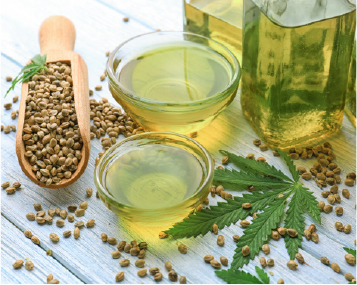
Hemp and CBD extracts combine several risk factors: lipid-rich matrices, hydrocarbon or ethanol extraction, and further refining steps. A 2024 study in Frontiers in Pharmacology tested 202 commercially available CBD products and detected residual solvents 446 times across 181 of them. The highest concentrations were reported for hexane, m/p-xylene, methanol, and o-xylene. The authors report that about 1 percent of residual solvent results exceeded more than one regulatory threshold, which shows that detection and violation are different findings. The frequency of detection still confirms that solvents routinely carry through to finished CBD products.
State rules add a second layer. State cannabis and hemp programs commonly publish their own solvent lists and numeric limits, and some state hemp plans filed with USDA set limits that differ from USP values. For example, the Alaska industrial hemp plan lists product-level limits for specific solvents. Brands selling hemp products across states should treat the most restrictive applicable rule as the specification and test finished lots where a state requires it.
BSCG's Certified CBD program reviews hemp supplier qualification, raw material specifications and testing, and finished product specifications as part of its initial assessment. Its published recurring panel covers cannabinoid profile, THC limits, and a drug screen on every lot, with heavy metals, pesticides, and microbiological agents every tenth lot. Residual solvent testing for hemp extracts is available as an additional service and should be scoped to the product's extraction history and state requirements.
When Residual Solvent Testing Is Usually Not Needed
Testing adds little value for materials that never contacted an organic solvent. Whole dried herbs, cut and sifted botanicals, simple herb powders, and extracts made only with water or steam fall into this group. For these materials, identity, pesticide residues, heavy metals, and microbial limits are the relevant contaminant controls, as described in BSCG's botanical testing guidance.
Two cautions apply. A "water extract" description should be confirmed with the supplier so that any co-solvent is identified. And a facility that handles solvents for other products can still introduce cleaning residues, which is a facility control issue rather than an ingredient issue.
What to Specify When Ordering the Test
The request should name the solvents, the method, and the limits. USP <467> describes headspace gas chromatography with flame ionization detection as its primary procedure, and laboratories also use GC-MS for added selectivity and lower detection limits. FDA guidance on residual solvents in drug products accepts alternative validated procedures, and the same principle applies when a supplement laboratory adapts the method.
Four specifications belong in every request:
- Analyte list. The supplier's declared solvents, the five Class 1 solvents, and any solvents required by a state program or retailer.
- Matrix validation. Confirmation that the method was verified for the sample type, since oils, gummies, and powders behave differently in headspace analysis.
- Reporting limits. Limits of quantitation low enough to judge compliance with the Class 1 values, which are in the low ppm range.
- Acceptance criteria. The USP <467> or ICH Q3C limit for each solvent, or the documented Option 2 limit based on daily serving.
BSCG offers residual solvent testing on an a la carte basis for USP Class 1, 2, and 3 solvents. The primary panel covers the five Class 1 solvents, and additional classes are added based on the extraction history. Testing runs through ISO/IEC 17025 accredited laboratory partners. The standard contaminant panel in BSCG's Certified Quality program covers heavy metals, pesticides, and microbiological agents, so brands with solvent-based extracts add residual solvents to the scope rather than assuming it is included.
Where Residual Solvents Fit in a Quality System
Residual solvent control works best as part of supplier qualification rather than as an isolated test. A complete specification for a solvent-based extract includes identity, marker compound strength, heavy metals, pesticides, microbial limits, and residual solvents, with each limit tied to a recognized standard. BSCG's ingredient certification review examines supplier qualification, specifications, and contaminant testing against 21 CFR 111.
Retailer requirements can also shape the scope. Online marketplaces publish testing requirements for dietary supplements that currently emphasize label claims, heavy metals, microbiological agents, and pesticides for botanical products, as summarized on BSCG's Amazon testing page. Secondary reports indicate that some marketplace programs have included residual solvent testing for certain products. Brands should confirm the current analyte list for each channel directly with the retailer, because these requirements change.
Frequently Asked Questions
Does FDA require residual solvent testing for dietary supplements?
Not by name. 21 CFR 111.70(b)(3) requires limits on contaminants that could adulterate the product, and 21 CFR 111.75 requires verification of those limits. For a solvent-based extract, residual solvents are a foreseeable contaminant, so the regulation effectively requires a specification and a verification approach. USP <467> and ICH Q3C supply the limits that industry guidance and manufacturers commonly adopt.
Is a supplier COA enough for residual solvents?
It can be, once the supplier is qualified. A COA can cover routine lots after the brand has confirmed the supplier's results by its own testing and the COA reports methods, limits, and actual results. Step 3 above lists the full conditions in 21 CFR 111.75(a)(2)(ii).
Do CO2 extracts need residual solvent testing?
Often yes. Supercritical CO2 leaves no organic solvent residue, but post-extraction refining or dilution steps may use ethanol or other solvents. The test should cover any post-processing solvents the supplier reports, plus the Class 1 solvents as a screen.
What limit applies to ethanol in a botanical extract?
Ethanol is a Class 3 solvent, and ICH Q3C considers up to 50 mg per day acceptable, equal to 5,000 ppm at a 10 gram daily dose. AHPA guidance states this limit does not apply to liquid extracts formulated to contain ethanol, where ethanol is an ingredient rather than a residue.
How often should a brand repeat residual solvent testing?
At supplier qualification, at the periodic re-confirmation that 111.75(a)(2)(D) requires, and after any change in solvent, process, or manufacturing site. Finished product panels may add residual solvents for formulas with several solvent-based extracts or high daily servings. The frequency should be documented in the quality system.
Summary
Residual solvent testing applies when an organic solvent touched the botanical, when that history is unknown, and when a supplier or process changes. Ingredient-level testing at qualification and re-confirmation covers most risk, while finished product testing becomes necessary for multi-extract formulas, high daily servings, lipid matrices, and hemp products under state rules. USP <467> and ICH Q3C define the limits, 21 CFR 111.70 and 111.75 define the obligation to set and verify them, and AHPA guidance adapts both to herbal extracts.
Two limitations deserve note. Published limits assume a 10 gram daily dose and should be recalculated for products that exceed it. And detection of a solvent does not by itself indicate a violation, as the 2024 CBD survey showed. The comparison against the applicable limit determines compliance.
CERTIFIED CLIENTS
Search by Lot, Product, Brand, Category, or Other Keyword.
Certified Drug Free
Certified Quality
Certified GMP
Certified CBD