Supplement Testing Providers: Histories and Service Focus
Jul 06, 2026
Supplement testing providers offer an array of services including ingredient identification, label claim verification, contaminant screening, banned substance evaluations, and GMP audits and certification. Some include certification options with defined scope that usually includes a combination of elements. Some specialize in banned substance certification for athletes, while others focus on contaminant screening, ingredient identity, label accuracy, or manufacturing compliance. This review details seven active providers in the dietary supplement testing market: BSCG, NSF, Eurofins, UL, Certified Laboratories, Tentamus, and Mérieux NutriSciences.
What Is Supplement Testing?
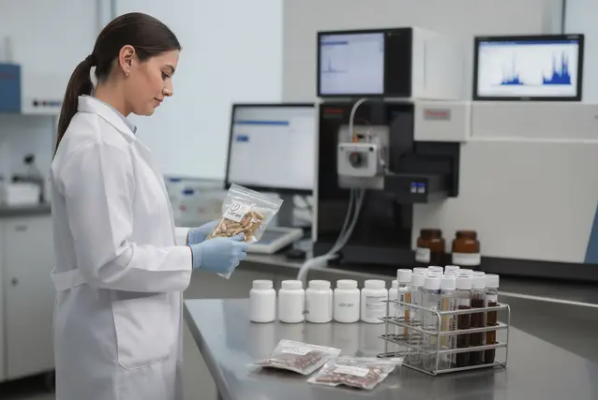
Supplement testing is independent analytical evaluation of dietary supplements. Its purposes are to confirm ingredient identity, verify label claims, screen for banned substances, and detect contaminants, which may include heavy metals, microbiological agents, and pesticides. Testing applies to raw materials and finished products, and manufacturing facilities are required to conduct quality control testing according to Good Manufacturing Practices (GMP). Testing may be performed as a single analysis relevant lot or it is included within ongoing certification programs that include a combination of elements.
Which Providers Are Commonly Used for Dietary Supplement Testing?
BSCG, NSF, Eurofins, UL, Certified Laboratories, Tentamus, and Mérieux NutriSciences offer a wide variety of supplement testing, quality assurance, contaminant screening, and certification and compliance services for the food, supplement, and related industries. Some providers offer third party certification programs in addition to testing. Certification programs may focus on single elements like GMP compliance, or some providers like BSCG, NSF, and Eurofins combine multiple elements like GMP compliance, label claim and contaminant testing, and banned substance screening.
What to Look for in a Dietary Supplement Testing Provider
Key criteria to consider are things like testing scope, analytical methods, laboratory accreditation, transparency of published criteria, turnaround times, certification program structures and included elements, and compatibility with the intended market.
Banned Substance Testing
Banned substance testing is a specialized field that addresses compounds prohibited by sport organizations, such as the World Anti-Doping Agency (WADA). Testing focuses on a number of categories including stimulants, anabolic agents, steroids, SARMs, masking agents, diuretics, designer drugs, and other agents posing drug test or health risks. Providers serving athletes, military personnel, professional teams, or equivalent brands require targeted expertise in banned substance identification and analysis, beyond general quality testing. BSCG and NSF are particularly well known for their banned substance testing capabilities with BSCG testing for more than 450 substances in their standard screen and NSF covering more than 290 substances.
Ingredient Identity and Label Claim Testing
Identity testing confirms that claimed ingredients are present as labeled. Label claim testing quantifies whether declared amounts correspond to what is contained in the product. A supplement may hold the correct ingredient but at an incorrect potency, or an apparent match could mask a substitute ingredient upon chemical analysis.
This issue is relevant for botanicals, amino acids, protein blends, vitamins, minerals, cannabinoids, and branded ingredients prone to substitution or dilution risks. Test methods must be validated for the specific purpose.
Contaminant Screening
Contaminant screening includes tests for heavy metals such as lead, arsenic, cadmium, chromium, and mercury; microbiological agents like yeasts, molds, salmonella, e-coli; pesticide residues for things like glyphosate; and residual solvents where warranted. The appropriate contaminant panel depends on ingredient type, product format, sourcing region, and the end consumer demographic. A botanical ingredient from a high-pesticide-use region entails different risks compared to a synthetic amino acid produced in a controlled facility.
Certification, Accreditation, and Recognition
Laboratory testing, product certification, and facility certification serve different purposes. A laboratory test yields results identifying findings in a specific batch. Product certification typically introduces ongoing testing, defined program criteria, and a certification seal for buyer or consumer assurance. Facility certification examines GMP compliance manufacturing process and procedures instead of the finished product.
ISO/IEC 17025 accreditation attests to an analytical laboratory’s methods and competence through independent review. However, accreditation alone does not guarantee that a lab’s banned substance panels, detection capabilities, or program structure suit a given market. Confirmation of sport league, retailer, or agency recognition should be drawn directly from trusted program documentation.
Provider Backgrounds and Testing Focus Areas
Provider summaries below are built on documented public positioning and available service descriptions. Program structures, scope, and methods are subject to change. Always verify the current details directly with each provider before proceeding.
BSCG: Banned Substance Expertise and Sport Focused Certification
BSCG (Banned Substances Control Group) was founded in 2004 by Dr. Don H. Catlin, Oliver Catlin, and attorney Ryan Connolly. Dr. Catlin established the first U.S. anti-doping laboratory in 1982, setting testing standards now adopted for Olympic competition. Under his leadership, the UCLA Olympic Analytical Laboratory provided testing for organizations including the IOC, WADA, USOC, USADA, MLB, NFL, NCAA, and several Olympic Games.
BSCG was formed in 2004 as one of the first providers to address the risk of accidental exposure to prohibited drugs via supplement contamination. The founders were among the early identifiers of designer steroids and stimulants mislabeled as supplements and collaborated with FDA and DEA to uncover and control such substances. Over the years BSCG has added a la carte supplement testing for ingredient identity, label claims, environmental contaminants as well as GMP facility audits. Testing is performed through ISO 17025 accredited partners using validated analytical methods.
BSCG Certification Programs
The Certified Drug Free program is its flagship offering, screening each lot for more than 450 substances. This panel includes more than 400 compounds listed by WADA and covers more than 50 prescription, over-the-counter, and illicit drugs not banned by sport that represent contamination risks to general consumers or retailers. Testing panels also meet substance requirements for Amazon’s dietary supplement compliance requirements. The program has received global recognition from organizations including NFL, UFC, NHL, U.S. Department of Defense Operation Supplement Safety, International Testing Agency, and Canadian Centre for Ethics in Sport. Recognition refers to program acknowledgment as a risk mitigation tool, not endorsement of individual products or brands.
BSCG provides additional certification programs for like Certified Quality, Certified CBD, and Certified GMP, and Certified Facility. These programs include a variety of key elements including GMP compliance audits, label claim and contaminant testing, and banned substance screening. Animal supplement certification programs are also available.
Where BSCG Often Fits
BSCG is renowned for it's banned substance testing services. Certification programs are part of Amazon's Compliance Fast Track offering additional benefits to brands. BSCG can also provide an array of supplement testing services for label claims, ingredient identity, or environmental contaminants.
NSF: Established Certification Programs for Sport and Product Quality
NSF International began operations in 1944 as a public health standards organization under the National Sanitation Foundation name. It established the first independent testing standard and product certification program for U.S. dietary supplements called NSF/ANSI 173. The NSF Certified for Sport program was introduced in 2004 in response to athletes’ needs for banned substance-free supplements, with EAS as an early adopter.
NSF Certified for Sport screens for over 290 substances, including steroids, SARMs, stimulants, beta-agonists, diuretics, and masking agents. Certification involves GMP audits and ongoing testing for banned substances and annual label claims and contaminant testing. NSF offers supplement certification programs covering label verification and manufacturing compliance under the NSF Contents Certified and NSF GMP Certified names. NSF is known for it's international manufacturing standards for GMP compliance called NSF/ANSI 455-2
Where NSF Often Fits
NSF certification is relevant for brands requiring a formal certification structure with established recognition among retailers and institutions. NSF Certified for Sport is recognized by organizations such as USADA, MLB, NHL, and CFL, and recommended by NFL, NBA, PGA, LPGA, and UFC. Brands should check the most recent scope, panel size, testing frequency, and documentation directly with NSF. NSF is on the Amazon list of approved Testing, Inspection, and Certification (TIC) organizations.
Eurofins: Global Laboratory Network and Broad Analytical Testing
Eurofins Scientific, founded in 1987, has grown through acquisitions and internal development to become an international network with more than 900 laboratories in over 60 countries and over 200,000 validated analytical methods. Eurofins serves the food, environment, pharmaceutical, cosmetic, and consumer product industries globally and is one of the largest analytical testing providers in the world.
Eurofins’ dietary supplement offerings include ingredient testing, contaminant screening, identity confirmation, microbiology, pesticide and heavy metal analysis, and specialized analytical services. The company operates Clean Sport Certified and Certified Dietary Supplement marks through its Eurofins Assurance division.
Where Eurofins Often Fits
Eurofins is relevant for brands requiring comprehensive laboratory capacity, multi-market sample handling, or testing in several categories. Its scale benefits multinational brands conducting routine quality assessments. The wide network of laboratories offer supplement testing services around the world. Certification options also enable recognition of testing through program seals. Eurofins is also on the Amazon list of approved Testing, Inspection, and Certification (TIC) organizations.
UL: Safety Science, Auditing, and Quality Program Support
UL, known as UL Solutions, was founded in 1894. It is a major provider of testing, inspection, and certification services, with more than 15,000 staff in over 110 countries. UL maintains an FDA-registered facility for dietary supplement testing in Canton, Massachusetts.
UL’s supplement services include DNA-based botanical identity testing, potency and contaminant analysis, GMP assessments, stability studies, regulatory label reviews, and a Dietary Supplement Verified Mark. The company supports supply chain qualification and claim verification.
Where UL Often Fits
UL’s services are suitable for organizations seeking quality program assistance, audit capabilities, global regulatory support, or product safety-related testing. Confirmation of service alignment with specific market or regulatory demands is recommended. UL offers dietary supplement testing and certification and is on the Amazon list of approved Testing, Inspection, and Certification (TIC) organizations.
Certified Laboratories: Food, Supplement, and Contaminant Testing Support
Certified Laboratories was started in New York City in 1926 and expanded over decades to include operations in several U.S. regions. Since joining Certified Group in 2021, it now operates over 30 ISO 17025-accredited labs across North America.
Its dietary supplement testing portfolio includes microbiology, chemistry, heavy metals, pesticides, amino acid and botanicals verification, CBD analysis, content claims measurement, and contaminant screening. Certified Laboratories appears on the Amazon list of approved Testing, Inspection, and Certification (TIC) organizations.
Where Certified Laboratories Often Fits
Certified Laboratories is an option for routine product quality verification, raw material assessment, finished product analysis, and contaminant screening, particularly for supplement products overlapping with food regulations.
Tentamus: International Testing Group With Food and Supplement Services
Tentamus Group, headquartered in Berlin and Munich, has grown since 2011 into a network of over 90 laboratories across Europe, North America, Asia, and other regions. Tentamus provides services for the food, feed, pharmaceutical, cosmetic, nutraceutical, agricultural, and consumer goods sectors. The North American laboratory was established in Virginia in 2016.
Tentamus offers microbiological and chemical analysis, contaminant screening, ingredient verification, authenticity tests, label compliance reviews, and regulatory consulting for supplements. Its broad international infrastructure serves brands requiring multi-region testing.
Where Tentamus Often Fits
Tentamus assists companies requiring laboratory access across countries, cross-sector ingredient verification, or multi-region compliance. Tentamus focuses primarily on testing services without any certification program options and they do not offer banned substance testing.
Mérieux NutriSciences: Food Safety Heritage and Supplement Quality Testing
Mérieux NutriSciences originated in 1967 with Dr. John H. Silliker’s laboratory focused on food safety. Links with the Mérieux family and Louis Pasteur’s scientific legacy inform its approach. With over 100 accredited labs in 27 countries, the company covers a wide global footprint.
Mérieux NutriSciences’ supplement services encompass microbiology, chemistry, contaminant and residue testing, allergen management, GMO and food authenticity analysis, environmental monitoring, third-party audits, and regulatory support. The 2021 acquisition of Dyad Labs strengthened its U.S.-based supplement expertise. Mérieux is also included as an Amazon-approved TIC provider.
Where Mérieux NutriSciences Often Fits
Mérieux NutriSciences is often selected for food safety systems, routine contaminant or analytical testing, and support in international operations. They also include a variety of compliance services but do not focus on banned substance testing.
If Athlete or Military Risk Is the Main Concern
Products consumed by tested athletes or military personnel are subject to specific banned substance risks. Positive drug tests result in career and legal consequences. BSCG and NSF provide structured certification programs with published substance lists, consistent detection thresholds, and established certification processes addressing these risks. Eurofins recently started offering banned substance testing. General laboratory testing does not offer equivalent assurance for sport oriented products.
If Ingredient Identity and Label Accuracy Are the Main Concern
Multiple providers perform identity and label claim testing. Analytical method selection and validation for the specific matrix and ingredient type are critical, particularly for botanicals, blends, vitamins, CBD/hemp products, and compounds with complex chemistry. Providers should specify the methods used and confirm their validation and accreditation status for the product type in question.
If Heavy Metals, Microbiology, and Pesticides Are the Main Concern
Contaminant testing requirements depend on ingredient risk profile, format, origin, and intended market. Botanicals from high-risk sourcing may warrant expanded pesticide testing, while protein powders may require specific microbiological analyses. Industry standard limits usually come from US Pharmacopeia or from groups like the Environmental Protection Agency (EPA). For California markets, Proposition 65 criteria apply. Providers’ contaminant panels, limits, and reports differ and should be compared in detail.
If Facility Review or GMP Support Is the Main Concern
Facility audits and GMP reviews verify production practices but do not replace finished product testing. NSF, UL, Eurofins, and Merieux offer ISO 17065 accredited GMP facility and quality system audits and are Amazon TICs. BSCG also offers GMP audits but is not ISO 17065 accredited or an Amazon TIC. Audit scope, referenced standard, and documentation format should be confirmed to ensure it supports intended retailer or regulatory submissions.
Important Limits of Third-Party Testing
Testing reduces risk but does not eliminate it. BSCG’s overview on third-party supplement testing clarifies that certification programs cannot guarantee a product is entirely free from banned substances. Sampling constraints, lot variation, supply chain modifications, and new designer substances create residual risk that current testing methods may not detect.
A one-time test verifies the sample at a specified time; only ongoing programs with lot-by-lot analysis and continual facility oversight offer a stronger assurance, yet they still have boundaries based on changing banned substance lists, supply adjustments, and evolving manufacturing environments. Routine updates and program adjustments are necessary to preserve testing relevance.
FAQ
What types of products need third-party testing?
All supplements are required to be tested for quality and contaminants according to GMP. Categories such as sports nutrition products, botanicals, protein powders, pre-workout formulas, weight management supplements, vitamins, minerals, and CBD/hemp supplements frequently require third-party testing. The need is elevated for products consumed by regulated populations, such as athletes or military personnel, or when retailer requirements demand independent verification.
Is banned substance testing the same as contaminant testing?
No. Banned substance testing targets compounds prohibited by sport organizations or considered drug contamination risks, including anabolic steroids, stimulants, and designer drugs. Contaminant testing addresses heavy metals, microbiological risks, pesticides, and related impurities. Some programs cover both areas, but many testing services remain category-specific and should be checked for coverage details.
Do all providers test for banned substances?
Not every provider offers specialized testing for banned substances. BSCG offers broad screening for more than 450 substances including more than 400 that are banned in sport.
Can one laboratory test cover every market requirement?
Rarely. Variability in retailer, sport body, international, and product-specific requirements results in multiple mandated tests or certifications for cross-market brands. Brands should construct testing plans around all relevant regulatory and retailer demands.
How often should dietary supplements be tested?
Testing frequency depends on risk associated with product type, format, ingredients, supplier history, production volume, targeted consumer group, and certification program rules. Some programs require testing of every batch; others rely on periodic or annual schedules. Every-batch testing is standard for products marketed to athletes or the military. Confirm the required frequency ahead of program selection to ensure alignment with production schedules and risk profiles.
CERTIFIED CLIENTS
Search by Lot, Product, Brand, Category, or Other Keyword.
Certified Drug Free
Certified Quality
Certified GMP
Certified CBD