Which Companies Offer Third-Party Tested Supplements?
Jul 15, 2026
Brand names alone do not indicate whether a supplement has undergone independent testing. Some brands implement third-party testing or certification, but the scope of the testing varies and testing may apply to certain products instead of an entire brand. Several established brands offer third-party tested supplements. Product level verification and review of testing details and results should be consider as part of consumer purchasing decisions.
Brands frequently recognized for independent supplement testing include Thorne, Klean Athlete, Momentous, Garden of Life Sport, NOW Sports, and Nature Made. Brands certified by BSCG include Herbalife 24, Ambrosia Collective, Vitargo, Metabolic Elite, Do Vitamins, Buff Chick, Haleo, and The Func Lab. Product certification status must be verified in the certification provider's public database by using the product name and lot number.
Many brands claim to have third-party testing but do not provide the actual results or details. It is important to explore the details of any third-party testing to understand the scope and value. Third-party certification providers may include a variety of elements in the review or testing process ensuring a consistent evaluation and adding significant value to brands while building trust in consumers. Review each label for certification marks and confirm the product details in the certification provider's directory. If the lot does not appear in the directory, it was not independently tested.
Definition of Third-Party Tested Supplements
Third-party tested supplements are dietary supplements evaluated by an independent organization without financial ties to the manufacturer. Testing criteria may include banned substances, ingredient identity, label claims, heavy metals, pesticides, microbiological agents. Certification providers may combine these elements with the addition of manufacturing compliance audits, providing a strong foundation of quality built on third-party testing. The scope of evaluation varies considerably between certification providers and programs.
Brands Frequently Associated With Independent Supplement Testing
The following brands participate in recognized certification programs. This information is provided for reference purposes only and does not represent endorsement. Certification applies to specific products and lots, not to entire brands or catalogs. Confirm current status through each certification provider's database before purchasing.
Sports Nutrition and Athlete-Focused Brands
Brands focused on sport and active nutrition often participate in programs that screen for banned substances in addition to verifying quality and manufacturing compliance with GMP. Certification program that offers a combination of these key elements include NSF Certified for Sport®, Informed Sport, and BSCG Certified Drug Free.
Thorne offers over 20 products with NSF Certified for Sport® designation. Momentous, Klean Athlete, and Garden of Life Sport have listings in the NSF Certified for Sport product directory, covering items such as creatine, protein powders, omega-3s, and multivitamins. NSF Certified for Sport® tests individual lots at a varying frequency for more than 290 banned substances.
Informed Sport certified brands include Optimum Nutrition, Transparent Labs, NOW Sports, Dymatize, and MusclePharm. Certification applies only to the documented products and batches. Informed Sport requires every finished product lot to be tested for more than 285 banned substances.
The BSCG Certified Drug Free program includes brands such as Herbalife 24, Ambrosia Collective, Vitargo, Metabolic Elite, Do Vitamins, and Shaklee. Certified products include protein powders, creatine, carbohydrate, multivitamins and more. BSCG Certified Drug Free requires every finished lot to be tested for an industry leading list of more than 450 banned substances including more than 400 drugs on the WADA Prohibited List and more than 50 prescription, OTC or illicit drugs.
General Wellness and Vitamin Brands
For vitamins and minerals, Nature Made is closely associated with the USP Verified Mark and maintains verification on more than 90 formulas. USP Verified evaluates ingredient identity, potency, purity, and verifies manufacturing according to current good manufacturing practices (GMPs). Centrum and Nature's Bounty also appear in general quality testing contexts, although verification scope varies by product.
NOW lists select products as Informed Sport certified, while conducting other testing internally. Life Extension and Ritual publish quality commitments; verification should be checked for each product individually. General quality certifications rarely include banned substance screening, which is pertinent for tested athletes and military personnel.
Protein, Collagen, and Performance Product Brands
Protein powders represent a category at higher risk for contamination. Consumer Reports found that more than two-thirds of tested protein products exceeded recommended lead thresholds, with greater contamination observed in plant based powders compared to dairy based counterparts. Independent testing is particularly relevant for these products.
BSCG certified protein products include Ambrosia Collective's Planta Protein, Haleo's Big Whey Straight, Herbalife 24's Rebuild Strength and Formula 1 Sport, The Func Lab's whey and plant proteins, and Buff Chick's Buff Whey and Buff Clear Protein, all subjected to lot-level testing for more than 450 banned substances in addition to a GMP compliance review and verification of product specifications and quality control testing results. NSF Certified for Sport® validation is found for protein products from Momentous and Thorne. Certification for collagen and hydration products varies. Verification of certification status should be done by searching the certification provider's directory.
CBD, Hemp, and Cannabinoid Product Brands
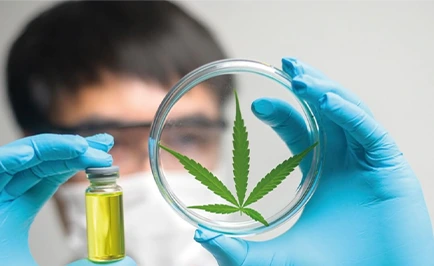
CBD supplements require third-party testing due to specific risks, including THC content, cannabinoid profile accuracy, and contamination by pesticides or heavy metals. A certificate of analysis from an independent laboratory constitutes the minimum standard, but ongoing certification entails broader requirements.
The BSCG Certified CBD program offers international third-party certification for CBD products, with mandatory lot-by-lot testing for more than 450 banned substances and cannabinoids, screening for environmental contaminants and a GMP compliance review. Certified brands include Pure Sport CBD, FourFive CBD, Kannaway, JoySport, Canlife Co. Ltd, CBD Force, and Night Athlete. Lot-level, batch-specific certification must be verified for each product.
Evaluating Brand Testing Claims
Third-party testing has become part of the marketing strategy. Some brands claim to do third-party testing but don't make the results public. Others only claim third-party testing but only conduct limited testing for things like microbiological agents or heavy metals. Testing claims vary in significance. A brand may state a product was "lab tested" even if this refers to only one sample, or results are not public. The following guidelines support verification of substantive claims.
Identify Recognized Certification Marks
Certification marks from recognized programs are more meaningful than statements such as "quality tested" or "tested for purity." Programs with defined scopes and searchable public databases include BSCG Certified Drug Free, BSCG Certified Quality, NSF Certified for Sport, Informed Sport, Informed Choice, USP Verified, and HASTA. Each program addresses distinct aspects of product quality or safety.
Confirm Certification at the Product Level
Product level verification is essential, as brands may test or certify only a subset of products, flavors, or serving sizes. Certification coverage must be confirmed for the specific product version and lot, referencing the certifier's database. As BSCG states in its Certified Drug Free database: "If a lot is not listed it has not been tested."
Review the Program's Scope of Testing
Third-party certification programs address different questions. Banned-substance testing detects drugs prohibited in sport or regulated environments. Label claim testing validates that components appear in stated quantities. Contaminant testing identifies harmful levels of heavy metals, pesticides, and microbiological agents. GMP review concerns manufacturing processes. Align the certification program with the specific requirement, whether athlete, military, or general consumer focus.
Assess Whether Testing Is Ongoing
Ongoing certification programs involve routine lot testing, periodic facility and documentation review, and publicly updated databases. Single lab reports provide limited assurance. Continual participation in recognized certification offers consistent evaluation across production cycles.
Overview of Major Third-Party Testing and Certification Programs
The programs outlined below serve distinct needs based on their domains. This reference does not constitute endorsement of any particular product or certification provider.
BSCG Certified Drug Free
BSCG Certified Drug Free tests every finished product lot for over 450 substances, including more than 400 compounds on the WADA Prohibited List and more than 50 additional prescription, over-the-counter, and illicit drugs. Detection thresholds operate in the parts-per-billion range. The standard screen includes Amazon-required substances, and the program includes annual verification of label claims and contaminant testing and GMP certification of manufacturers. The program is designed for athletes, military personnel, first responders, and brands requiring comprehensive banned substance coverage on each lot. It is recognized by groups including the NFL, UFC, the DoD's Operation Supplement Safety (OPSS) and others. BSCG certifies more than 700 products available in over 70 countries.
BSCG Certified Quality
BSCG Certified Quality is an annual testing regimen for consumer protection and retail compliance. The program verifies ingredient identity, label claim accuracy, and screens for heavy metals, pesticides, and microbiological contaminants. It includes banned substance screening but is not intended for anti-doping or sport drug-testing assurance. It applies to products and brands seeking confirmation of content and general quality.
NSF Certified for Sport®
NSF Certified for Sport® screens for more than 290 substances banned by major athletic organizations. Certification requires participation in the NSF Contents Certified program covering label claims and contaminant testing, and also requires manufacturers to be NSF GMP Certified. The certification is recognized by organizations such as the NFL, MLB, NHL, and their players' associations. The NSF product directory provides current certification status.
Informed Sport and Informed Choice
LGC Group administers both Informed Sport and Informed Choice programs using ISO/IEC 17025 accredited testing. Informed Sport tests every batch prior to market release, targeting athletes subject to doping controls. Informed Choice executes random retail monitoring on at least 12 lots annually, targeting the broader active nutrition sector. Both programs maintain searchable public product listings and screen for more than 285 prohibited substances.
USP Verified and Other Quality Verification Programs
USP Verified validation confirms ingredient identity, potency, purity, and dissolution, and attests to manufacturing under current GMPs. It does not include testing for banned substances in sport. Fewer than 1% of supplements carry the USP Verified Mark. Programs such as ConsumerLab, UL, and ISO-accredited laboratory assessment may also provide verification; review each program's scope or details on certificates of analysis prior to use as a reference.
Products Requiring Heightened Scrutiny for Athletes
Athletes should prioritize product and lot level verification through banned substance certification programs rather than brand popularity. Categories such as pre-workouts, fat burners, muscle builders, hormone support, sexual enhancement products, and proprietary blends warrant elevated scrutiny due to higher contamination or adulteration risks.
Importance of Banned Substance Testing in Sport
Sports drug testing rules assign responsibility to athletes for any prohibited substance detected, regardless of intent. Consuming supplements contaminated with banned compounds may result in positive tests. Third-party sport certification reduces the risk of inadvertent doping but does not eliminate it. Sampling variability and manufacturing changes introduce residual risk.
Evaluation Protocols for Military and Tactical Personnel
Military personnel face requirements similar to those of competitive athletes. OPSS (Operation Supplement Safety), the Department of Defense program for supplement guidance, recommends confirming third-party certification seals on product packaging and provides a DoD Prohibited Dietary Supplement Ingredients List. Given that most service members use dietary supplements, product specific verification and screening against ingredient risk lists are recommended standard procedures.
Brand Strategies Supporting Buyer Confidence
Brands can facilitate verification by providing precise information about testing, including the tested aspect, entity, and date. Vague statements such as "tested for quality" without details do not enable effective consumer evaluation. Clear labeling, current certificates of analysis, searchable directories, and transparent testing scopes improve traceability and confidence.
Clarification of Testing Scope
It is important for brands to indicate whether testing addressed banned substances, label claims, ingredient identity, contaminants, CBD or THC content, or GMP compliance. Each parameter addresses different aspects of safety and accuracy; combining them into a single generic claim does not support transparent assessment. Relevant certification programs for independent verification include BSCG Certified Drug Free, Certified Quality, Certified CBD, or Certified GMP, as appropriate for the specific product and market.
Maintaining Up-To-Date Certification Listings
Certification directories and certificates benefit from regular updates to reflect product reformulations, discontinued items, and manufacturing site changes. Discrepancies between directories and current shelf products can invalidate the assurance claimed by certification. Verification must reference currently available product versions.
Interpretation of Common Testing Claims
"Third-Party Tested"
This denotes that an external entity assessed the product. The claim alone does not specify the aspect tested, frequency, result publication, or lab accreditation. The scope and frequency of testing can vary considerably and may not be transparent. It represents an initial step but not a comprehensive solution.
"Certified"
Certification indicates successful completion of a defined program; however, the criteria differ widely. A certification focused on label claims does not equate to one focused on banned substances. Users should review the issuing third-party certification provider and scope of certification.
"COA Available"
A certificate of analysis is a lot-specific test report. Maximum informational value occurs when the document is recent, product and lot specific, and issued by an independent accredited laboratory. Manufacturer issued documents or undifferentiated certificates provide less value.
"GMP Certified"
GMP certification refers to the manufacturing process rather than the finished product, label claim, or banned-substance status. It ensures processes but does not directly verify product content or freedom from prohibited compounds.
Steps for Supplement Verification Prior to Purchase
Step 1: Search the Certification Provider's Public Directory
Certifier maintained public databases offer verification superior to product packaging alone. Query the product in question by name and lot number. Absence from the directory indicates lack of current verification under that certification provider or program.
Step 2: Validate All Product Details
Brands may offer similar products with minor differences. Match serving size, flavor, formula, and packaging with the certification provider listing is an important step. Certifications for one variant do not automatically extend to others.
Step 3: Evaluate the Testing Coverage
Athletes should confirm inclusion of banned substance testing relevant to their activities. General consumers may prioritize ingredient identity, label accuracy, and contaminant coverage. The certification program should align precisely with the intended use and context. Products like BSCG Certified Drug Free or Certified Quality combine multiple elements for maximum benefit to consumers.
Step 4: Request Clarification When Verification Details Are Missing
Unspecified details limit verifiability. Absence of certifier information, lot specific records, or documentation necessitates direct inquiry with the brand or certification provider before accepting the claim.
Limitations of Third-Party Testing
Third-party testing verifies product quality and mitigates, but does not eliminate, risks associated with supplement use. Understanding program limitations improves interpretation and informed decision making.
Testing Scope is Intrinsically Limited
Each certification program maintains a distinct testing menu. Banned substance certification providers offer different testing menus and coverage. BSCG Certified Drug Free covers more than 450 substances. NSF Certified for Sport covers more than 290; Informed Sport screens for more than 285 drugs. Review testing parameters to determine adequacy for intended coverage.
Certification Status Can Change
Product formulations, suppliers, and certifications are subject to change. Past certifications seen on packaging or via online documentation may not reflect current status. Verification against the certification provider's database should be performed prior to each purchase.
Risks Associated With Counterfeiting and Unverified Retailers
Purchases from non-verified third-party sellers introduce authenticity risks that certification cannot address. Counterfeit supplement cases have been documented on major online platforms. Purchase through the brand or authorized sellers and confirm product and lot information upon receipt.
Frequently Asked Questions
Are all products from a tested brand automatically tested?
No. Testing and certification apply to specific products, formulas, flavors, or lots. A brand may have certified and uncertified products simultaneously. Verification of each product through a certifier's database is essential.
Which certification is most suitable for athletes?
Athletes should seek out banned substance certification programs, such as BSCG Certified Drug Free, NSF Certified for Sport, and Informed Sport. The optimal program should offer broad coverage of banned substances on the WADA Prohibited List and other banned substance lists for the military, NCAA, professional sport and other groups.
Is a certificate of analysis (COA) equivalent to certification?
No. A COA pertains to a tested batch and does not substitute for certification, which involves ongoing testing, facility assessments, and public database maintenance. Both documents may be informative when interpreted in context.
Can third-party testing guarantee supplement safety?
No. Testing decreases risk and verifies product quality, but does not guarantee safety due to sampling limitations, manufacturing variations, reformulations, and finite scope. As BSCG clarifies, complete risk removal is not feasible because of inherent sampling and manufacturing limits.
How often should a supplement's certification be checked?
Certification should be verified before each purchase when accuracy is critical, such as for athletes, military, or clinical contexts. Changes in products, formulas, or listings render periodic review necessary.
Key Factors When Selecting a Tested Brand
Brand visibility can provide a starting point. Product specific verification quality verification remains essential. The brands detailed herein maintain engagement with recognized third-party certification programs for certain products and lots. Current status should be verified in program databases.
Athletes and military personnel should prioritize programs providing banned substance testing on every lot. General consumers may place greater emphasis on ingredient identity and contaminant testing. Certifier managed public databases offer the most reliable means of verification.
Brands supporting transparent, accurate testing claims, maintaining current certificates, and providing accessible product directories enhance the verifiability of their claims. Brands that offer ambiguous, non-specific statements reduce traceability and confidence, regardless of market familiarity.
CERTIFIED CLIENTS
Search by Lot, Product, Brand, Category, or Other Keyword.
Certified Drug Free
Certified Quality
Certified GMP
Certified CBD