Why Brands Seek Third Party Tested Supplements Certification
Jul 07, 2026
Supplement brands operate in a market where any label compliance gap, undisclosed ingredient, or failed retailer audit affects commercial access, institutional relationships, and long-term brand credibility. Dietary supplements reach consumers without pre-market FDA approval, so brands bear responsibility for demonstrating safety, label accuracy, and manufacturing compliance. Third-party certification and verification serve as standard tools for managing these obligations. This article presents the reasons brands pursue external review, the distinctions between certification and one-time testing, and the criteria compliance decision makers should examine when selecting a program.
What Are Third Party Tested Supplements?
Third party tested supplements are dietary supplements reviewed by independent laboratories or certification bodies to assess ingredient identity, label claims, contaminants, banned substances, or manufacturing-related requirements. Reviewing organizations do not have commercial relationships with manufacturers or brands. The scope differs by program, and testing reduces but does not eliminate all product risk.
Why Supplement Brands Pursue Certification and Verification
Certification provides documented quality controls that internal records may not fully substantiate. It supplies brands with an external record of testing, which supports retailer documentation, institutional purchasing decisions, and regulatory responses. Verification confirms product or ingredient alignment with stated specifications, supporting label accuracy claims and supply chain reliability.
External review introduces structured, ongoing compliance and is not limited to periodic internal checks. Certification manages risk but does not guarantee outcomes. Brands remain responsible for product safety, labeling, and manufacturing controls.
Reducing Uncertainty in a Complex Supply Chain
Ingredient sourcing introduces variability because raw materials may come from multiple suppliers and geographies. Differences can arise from inconsistent manufacturing controls, while contract manufacturing may limit documentation and accountability when brands lack full visibility.
Independent review creates a verifiable external record of testing and compliance activity. Ingredient certification can provide additional oversight within the supply chain, but it does not account for variables introduced for finished products during blending, encapsulation, or packaging.
Supporting Retail and Marketplace Requirements
Retailers and online marketplaces increasingly require documentation for certain supplement categories. For example, Amazon requires dietary supplement sellers to use third-party testing, inspection, and certification organizations to document cGMP compliance. In December 2025, Amazon expanded this requirement to all supplement products.
Brands with recognized certification may complete compliance review more efficiently. BSCG is recognized by Amazon as a third-party certification and testing provider, and products in Certified Drug Free and Certified Quality programs are eligible for expedited Amazon review in the Amazon compliance fast track. Brands should verify current platform policies, as requirements change over time.
Meeting Expectations From Sport, Military, and Institutional Buyers
Athletes, teams, leagues, and military organizations apply strict risk standards. Even trace amounts of a banned substance in a supplement can trigger positive drug tests or professional consequences. These buyers seek certification programs that align testing with recognized prohibited substance lists, such as the WADA Prohibited List.
BSCG's Certified Drug Free program receives global recognition from organizations including the NFL, UFC, the U.S. Department of Defense Operation Supplement Safety (OPSS), the NHL, and the International Testing Agency. This recognition pertains to program alignment with institutional risk standards. It does not indicate endorsement of specific products or brands.
Certification, Verification, and Testing Are Not the Same
Certification, verification, and testing differ in process and scope. Testing analyzes products or ingredients in a laboratory for defined parameters. Verification confirms a specific claim, identity, or specification for a specified batch. Certification programs incorporate defined rules, testing scope, ongoing oversight, documentation, and often facility audits and continued monitoring.
A laboratory report is distinct from a certification seal. Certification program scope requires careful review before assuming coverage of any seal or report.
One-Time Testing Versus Ongoing Certification
One-time laboratory reports reflect the sample submitted at a given point. This approach excludes subsequent production lots. Ongoing certification may incorporate lot-by-lot testing, surveillance sampling, documentation review, and renewal conditions, creating a continuous compliance record.
Neither approach addresses all potential future supply chain or production changes. Ongoing models typically yield stronger traceability and are suitable for brands maintaining recurring retail or institutional relationships.
Banned Substance Testing Versus Quality Verification
Banned substance testing determines if a product contains substances prohibited by sport organizations, military programs, or marketplaces. Quality verification assesses identity, potency, label claims, contaminants, and product specifications. Passing one review type does not substitute for the other, as they focus on distinct parameters.
Decision makers should not assume a label claim review also addresses banned substances, or vice versa. Each analytical area requires distinct testing scope and methods.
Ingredient Certification Versus Finished Product Certification
Ingredient testing evaluates raw material characteristics prior to manufacturing. Finished product testing measures the final formulation as offered for sale. Manufacturing steps, including blending, encapsulation, flavoring, and packaging, introduce variables that ingredient-level review cannot detect.
Ingredient certification enhances upstream risk management and reduces contamination risk before manufacturing. It does not replace finished product certification. Finished product testing provides verification of product quality and integrity.
What Certification Programs Commonly Evaluate
Certification and verification programs differ in scope but often address banned substances and drugs, ingredient identity, label claim accuracy, contaminants and adulterants such as heavy metals and pesticides, GMP compliance and facility practices, or requirements specific to CBD or hemp products. Actual testing menus and thresholds vary by provider. No single program addresses every potential risk area.
Banned Substances and Clean Sport Risk
Banned substance screening may align with lists maintained by WADA, professional sports, military, or marketplaces. Common categories screened include anabolic agents, stimulants, diuretics, masking agents, and other prohibited compounds. The BSCG Certified Drug Free program tests every production lot for more than 450 drugs, including substances on the WADA Prohibited List as well as additional prescription, OTC, and illicit compounds. Test menus and thresholds are published and publicly documented.
Identity and Label Claim Verification
Identity testing confirms declared ingredients on product labels. Label claim testing assesses whether amounts match stated claims within regulatory tolerances. These evaluations support retailer compliance, consumer expectations, and regulatory obligations. BSCG Certified Quality addresses these areas with annual testing to verify ingredient identity, label claims, and contaminant limits and screens for banned substances.
CBD, Hemp, and Category-Specific Testing
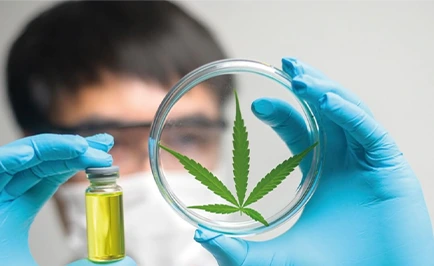
CBD and hemp products require evaluation of cannabinoid profiles, THC levels per daily dose, contaminants, and labeling. Requirements change across jurisdictions and distribution channels. Specialized certification programs address these category-specific risks, but certification does not determine product legality in all markets. Brands must assess relevant regulations independently.
GMP Certification
GMP certification reviews procedures, records, sanitation controls, supplier qualifications, and corrective action processes at the facility level. This review applies to facility operations and documentation, not the contents of finished products. Brand-level GMP certification evaluates whether a brand’s internal processes support compliant labeling, specifications, adverse event reporting, and recall readiness—elements that manufacturer-level audits may not address.
Why Brands Compare Certification Scope Before Choosing a Program
Certification programs differ in their testing menus, prohibited substance lists, frequency, lot review, facility review, transparency, and institutional recognition. Programs on the market, such as BSCG Certified Drug Free, BSCG Certified Quality, NSF Certified for Sport®, Informed Sport, Informed Choice, Cologne List®, and HASTA™ offer varying approaches.
Testing Menu and Substance Coverage
The breadth of a testing menu affects how many substances are assessed and which risks remain unaddressed. Some programs publish testing lists, thresholds, and methodology summaries, while others do not. BSCG tests approximately 450 substances, about 400 of which are banned in sport, with the testing menu and reporting details available for public review and transparency. Other third party certification programs test for 150-290 substances. Differences in coverage influence suitability for sport, military, or high-scrutiny retail channels. A comparison chart is available.
Transparency of Standards and Thresholds
Publicly available testing menus and thresholds enable brands to determine actual certification coverage. A lack of clarity or publication complicates the development and defense of internal compliance documentation. Transparency also supports communication with retailers, institutions, and supply chain partners requesting documentation. Perhaps most importantly transparency creates trust with consumers.
Recognition by Retailers and Institutions
Brands consider whether certification receives recognition from relevant retailers, sports organizations, leagues, or institutions. Recognition varies by product type, jurisdiction, and purchasing policy. BSCG's Certified Drug Free program is recognized by organizations such as the NFL, UFC, NHL, and U.S. Department of Defense Operation Supplement Safety (OPSS). Recognition or listing does not constitute product or brand endorsement.
How Certification Supports Internal Compliance Systems
Certification operates in tandem with internal quality systems. It strengthens supplier qualification, product release procedures, documentation, corrective actions, and retailer compliance. Legal and regulatory accountability remains with the brand.
Supplier and Ingredient Qualification
Brands use third-party review to assess ingredient risk before materials enter production. Supplier documentation, certificates of analysis, and independent lab results are compared to specifications. BSCG's Dietary Supplement Ingredient Advisory List is an educational reference highlighting ingredients with regulatory concerns, assisting brands in flagging higher-risk materials at the formulation stage.
Lot-by-Lot Documentation
Lot-based review connects testing outcomes to individual production batches and supports traceability for retailer, team, or institutional inquiries. It enables detection of batch variability. Programs like BSCG Certified Drug Free, HASTA, and Informed Sport test every finished product lot for banned substances to maximize protection for drug tested athletes and professionals.
How Brands Typically Evaluate a Certification Partner
Compliance teams assess certification partners across areas such as testing methods and scope, certification categories, frequency of review, turnaround times, global recognition, institutional acceptance, and documentation practices. Pricing is also a key component.
Questions Compliance Teams Commonly Ask
- Which substances or claims are covered by testing, and are the details publicly available?
- Are standards and thresholds accessible for review?
- Does certification apply to ingredients, finished products, facilities, or multiple levels?
- Is testing conducted lot-by-lot or at periodic intervals?
- What documentation is provided following review?
- How does the certifier address nonconformities or unexpected results?
Certification Establishes Compliance and Builds Trust
Brands adopt certification and verification as part of compliance records, supply chain management, and in response to retailer and institutional expectations. Certification assists in managing banned substance and quality risk over time. A single test reflects a specific production lot, while a structured certification program demonstrates ongoing system controls and establishes compliance and enhancing trust in product quality.
BSCG provides certification for finished products, ingredients, CBD products, facilities, and animal supplements to support all levels of the industry and product types . Each program addresses specific risk areas relevant to the item or facility that is certified. Assessing third-party tested supplements requires a review of certification scope, testing frequency, standards, transparency, and alignment with the risk profile.
FAQ
Why do supplement brands use third-party certification?
Brands use third-party certification to support independent review of product quality, label claims, banned substance risk, and manufacturing controls. This review assists compliance with documentation requirements from retailers, sports organizations, and institutional buyers and demonstrates product quality and integrity to consumers.
Is third-party testing the same as certification?
Testing refers to laboratory analysis of samples, while certification includes defined program criteria, documentation, testing scope, and ongoing oversight. Scope varies by provider and specific program. Third-party certification usually address a broader set of criteria than third party testing.
Does certification mean a supplement is risk-free?
Results depend on selected samples, testing scope, analytical limits, manufacturing controls, and current supply chain conditions. Certification programs go above and beyond industry standards to ensure the quality of products but no certification removes all risk.
What is the difference between banned substance testing and label claim verification?
Banned substance testing determines the presence of substances prohibited by sports or institutional lists. Label claim verification assesses consistency between product contents and stated specifications. These represent distinct analytical scopes.
Why does lot-by-lot certification matter?
Lot-by-lot certification links testing outcomes to individual production lots and supports traceability for retailer or institutional requests. When every lot is tested it provides ongoing quality control and security while annual testing or periodic testing is more of a check on the established quality control processes in place.
Do all certification programs test for the same substances?
No. Certification programs differ in banned substance lists, thresholds, product categories, and documentation. Brands and consumers should examine published program details to determine scope.
CERTIFIED CLIENTS
Search by Lot, Product, Brand, Category, or Other Keyword.
Certified Drug Free
Certified Quality
Certified GMP
Certified CBD